What does John 13:24 mean?
“Simon Peter therefore beckoned to him, that he should ask who it should be of whom he spake.” — John 13:24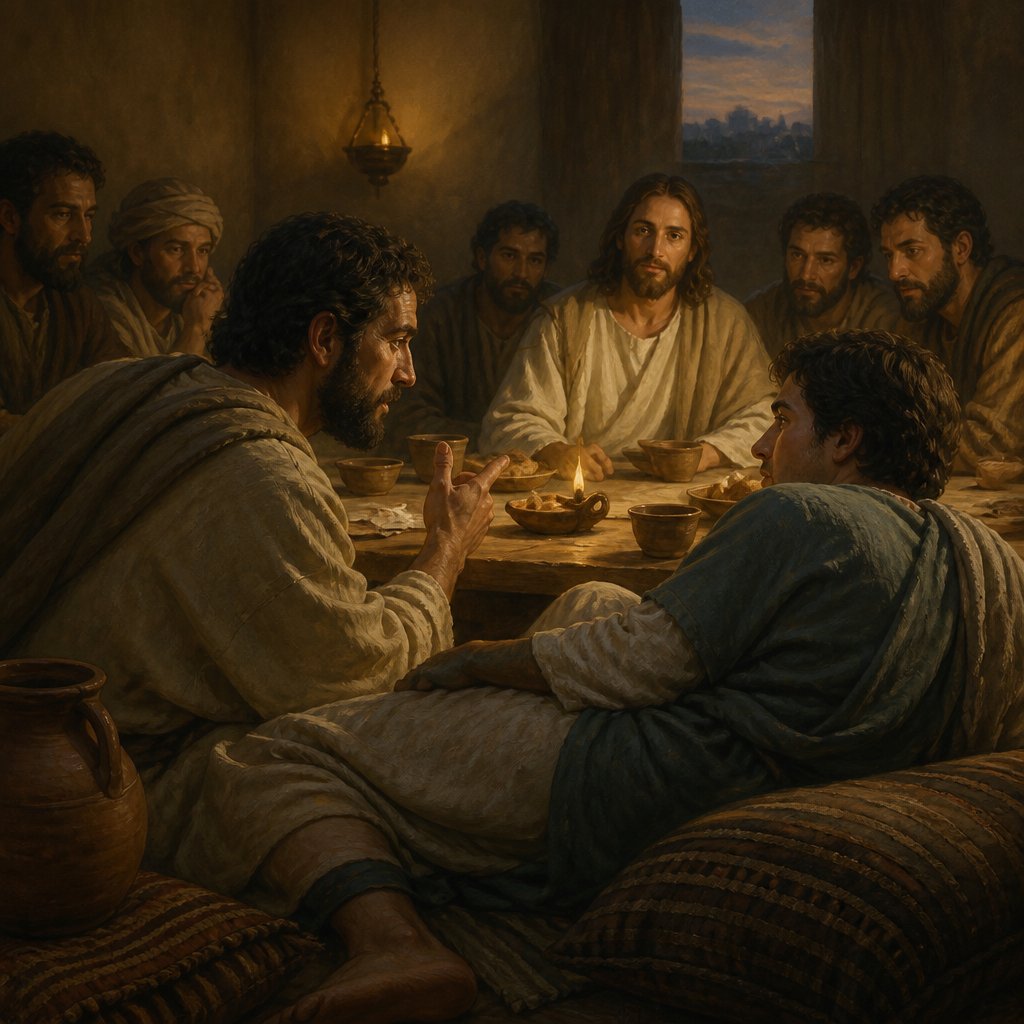
The Bible verse John 13:24 from the King James Version (KJV) reads, "Simon Peter therefore beckoned to him, that he should ask who it should be of whom he spake." This verse is part of a larger passage in the Gospel of John that recounts the events of the Last Supper, a significant moment in the life of Jesus and his disciples.
In this verse, Simon Peter, one of Jesus' closest disciples, is seen beckoning to another disciple, asking him to inquire about the identity of the person of whom Jesus had spoken. This brief exchange between Peter and the other disciple is significant in that it reflects the intense curiosity and uncertainty among the disciples about Jesus' impending betrayal and the identity of the betrayer.
The context of this verse is crucial for understanding its deeper meaning and significance. The Last Supper was a pivotal moment in Jesus' ministry, as it was during this gathering that he shared the Passover meal with his disciples and initiated the sacrament of the Eucharist. It was also at this time that Jesus revealed to his disciples that one of them would betray him.
The symbolism in this verse is rich and multifaceted. Firstly, the act of Peter beckoning to the other disciple can be seen as a demonstration of Peter's impulsive and passionate nature. Throughout the Gospels, Peter is portrayed as a bold and outspoken disciple who often acts without thinking. In this instance, his eagerness to know the identity of the betrayer reflects his deep emotional attachment to Jesus and his desire to protect him.
Furthermore, the fact that the other disciple is asked to inquire about the betrayer's identity highlights the theme of trust and loyalty among the disciples. The choice of the other disciple to make this inquiry suggests a certain level of intimacy and trust between the disciples, as well as a shared concern for the well-being of Jesus and the integrity of the group.
The theme of betrayal is also central to this verse and the larger passage in which it is situated. Jesus' revelation that one of his own disciples would betray him is a moment of profound tension and sorrow. The disciples' confusion and distress over this revelation reflect the deeply human emotions that accompany the experience of betrayal, as well as the complex nature of human relationships.
In a broader sense, this verse can also be interpreted as a meditation on the human experience of doubt and uncertainty. The disciples' desire to know the identity of the betrayer mirrors the universal human tendency to seek clarity and understanding in the face of distressing and confusing circumstances. In this sense, the verse speaks to the universal longing for certainty and reassurance in times of trial and upheaval.
Overall, John 13:24 is a verse that encapsulates the complex emotional and relational dynamics at play in the events of the Last Supper. Through its portrayal of the disciples' curiosity, concern, and confusion, the verse invites readers to reflect on the themes of trust, loyalty, and the human experience of betrayal. It is a poignant and thought-provoking passage that continues to resonate with readers today, inviting them to deepen their understanding of the complexities of faith, human relationships, and the enduring significance of the Last Supper in the Christian tradition.
Get our apps


Artwork for John 13:24
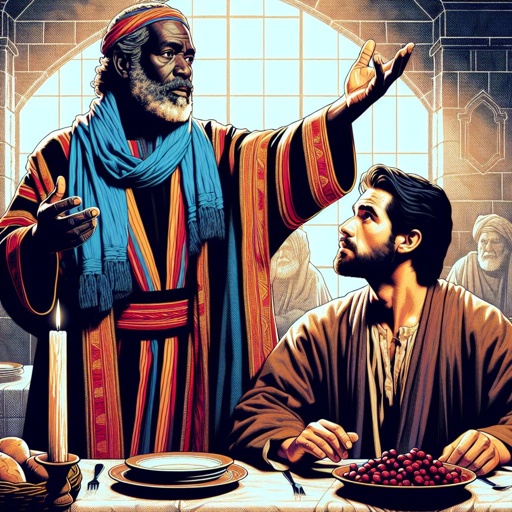
John 13:24 - "Simon Peter therefore beckoned to him, that he should ask who it should be of whom he spake."
"Simon Peter therefore beckoned to him, that he should ask who it should be of whom he spake." - John 13:24

Acts 13:24 - "When John had first preached before his coming the baptism of repentance to all the people of Israel."

John 3:24 - "For John was not yet cast into prison."

"When John had first preached before his coming the baptism of repentance to all the people of Israel." - Acts 13:24

"For John was not yet cast into prison." - John 3:24

John 13

John 1:24 - "And they which were sent were of the Pharisees."

Luke 13:24
Genesis 24-13

John 7:24 - "Judge not according to the appearance, but judge righteous judgment."

John 13:13 - "Ye call me Master and Lord: and ye say well; for so I am."

John 13: 34-35

Luke 24:13-35

John 13:4-9

JOHN 6:11-13

John 20:11-13

John 20:24 - "¶ But Thomas, one of the twelve, called Didymus, was not with them when Jesus came."

John 4:24 - "God is a Spirit: and they that worship him must worship him in spirit and in truth."

Luke 7:24 - "¶ And when the messengers of John were departed, he began to speak unto the people concerning John, What went ye out into the wilderness for to see? A reed shaken with the wind?"

1 John 4:13

John 13:31-35

1 Chronicles 24:13 - "The thirteenth to Huppah, the fourteenth to Jeshebeab,"

Leviticus 24:13 - "And the LORD spake unto Moses, saying,"

John 18:24 - "Now Annas had sent him bound unto Caiaphas the high priest."

John 2:24 - "But Jesus did not commit himself unto them, because he knew all men,"

John 21:24 - "This is the disciple which testifieth of these things, and wrote these things: and we know that his testimony is true."

John 9:13 - "¶ They brought to the Pharisees him that aforetime was blind."

"And they which were sent were of the Pharisees." - John 1:24

Matthew 11:13 - "For all the prophets and the law prophesied until John."