What does John 13:28 mean?
“Now no man at the table knew for what intent he spake this unto him.” — John 13:28
John 13:28 reads in the King James Version: "Now no man at the table knew for what intent he spake this unto him."
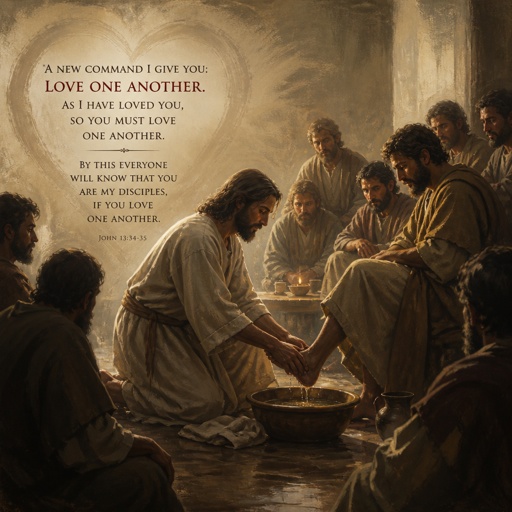
This verse comes from the New Testament and is part of the story of Jesus washing the disciples' feet at the Last Supper. It is a particularly intriguing moment in the narrative, as it foreshadows the betrayal of Jesus by one of his own disciples, Judas Iscariot.
The context of this verse is crucial to understanding its meaning. Jesus has just finished washing the feet of his disciples, a humble and servant-like act that was typically reserved for the lowliest of servants. This act not only serves as an example of humility and service but also as a symbol of the greater spiritual cleansing that Jesus would soon provide through his death and resurrection. However, amidst this intimate and profound moment, Jesus drops a bombshell by revealing that one of the twelve disciples would betray him. This revelation naturally leads to confusion and distress among the disciples, as evidenced by the uncertainty expressed in John 13:28.
The theme of betrayal is central to this verse, and indeed, to the entire narrative of Jesus' arrest, trial, and crucifixion. Just as Jesus humbled himself to serve and cleanse his disciples, one of them would betray him for personal gain. This betrayal carries a deep sense of irony, as it exposes the disloyalty and deceitfulness of humanity even in the presence of the Son of God himself. This theme of betrayal is not only significant in the context of the narrative but also in a broader theological sense, as it highlights the brokenness and sinfulness of humanity and the necessity of divine intervention for reconciliation and redemption.
The symbolism of the verse is closely tied to its context and themes. The confusion and uncertainty among the disciples reflect the spiritual confusion and turmoil that would soon engulf them in the wake of Jesus' arrest and crucifixion. It symbolizes the darkness that was about to descend upon them as they grappled with the impending betrayal and the loss of their beloved teacher and friend. The table itself, where this revelation takes place, holds symbolic weight as the place of fellowship, communion, and unity, all of which would soon be shattered by the betrayal and subsequent events.
In a broader theological sense, this verse serves as a reminder of the complexity and depth of human nature. It exposes the capacity for betrayal and sinfulness that resides within even those who have been closest to Jesus. This serves as a cautionary tale and a call to self-reflection for all believers, reminding them of the need for humility, self-examination, and spiritual vigilance in the face of temptation and betrayal.
Overall, John 13:28 is a pivotal and poignant moment in the narrative of Jesus' arrest and crucifixion, serving as a foreshadowing of the betrayal to come and highlighting the themes of human frailty, spiritual darkness, and the need for divine redemption. Its rich symbolism and deep theological significance make it a verse worth pondering and meditating on for believers seeking to understand the complexities of human nature and the depths of God's love and grace.
Get our apps


Artwork for John 13:28

John 13:28 - "Now no man at the table knew for what intent he spake this unto him."

"Now no man at the table knew for what intent he spake this unto him." - John 13:28

John 14:28

John 5:28

John 5:28

John 5:28

John 1:28 - "These things were done in Bethabara beyond Jordan, where John was baptizing."

Genesis 28-13

Ezekiel 28:13

John 13

Mark 13:28-37

Mark 13:28-37

Mark 13:28-37

luke 13:28-37

Luke 13:28-27

Luke 13:28-27

Luke 13:28-27

Mark 13:28-37

luke 13:28-37

Mark 8:28 - "And they answered, John the Baptist: but some say, Elias; and others, One of the prophets."

"These things were done in Bethabara beyond Jordan, where John was baptizing." - John 1:28

Exodus 28:13 - "¶ And thou shalt make ouches of gold;"

John 20:28 - "And Thomas answered and said unto him, My Lord and my God."

John 5:28 - "Marvel not at this: for the hour is coming, in the which all that are in the graves shall hear his voice,"

John 9:28 - "Then they reviled him, and said, Thou art his disciple; but we are Moses' disciples."

John 4:28 - "The woman then left her waterpot, and went her way into the city, and saith to the men,"

John 13:13 - "Ye call me Master and Lord: and ye say well; for so I am."
John 13: 34-35

John 13:4-9

JOHN 6:11-13