What does John 14:23 mean?
“Jesus answered and said unto him, If a man love me, he will keep my words: and my Father will love him, and we will come unto him, and make our abode with him.” — John 14:23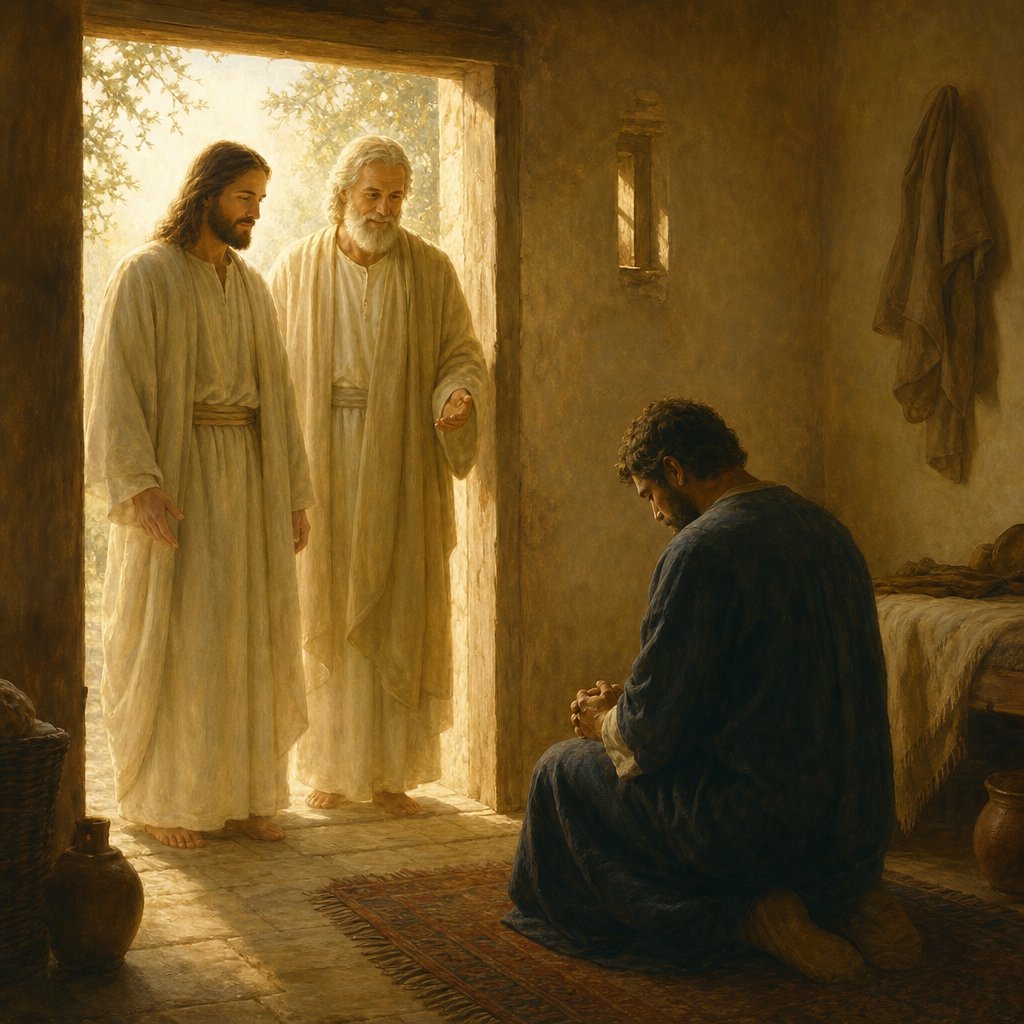
John 14:23 in the KJV reads, “Jesus answered and said unto him, If a man love me, he will keep my words: and my Father will love him, and we will come unto him, and make our abode with him.”
This sentence belongs to Jesus’ private, final teaching to his disciples on the night before his crucifixion, a setting often called the farewell discourse. The tone is intimate and urgent because Jesus is preparing them for life without his visible, bodily presence. In that moment the disciples are troubled and confused about what his departure means, how they will continue, and how God will be with them. John 14 is Jesus’ answer to that anxiety. He speaks of the Father’s house, of his own identity as “the way, the truth, and the life,” and of the promise of the “Comforter,” and within that stream John 14:23 explains what real communion with God looks like in the life of the believer: love expressed as obedience, and obedience answered by divine indwelling.
The verse begins with a condition that is not mere sentiment: “If a man love me, he will keep my words.” In the KJV, “keep” carries the sense of guarding, holding fast, and observing, not simply hearing. “My words” points to Jesus’ teachings as something to be treasured and lived, rather than treated as information. Love for Christ, in this verse, is not measured by intensity of feeling or by outward claim, but by fidelity to what he has said. This is one of John’s repeated themes: that love and obedience are inseparable when the object of love is the Lord. The emphasis on “words” rather than a single “word” also suggests a whole way of life shaped by Christ’s instruction, not a selective attachment to parts that are convenient. The verse therefore draws a line between attachment to Jesus as a figure and allegiance to Jesus as Lord; the former can remain vague, the latter becomes concrete in daily obedience.
Then Jesus moves from the disciple’s response to God’s response: “and my Father will love him.” This does not deny that God is loving by nature, nor does it reduce divine love to a reward earned by human performance. Rather, in the logic of the passage, it describes love as enjoyed and known in covenant fellowship. The Father’s love is not presented as an abstract doctrine but as a relational reality that becomes personally experienced in the life of the one who clings to the Son’s words. In John’s Gospel, relationship to the Father is mediated through the Son; to receive the Son is to come into the sphere where the Father’s love is encountered as Fatherly affection, approval, and care. The verse makes the point that obedience is not cold legalism; it is the pathway of communion.
The climax is striking: “and we will come unto him, and make our abode with him.” The “we” is important. Jesus joins the Father with himself in the action of coming and dwelling. This is not merely that God sends help from a distance; it is divine nearness. The verse speaks in the language of presence, not just provision. The promise also answers, indirectly, the fear that Jesus’ departure means abandonment. Though Jesus will not remain with them in the same visible manner, the Father and the Son will still be with the believer in a real and enduring way.
The word “abode” is rich with meaning in its context. Earlier in the chapter, Jesus says, “In my Father’s house are many mansions” and speaks of going to prepare a place. Here, instead of only speaking about believers going to dwell with God, Jesus speaks of God coming to dwell with believers. The two ideas are not opposed; they interpret each other. The final hope is communion with God, and John 14:23 shows that this communion begins now. The “abode” is the settled, continuing presence of God, not a temporary visit. In symbolic terms, it evokes the Old Testament pattern of God dwelling with his people: the tabernacle in the wilderness, the temple in Jerusalem, and the glory associated with God’s presence among Israel. John’s Gospel is already filled with this temple-and-presence symbolism, and John 14:23 carries it forward by describing the believer as the place of divine dwelling, a living sphere of fellowship where God makes himself at home. The “abode” language therefore implies stability, intimacy, and ownership: God is not a guest passing through but a Lord who dwells.
This promise also stands close to Jesus’ words in the same chapter about the “Comforter,” and it should be read alongside them. John 14:23 is not trying to describe the mechanics of how God dwells with a person, but it is part of a section where Jesus speaks of the coming of the Spirit as God’s continued presence with the disciples. The effect is to assure them that, even in Jesus’ physical absence, divine fellowship will not be less real; it will be inward, sustaining, and continual. The verse thus points to a life that is both obedient and inhabited: obedience is the mark of love, and God’s indwelling is the gift of love.
A further theme in the verse is the personal universality of the invitation: “If a man love me.” The promise is not reserved for a spiritual elite or limited to the original apostles as a closed circle. It is spoken in a way that opens outward to any person who loves Christ truly. Yet it is also personal and individual. The “him” repeated through the verse stresses that this is not only a collective promise to a community but a promise that reaches the single believer in his own life. The result is that Christian faith, as John presents it here, is neither merely institutional nor merely private: it is personal fellowship that inevitably shapes conduct, and it is conduct rooted in a relationship with Father and Son.
The significance of John 14:23, therefore, lies in its portrait of what true discipleship is and what God gives to true disciples. It defines love for Christ as keeping his words, and it defines the blessing of that love as shared communion with the Father and the Son, expressed as their coming and making their “abode” with the believer. In one verse, Jesus ties together devotion and doctrine, ethics and intimacy, commandment and comfort. It is a promise that the life of obedience is not a lonely moral struggle but a life lived in the settled presence of God, where love is answered by love, and where God himself becomes the believer’s home even as the believer is being prepared for a home with God.
Get our apps


Artwork for John 14:23

John 14:23-29

John 14:23-29

John 14:23-29
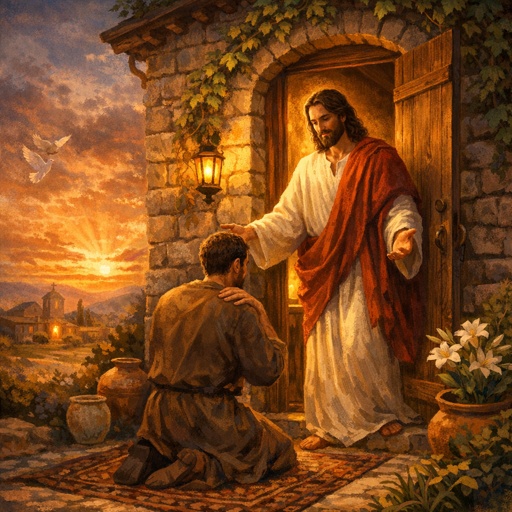
"Jesus answered and said unto him, If a man love me, he will keep my words: and my Father will love him, and we will come unto him, and make our abode with him." - John 14:23

John 14:23-24 - "Jesus replied, “Anyone who loves me will obey my teaching. My Father will love them, and we will come to them and make our home with them. Anyone who does not love me will not obey my teaching. These words you hear are not my own; they belong to the Father who sent me."

"Jesus answered and said unto him, If a man love me, he will keep my words: and my Father will love him, and we will come unto him, and make our abode with him." - John 14:23
"Jesus answered and said unto him, If a man love me, he will keep my words: and my Father will love him, and we will come unto him, and make our abode with him." - John 14:23
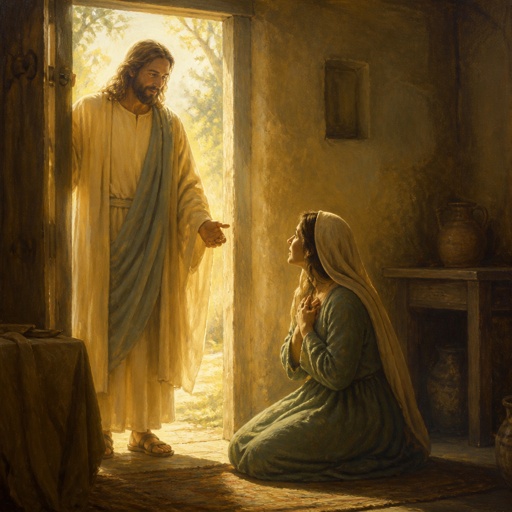
"Jesus replied, “Anyone who loves me will obey my teaching. My Father will love them, and we will come to them and make our home with them. Anyone who does not love me will not obey my teaching. These words you hear are not my own; they belong to the Father who sent me." - John 14:23-24

John 3:23 - "¶ And John also was baptizing in Aenon near to Salim, because there was much water there: and they came, and were baptized."

John 14

John 14:30

John 10:23 - "And Jesus walked in the temple in Solomon's porch."

John 3:14

John 14:16

John 14:6

John 14:28

John 20:14

Genesis 23-14

John 14:14 - "If ye shall ask any thing in my name, I will do it."

John 15:23 - "He that hateth me hateth my Father also."

John 14:15-21

John 9:23 - "Therefore said his parents, He is of age; ask him."

1 John 2:14

1 John 2:14

John 14:1-2

John 14:16-17

John 13:23 - "Now there was leaning on Jesus' bosom one of his disciples, whom Jesus loved."

John 12:23 - "¶ And Jesus answered them, saying, The hour is come, that the Son of man should be glorified."

John 11:23 - "Jesus saith unto her, Thy brother shall rise again."

Matthew 14:10 - "And he sent, and beheaded John in the prison."