What does John 18:17 mean?
“Then saith the damsel that kept the door unto Peter, Art not thou also one of this man’s disciples? He saith, I am not.” — John 18:17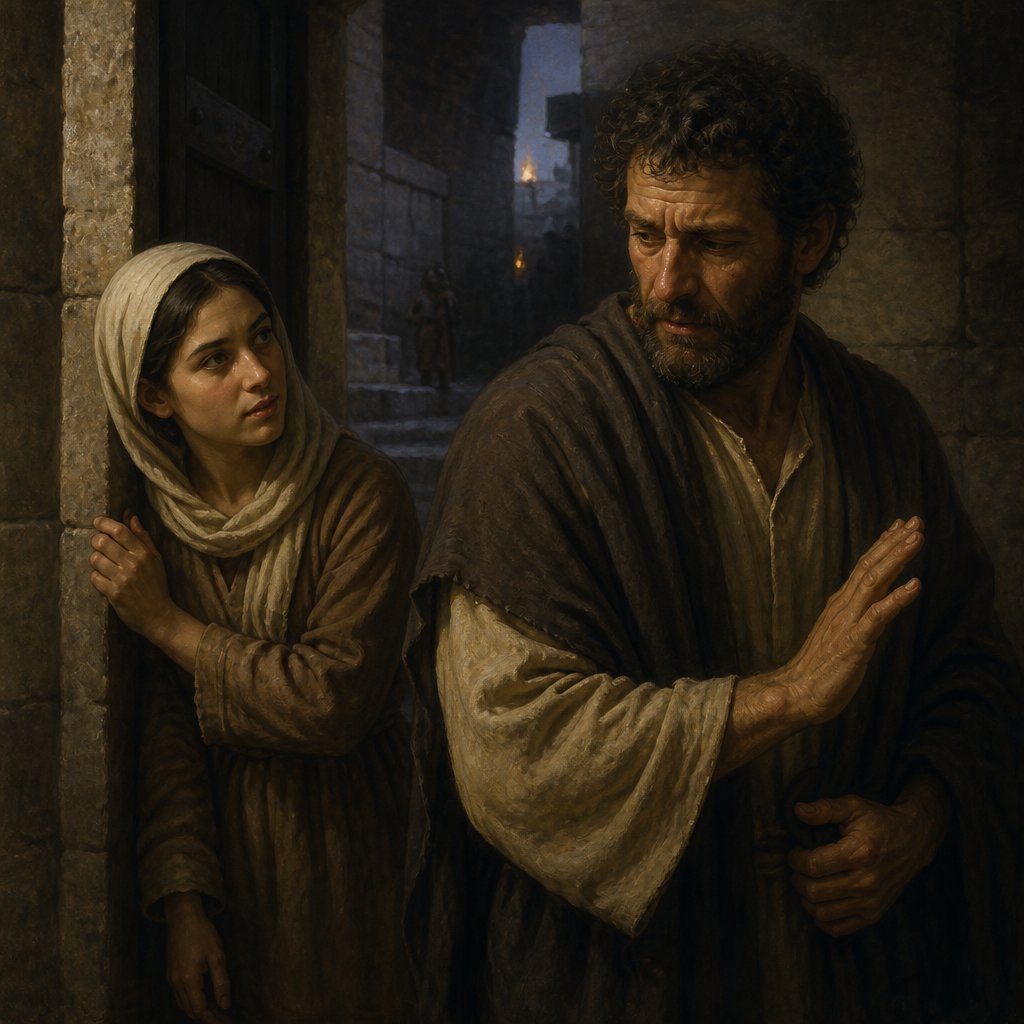
In John 18:17 in the King James Version of the Bible, we read the following words: "Then saith the damsel that kept the door unto Peter, Art not thou also one of this man's disciples? He saith, I am not."
This passage takes place in the context of Jesus' betrayal and subsequent arrest. Jesus had been praying in the garden of Gethsemane when Judas, one of his disciples, arrived with a large crowd armed with swords and clubs. Judas betrayed Jesus by greeting him with a kiss, leading to Jesus' arrest. In the confusion and chaos of the moment, some of Jesus' followers scattered, while others remained nearby to witness the events that followed.
In this specific verse, a young woman who kept the door at the high priest's house confronts the apostle Peter, questioning whether he is a follower of Jesus. Peter, in fear of being arrested himself, denies any association with Jesus, saying, "I am not." This interaction serves as a pivotal moment in the story of Jesus' arrest and highlights the theme of human weakness, fear, and the struggle for faith in the face of adversity.
One of the central themes in this passage is the theme of denial and betrayal. Peter, who had been a devoted follower of Jesus, vehemently denies any association with him in order to protect himself. This moment of weakness and betrayal by one of Jesus' closest disciples serves as a reminder of the frailty of human nature and the internal struggle between faith and fear. It also foreshadows Peter's denial of Jesus three times, as Jesus had predicted earlier in the gospel of John.
This verse also reveals the theme of loyalty and allegiance. In the face of danger and persecution, followers of Jesus are tested in their loyalty and commitment to him. Peter's denial serves as a cautionary example of the challenges and temptations that can lead individuals to betray their beliefs and convictions in moments of crisis.
The context of this passage is also significant to its meaning. The scene takes place in the immediate aftermath of Jesus' arrest, as he is led to the high priest's house to be interrogated and put on trial. The tense and volatile atmosphere heightens the intensity of the moment as Jesus' followers are faced with the reality of the impending persecution and crucifixion of their beloved teacher and leader.
There is also a symbolic interpretation of this verse, particularly in the character of Peter. Throughout the gospels, Peter is portrayed as a passionate and impulsive disciple who often speaks and acts without fully understanding the implications of his words and actions. His denial of Jesus can be seen as a representation of the human tendency to falter in the face of adversity and the struggle to uphold one's beliefs in the midst of fear and uncertainty.
Overall, John 18:17 offers a poignant and thought-provoking depiction of human frailty and the internal conflict between faith and fear. The passage serves as a powerful reminder of the challenges and temptations that individuals face in remaining steadfast in their beliefs, especially in the face of persecution and adversity. Peter's denial of Jesus stands as a cautionary tale, urging readers to reflect on their own convictions and the strength of their faith in times of trial.
Get our apps


Artwork for John 18:17
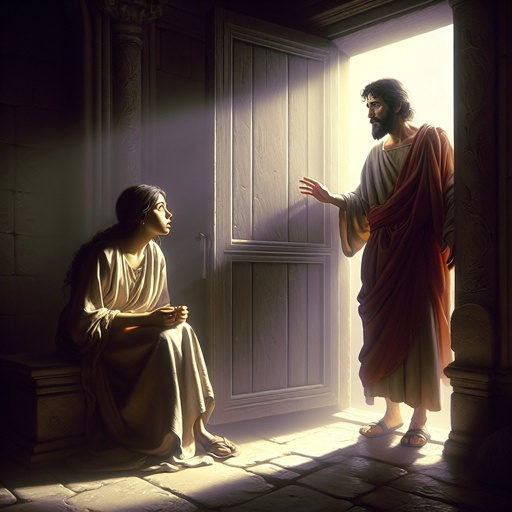
John 18:17 - "Then saith the damsel that kept the door unto Peter, Art not thou also one of this man's disciples? He saith, I am not."
"Then saith the damsel that kept the door unto Peter, Art not thou also one of this man's disciples? He saith, I am not." - John 18:17

John 7:17-18

John 7:17-18

John 7:17-18

John 7:17-18

John 17:18 - "As thou hast sent me into the world, even so have I also sent them into the world."

John 19:17-18 - "And he bearing his cross went forth into a place called the place of a skull, which is called in the Hebrew Golgotha: Where they crucified him, and two other with him, on either side one, and Jesus in the midst."
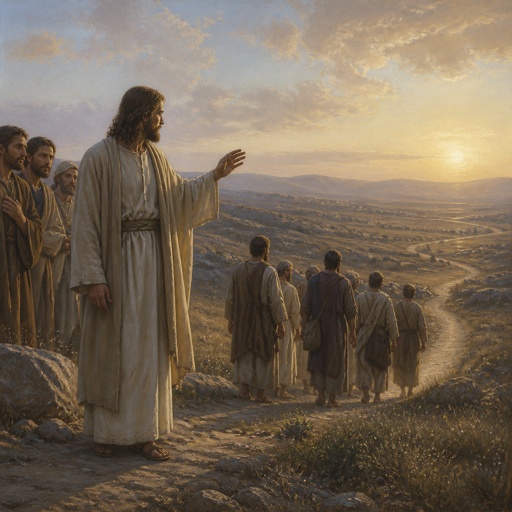
"As thou hast sent me into the world, even so have I also sent them into the world." - John 17:18

1 John 3:17-18 - "But if anyone has the world's goods and sees his brother in need, yet closes his heart against him, how does God's love abide in him? Little children, let us not love in word or talk but in deed and in truth."

Matthew 17:17-18

Matthew 17:17-18

John 17:17 - "Sanctify them through thy truth: thy word is truth."

John 18:25

john 18:36

John 1:17

John 21:17

John 1:17

John 1:17

John 14:16-17

Genesis 18-17

Genesis 17-18

1 John 5:18

1 John 4:18

1 John 4:18

John 17:16 - "They are not of the world, even as I am not of the world."

John 10:17-18 - "Therefore doth my Father love me, because I lay down my life, that I might take it again. No man taketh it from me, but I lay it down of myself. I have power to lay it down, and I have power to take it again. This commandment have I received of my Father."

Matthew 6:17-18

Psalm 139:17-18

Psalm 139:17-18