What does John 18:19 mean?
“The high priest then asked Jesus of his disciples, and of his doctrine.” — John 18:19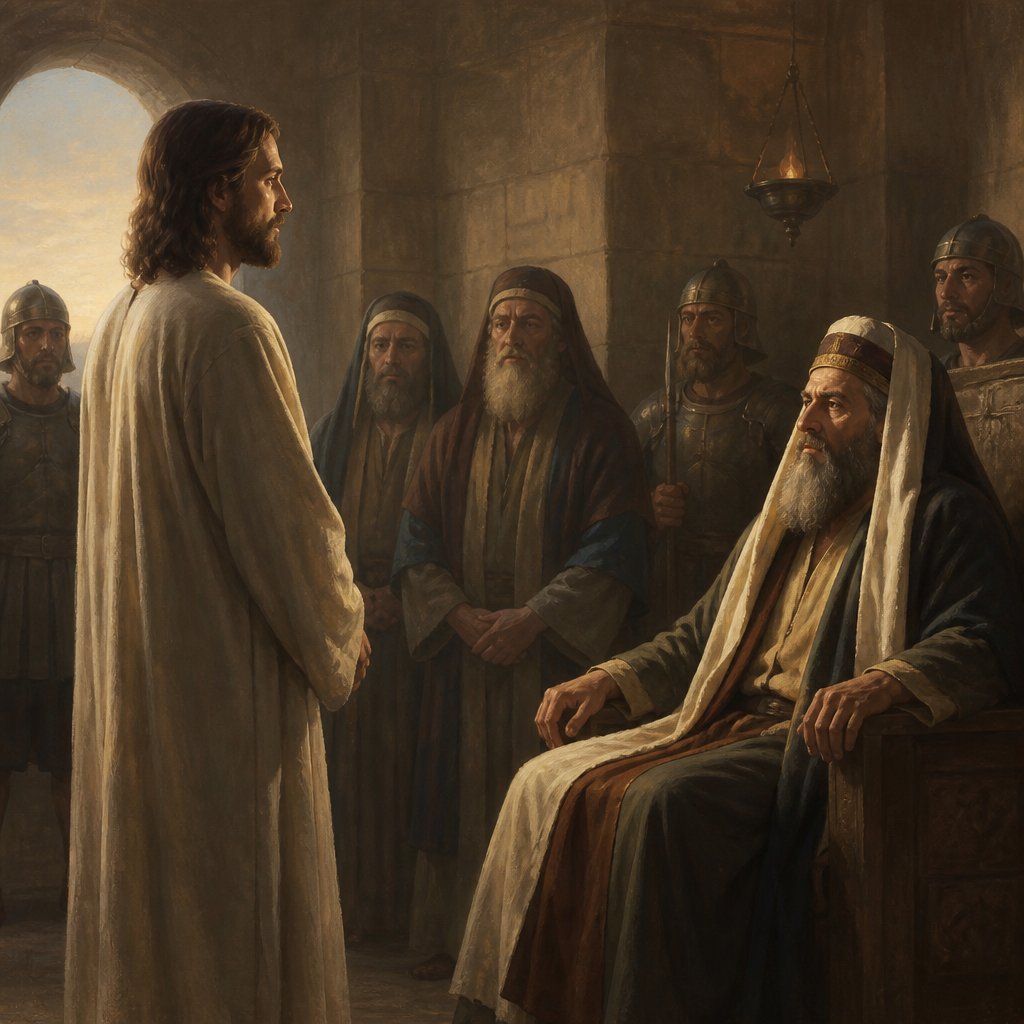
The Bible verse John 18:19 in the King James Version (KJV) states: "The high priest then asked Jesus of his disciples, and of his doctrine." This verse occurs in the context of the events leading up to the crucifixion of Jesus. After Jesus was arrested in the Garden of Gethsemane, he was taken to the high priest, who questioned him about his teachings and his disciples.
The high priest's questioning of Jesus reveals several important themes and elements to consider. Firstly, the role of the high priest in Jewish society is significant. The high priest was the leader of the Jewish religious establishment and held great influence and authority. By interrogating Jesus, the high priest was seeking to ascertain whether Jesus posed a threat to the religious and social order.
Additionally, the high priest's questioning of Jesus reflects the inherent tension and conflict between Jesus' teachings and the established religious traditions. Throughout his ministry, Jesus challenged the religious authorities and their interpretations of the law, often advocating for a deeper spiritual understanding and a more personal relationship with God. This tension is further emphasized by the fact that the high priest questioned Jesus immediately after his arrest, indicating a sense of urgency in addressing Jesus' teachings.
The high priest's inquiry into Jesus' disciples is also significant. The high priest sought to identify and understand the individuals who were following Jesus and spreading his message. This demonstrates the widespread influence and impact of Jesus' teachings, as well as the threat it posed to the religious establishment.
The symbolic significance of this verse is also noteworthy. Jesus' encounter with the high priest serves as a microcosm of the larger conflict between spiritual truth and religious tradition. Jesus' teachings challenged the status quo and offered a revolutionary message of love, forgiveness, and redemption. The high priest's interrogation represents the resistance and skepticism that Jesus faced from religious authorities, who were unwilling to accept his radical ideas.
Furthermore, the high priest's questioning of Jesus reflects the broader theme of persecution and conflict present throughout the narrative of Jesus' arrest and crucifixion. Jesus' willingness to endure interrogation and persecution at the hands of the religious authorities underscores his unwavering commitment to his mission and his divine purpose.
In conclusion, John 18:19 in the King James Version captures a crucial moment in the narrative of Jesus' arrest and subsequent trial. The verse highlights the tension and conflict between Jesus' teachings and the established religious traditions, as well as the broader themes of persecution and the clash between spiritual truth and religious authority. This verse serves as a potent reminder of Jesus' steadfast commitment to his mission and the challenges he faced in spreading his message of love and redemption.
Get our apps


Artwork for John 18:19

John 18:19 - "¶ The high priest then asked Jesus of his disciples, and of his doctrine."
"¶ The high priest then asked Jesus of his disciples, and of his doctrine." - John 18:19

John 18:19-24 - "The high priest then questioned Jesus about his disciples and his teaching. Jesus answered him, “I have spoken openly to the world; I have always taught in synagogues and in the temple, where all Jews come together. I have said nothing in secret. Why do you ask me? Ask those who heard me, what I said to them; they know what I said.” When he had said this, one of the officers standing by struck Jesus with his hand, saying, “Is that how you answer the high priest?” Jesus answered him, “If I have spoken wrongly, bear witness to the wrong; but if rightly, why do you strike me?” Annas then sent him bound to Caiaphas the high priest."
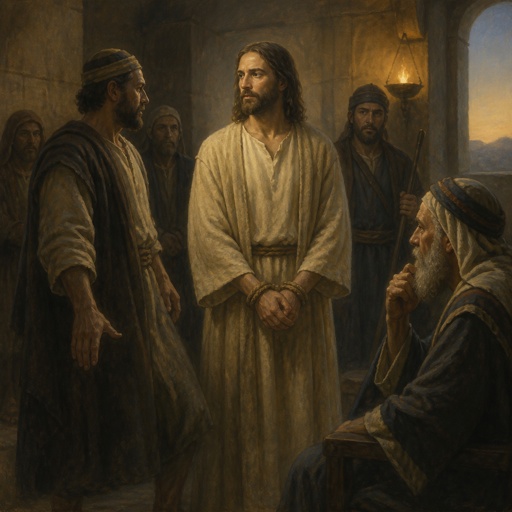
"The high priest then questioned Jesus about his disciples and his teaching. Jesus answered him, “I have spoken openly to the world; I have always taught in synagogues and in the temple, where all Jews come together. I have said nothing in secret. Why do you ask me? Ask those who heard me, what I said to them; they know what I said.” When he had said this, one of the officers standing by struck Jesus with his hand, saying, “Is that how you answer the high priest?” Jesus answered him, “If I have spoken wrongly, bear witness to the wrong; but if rightly, why do you strike me?” Annas then sent him bound to Caiaphas the high priest." - John 18:19-24

John 19:18 - "Where they crucified him, and two other with him, on either side one, and Jesus in the midst."

1 John 3:18-19 - "My little children, let us not love in word, neither in tongue; but in deed and in truth. And hereby we know that we are of the truth, and shall assure our hearts before him."

John 19:17-18 - "And he bearing his cross went forth into a place called the place of a skull, which is called in the Hebrew Golgotha: Where they crucified him, and two other with him, on either side one, and Jesus in the midst."

1 John 4:18-19 - "There is no fear in love; but perfect love casteth out fear: because fear hath torment. He that feareth is not made perfect in love. We love him, because he first loved us."
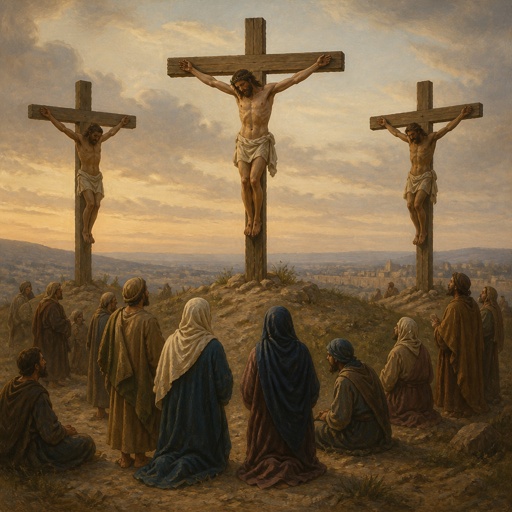
"Where they crucified him, and two other with him, on either side one, and Jesus in the midst." - John 19:18

John 15:18-19 - "If the world hates you, keep in mind that it hated me first. If you belonged to the world, it would love you as its own. As it is, you do not belong to the world, but I have chosen you out of the world. That is why the world hates you."

John 7:17-18

John 7:17-18

John 19:38

John 19:1

John 7:17-18

John 7:17-18

John 18:25

john 18:36

John 19:19 - "¶ And Pilate wrote a title, and put it on the cross. And the writing was, JESUS OF NAZARETH THE KING OF THE JEWS."

Luke 10:18-19

Luke 13:18-19

Luke 10:18-19

Luke 10:18-19

Luke 13:18-19

John 17.6-19

John 19:1-3

John 19:25-27

Luke 10:18-19

Luke 10:18-19

Luke 10:18-19