What does John 18:27 mean?
“Peter then denied again: and immediately the cock crew.” — John 18:27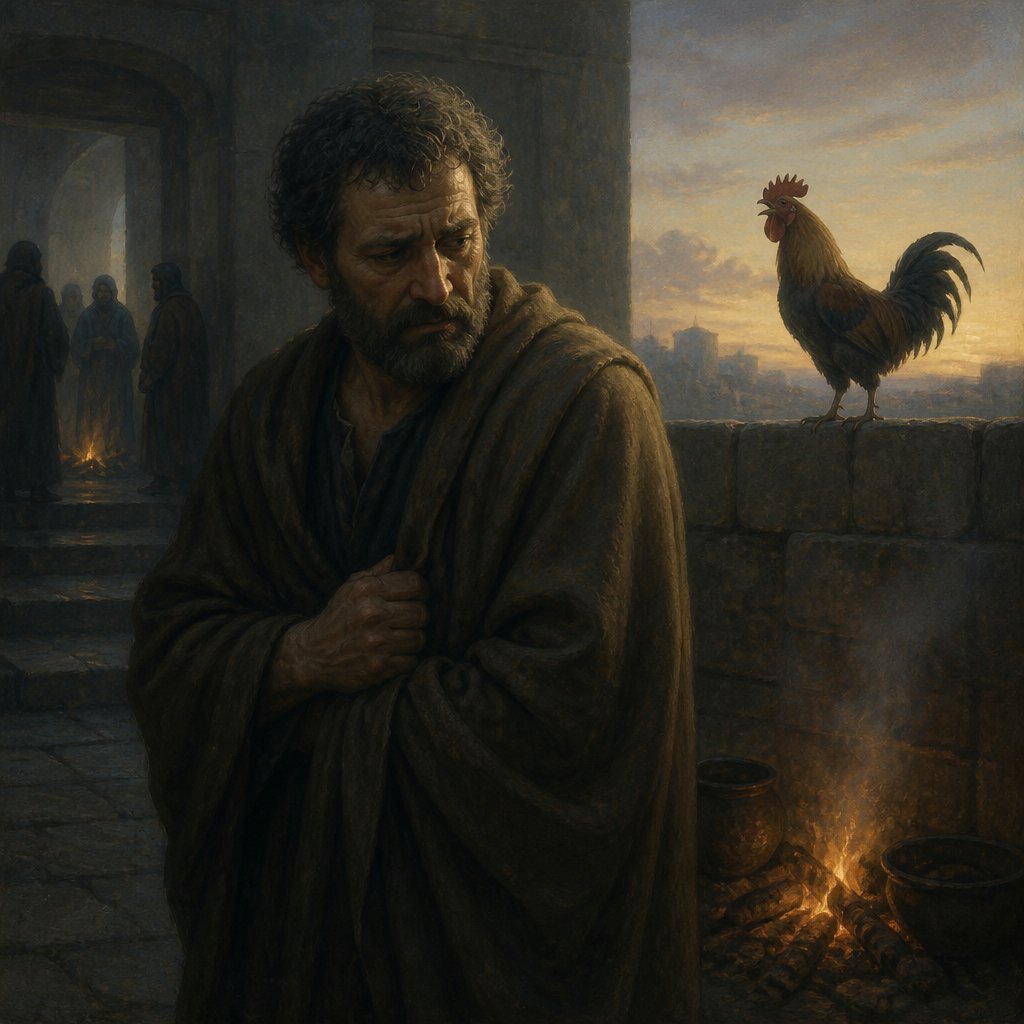
John 18:27 (KJV) - "Peter denying Jesus"
"But Peter denied him, saying, Woman, I know him not."
This verse from the Gospel of John is a crucial moment in the narrative of Jesus' crucifixion. It captures the betrayal and denial of Jesus by one of his closest disciples, Peter. The scene takes place in the courtyard of the high priest, where Jesus has been taken after his arrest. As Jesus is being interrogated, Peter is confronted by the bystanders who recognize him as one of Jesus' disciples. Three times, Peter denies any association with Jesus, fulfilling Jesus' earlier prophecy that Peter would deny him thrice before the rooster crowed.
The theme of betrayal and denial is central to this verse. Peter, who had previously affirmed his loyalty to Jesus and even declared that he would never deny him, succumbs to fear and self-preservation in the face of potential persecution. This reflects the fallibility of human nature and the struggle between faith and doubt. It also serves as a cautionary tale about the fragility of human resolve and the potential for betrayal, even among those who profess unwavering loyalty.
The context of this verse is significant in understanding its implications. Jesus' arrest and subsequent trial were pivotal moments in his earthly mission, culminating in his crucifixion and ultimate sacrifice for the redemption of humanity. It is within this backdrop of intense emotion and tension that Peter's denial takes place. The contrast between Jesus' steadfastness in the face of adversity and Peter's faltering faith underscores the internal struggle of the human spirit and the capacity for moral failure.
Symbolically, Peter's denial represents a broader theological theme of human imperfection and the need for divine grace. It serves as a reminder of the limitations of human faith and the temptation to prioritize self-preservation over loyalty to one's beliefs. At the same time, it also foreshadows the redemptive power of forgiveness and the restoration of Peter's faith following Jesus' resurrection. The rooster's crowing, as prophesied by Jesus, becomes a poignant symbol of Peter's remorse and the dawning realization of his betrayal.
The significance of this verse extends beyond its immediate context within the narrative of Jesus' crucifixion. It carries timeless lessons about the complexities of human nature and the universal struggle between faith and doubt. The portrayal of Peter's denial as a moment of weakness and moral failing serves as a cautionary tale for believers, highlighting the need for humility and vigilance in the face of adversity. It also underscores the transformative power of grace and the potential for spiritual renewal, as demonstrated in Peter's eventual reinstatement and unwavering commitment to Jesus' teachings.
In conclusion, John 18:27 (KJV) captures a pivotal moment in the narrative of Jesus' crucifixion, highlighting the theme of betrayal and denial through Peter's faltering faith. Its context within the larger narrative of Jesus' earthly mission and its symbolism as a cautionary tale of human fallibility and divine grace make it a profound and thought-provoking verse with enduring relevance for believers.
Get our apps


Artwork for John 18:27

John 18:27 - "Peter then denied again: and immediately the cock crew."
"Peter then denied again: and immediately the cock crew." - John 18:27

John 20:27

John 20:27

John 19:25-27

1 John 2:27

John 3:27 - "John answered and said, A man can receive nothing, except it be given him from heaven."

Genesis 18-27

John 19:25-27

1 John 2:27

John 19:26-27

1 John 2:27

1 John 2:27

John 7:17-18

John 7:17-18

Genesis 27:18-19

Joshua 18:27 - "And Rekem, and Irpeel, and Taralah,"

John 8:27 - "They understood not that he spake to them of the Father."

John 7:17-18

John 7:17-18

John 18:25

john 18:36

John 19:25-27 with emphasis on Mary

Matthew 27:18 - "For he knew that for envy they had delivered him."

1 John 5:18

1 John 4:18

1 John 4:18

Luke 18:27 - "And he said, The things which are impossible with men are possible with God."

"And Rekem, and Irpeel, and Taralah," - Joshua 18:27

John 10:27 - "My sheep hear my voice, and I know them, and they follow me:"