What does John 18:5 mean?
“They answered him, Jesus of Nazareth. Jesus saith unto them, I am he. And Judas also, which betrayed him, stood with them.” — John 18:5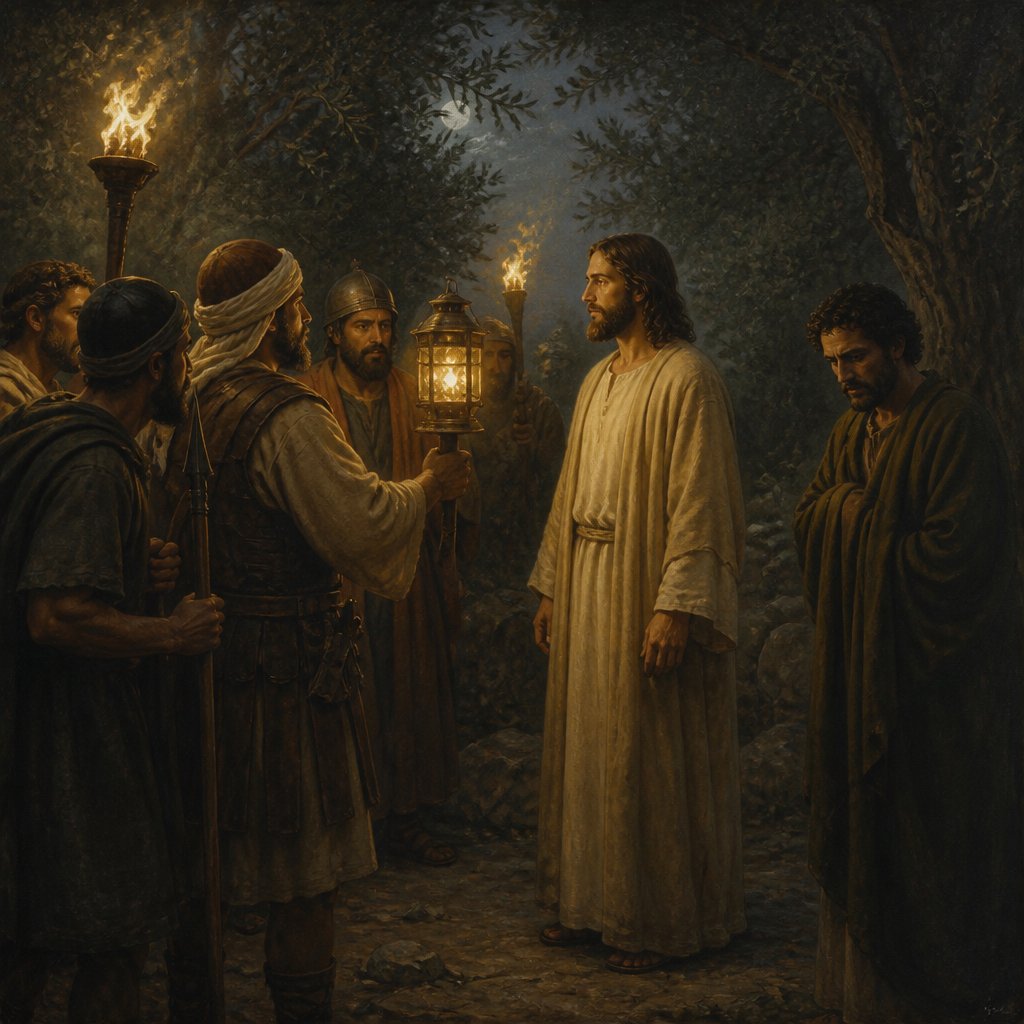
John 18:5 (KJV) states, "They answered him, Jesus of Nazareth. Jesus saith unto them, I am he. And Judas also, which betrayed him, stood with them."
This verse is part of the narrative of Jesus' arrest in the Garden of Gethsemane, a pivotal moment in the passion and crucifixion of Jesus Christ. It reflects themes of betrayal, sacrifice, and the fulfillment of prophecy.
The context of this verse is the night of Jesus' betrayal and arrest. After the Last Supper, Jesus and his disciples went to the Garden of Gethsemane to pray. It is there that Judas, who had agreed to betray Jesus for thirty pieces of silver, leads a group of soldiers and officials to arrest him. In this verse, Jesus responds to the soldiers' inquiry about his identity by stating, "I am he." This bold proclamation ultimately leads to his arrest and subsequent crucifixion.
One of the key themes in this verse is betrayal. Judas, one of Jesus' own disciples, betrays him with a kiss, signaling to the soldiers who Jesus is. This act of betrayal fulfills the prophecy found in the Old Testament, particularly in Psalm 41:9 which says, "Even my close friend in whom I trusted, who ate my bread, has lifted his heel against me." This fulfillment of prophecy underscores the divine plan at work in Jesus' arrest and subsequent crucifixion.
Another theme present in this verse is sacrifice. Jesus willingly identifies himself to the soldiers, knowing that this action will lead to his arrest and ultimate sacrifice on the cross. This act of self-identification demonstrates Jesus' obedience to the will of God and his willingness to fulfill his mission of atoning for the sins of humanity. This theme of sacrifice is central to Christian theology, as Jesus' death on the cross is seen as the ultimate act of love and redemption for humanity's sins.
Symbolism is also present in this verse, particularly in the actions and words of Jesus. When Jesus responds, "I am he," he is not only identifying himself to the soldiers, but he is also making a profound declaration of his divinity. The phrase "I am" is significant in the Gospel of John, as it is used repeatedly by Jesus to assert his identity as the Son of God. This symbolic self-identification further emphasizes the theological significance of Jesus' arrest and crucifixion as part of God's redemptive plan for humanity.
In conclusion, John 18:5 (KJV) captures a pivotal moment in the passion and crucifixion of Jesus Christ. This verse resonates with themes of betrayal, sacrifice, and divine fulfillment of prophecy. It also contains powerful symbolism in Jesus' self-identification and the unfolding of God's redemptive plan. As such, this verse holds deep theological and spiritual significance for Christians as they reflect on the events leading up to Easter and the ultimate sacrifice of Jesus for the salvation of humanity.
Get our apps


Artwork for John 18:5

John 18:5 - "They answered him, Jesus of Nazareth. Jesus saith unto them, I am he. And Judas also, which betrayed him, stood with them."
"They answered him, Jesus of Nazareth. Jesus saith unto them, I am he. And Judas also, which betrayed him, stood with them." - John 18:5

1 John 5:18

1 John 5:18 - "We know that whosoever is born of God sinneth not; but he that is begotten of God keepeth himself, and that wicked one toucheth him not."

John 5:18 - "Therefore the Jews sought the more to kill him, because he not only had broken the sabbath, but said also that God was his Father, making himself equal with God."

John 7:17-18

John 7:17-18

John 7:17-18

John 7:17-18

John 18:25

john 18:36

1 John 4:18

1 John 4:18

John 15:5

John 5:2

John 15:5

John 5:33 - "Ye sent unto John, and he bare witness unto the truth."

John 6:18 - "And the sea arose by reason of a great wind that blew."

John 18:27 - "Peter then denied again: and immediately the cock crew."

"We know that whosoever is born of God sinneth not; but he that is begotten of God keepeth himself, and that wicked one toucheth him not." - 1 John 5:18

John 5:5 - "And a certain man was there, which had an infirmity thirty and eight years."

John 5:28

John 5:28

John 5:28

1 John 5:5 - "Who is he that overcometh the world, but he that believeth that Jesus is the Son of God?"

Mark 2:18 - "And the disciples of John and of the Pharisees used to fast: and they come and say unto him, Why do the disciples of John and of the Pharisees fast, but thy disciples fast not?"
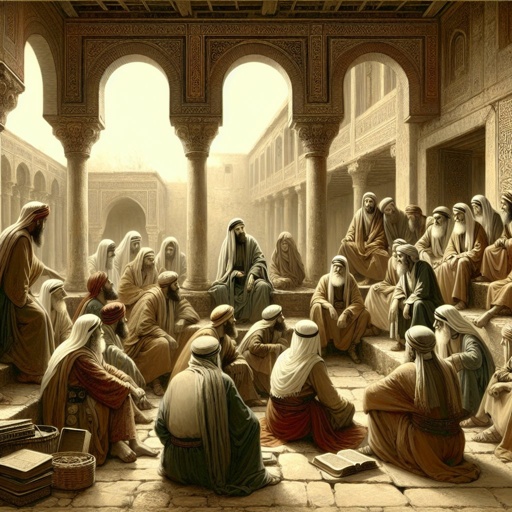
Luke 7:18 - "And the disciples of John shewed him of all these things."

John 18:18 - "And the servants and officers stood there, who had made a fire of coals; for it was cold: and they warmed themselves: and Peter stood with them, and warmed himself."
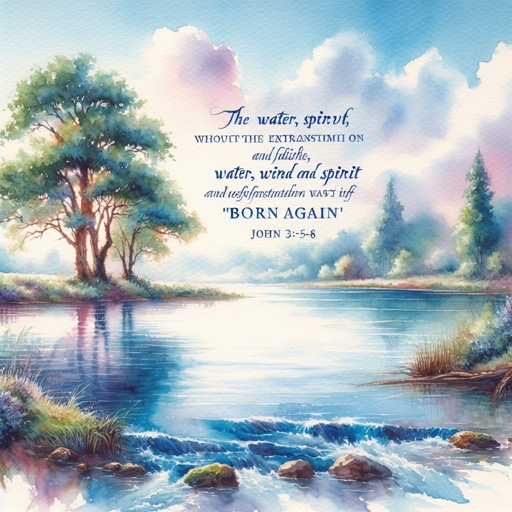
John 3:5-8

John 1:1-5