What does John 19:33 mean?
“But when they came to Jesus, and saw that he was dead already, they brake not his legs:” — John 19:33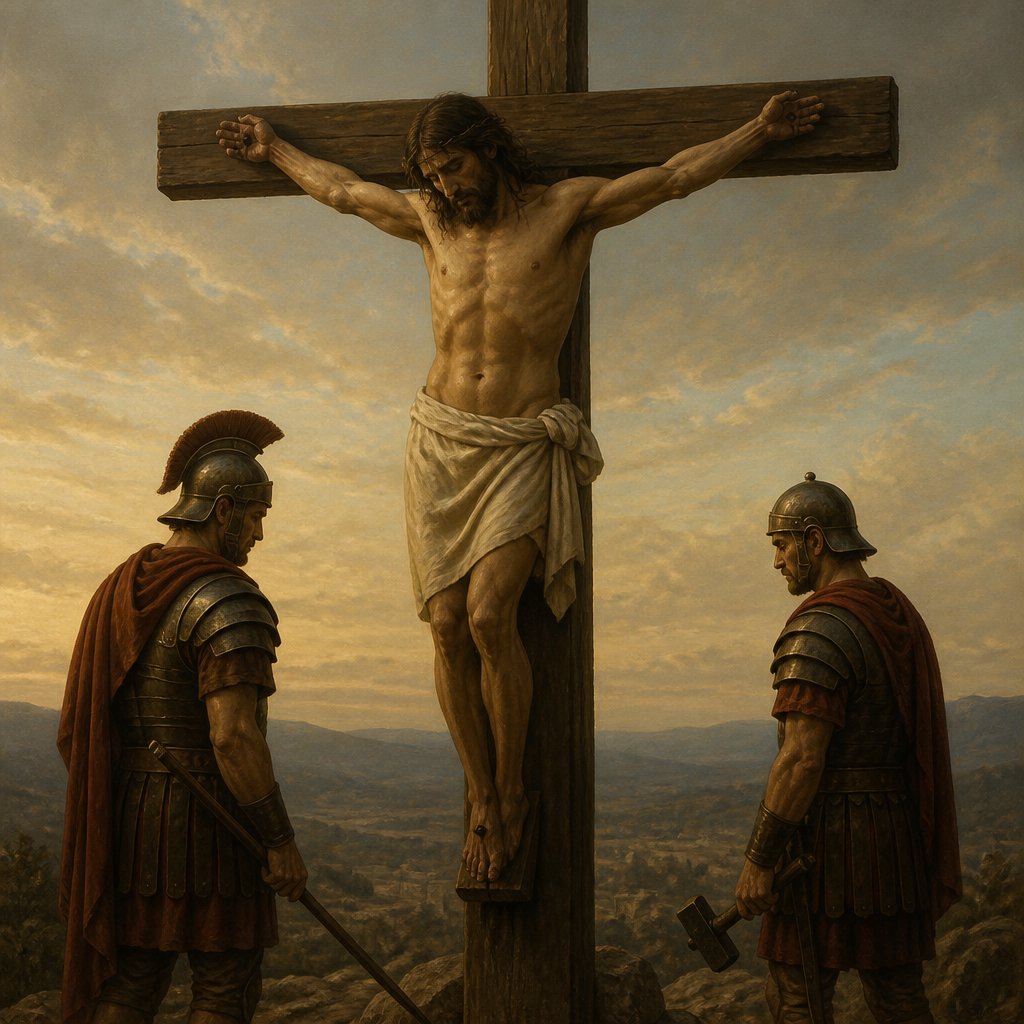
John 19:33 in the King James Version of the Bible reads, "But when they came to Jesus, and saw that he was dead already, they brake not his legs."
This verse is part of the narrative of Jesus' crucifixion, and it holds significant theological, historical, and symbolic meaning. To understand this verse fully, it is essential to examine its context within the passage and the larger themes presented in the Gospel of John.
In the verses leading up to John 19:33, we see the scene of Jesus' crucifixion unfolding. Jesus had been crucified alongside two criminals, and the soldiers who crucified Him divided His clothing among themselves. As the soldiers approached Jesus, they noticed that He was already dead and decided not to break His legs. This action fulfills a prophetic element, as John 19:36 explains, "For these things were done, that the scripture should be fulfilled, A bone of him shall not be broken."
This act of not breaking Jesus' legs holds deep theological significance. In the Old Testament, the Passover lamb was to be sacrificed without any broken bones (Exodus 12:46). The fact that Jesus, often referred to as the "Lamb of God" in the New Testament (John 1:29), did not have His bones broken parallels this Old Testament requirement and emphasizes the sacrificial nature of Jesus' death. It underscores the idea that Jesus' death was the ultimate atoning sacrifice for the sins of humanity, fulfilling the requirements of the law and bringing salvation to all who believe in Him.
In addition to its theological significance, John 19:33 also serves as a reminder of Jesus' identity as the fulfillment of Old Testament prophecies. Throughout the Gospel of John, Jesus is portrayed as the fulfillment of various messianic prophecies, and His actions and the events surrounding His crucifixion often parallel elements of Old Testament stories and symbolism. By not breaking Jesus' legs, the soldiers unknowingly played a role in fulfilling the Scriptures, further emphasizing Jesus' divine identity and the sovereignty of God's plan.
Moreover, this verse highlights the theme of Jesus' voluntary sacrifice. In the Gospel of John, Jesus frequently speaks of laying down His life willingly (John 10:17-18), and this act of the soldiers refraining from breaking His legs further demonstrates that Jesus' death was not a result of defeat or weakness. Instead, it was a deliberate and voluntary act of love and obedience to the Father's will, as Jesus Himself declared, "No one takes it from me, but I lay it down of my own accord" (John 10:18, ESV).
The symbolism in John 19:33 also extends to the broader theme of Jesus as the perfect, unblemished sacrifice. Just as the sacrificial animals in the Old Testament were required to be without blemish, so too was Jesus, the spotless Lamb of God, without sin or physical defect (1 Peter 1:19). By not breaking His legs, Jesus' perfection and innocence are emphasized, highlighting His suitability as the ultimate sacrifice for sin.
In conclusion, John 19:33 holds profound significance in the narrative of Jesus' crucifixion and in the larger theological themes of the Gospel of John. It points to Jesus as the fulfillment of Old Testament prophecies, the voluntary nature of His sacrificial death, and His identity as the unblemished Lamb of God. As Christians reflect on this verse, they are reminded of the depth of God's love and the profound meaning of Jesus' redemptive work on the cross.
Get our apps


Artwork for John 19:33

John 19:33 - "But when they came to Jesus, and saw that he was dead already, they brake not his legs:"
"But when they came to Jesus, and saw that he was dead already, they brake not his legs:" - John 19:33

John 16:33

John 16:33

John 16:33

John 16:33

John 16:33

John 16:33

John 16 : 33

John 1:33

John 5:33 - "Ye sent unto John, and he bare witness unto the truth."

Genesis 19-33

John 9:33 - "If this man were not of God, he could do nothing."

Jeremiah 33:19 - "¶ And the word of the LORD came unto Jeremiah, saying,"

Numbers 33:19 - "And they departed from Rithmah, and pitched at Rimmon-parez."

John 12:33 - "This he said, signifying what death he should die."

Psalms 33:19 - "To deliver their soul from death, and to keep them alive in famine."

"Ye sent unto John, and he bare witness unto the truth." - John 5:33

Leviticus 19:33 - "¶ And if a stranger sojourn with thee in your land, ye shall not vex him."

John 19:38

John 19:1

John 3:33 - "He that hath received his testimony hath set to his seal that God is true."

Mark 14:33 - "And he taketh with him Peter and James and John, and began to be sore amazed, and to be very heavy;"

John 4:33 - "Therefore said the disciples one to another, Hath any man brought him ought to eat?"

John 6:33 - "For the bread of God is he which cometh down from heaven, and giveth life unto the world."

John 19:19 - "¶ And Pilate wrote a title, and put it on the cross. And the writing was, JESUS OF NAZARETH THE KING OF THE JEWS."

John 17.6-19

John 19:1-3

John 19:25-27

Luke 19:33 - "And as they were loosing the colt, the owners thereof said unto them, Why loose ye the colt?"