What does John 19:39 mean?
“And there came also Nicodemus, which at the first came to Jesus by night, and brought a mixture of myrrh and aloes, about an hundred pound weight.” — John 19:39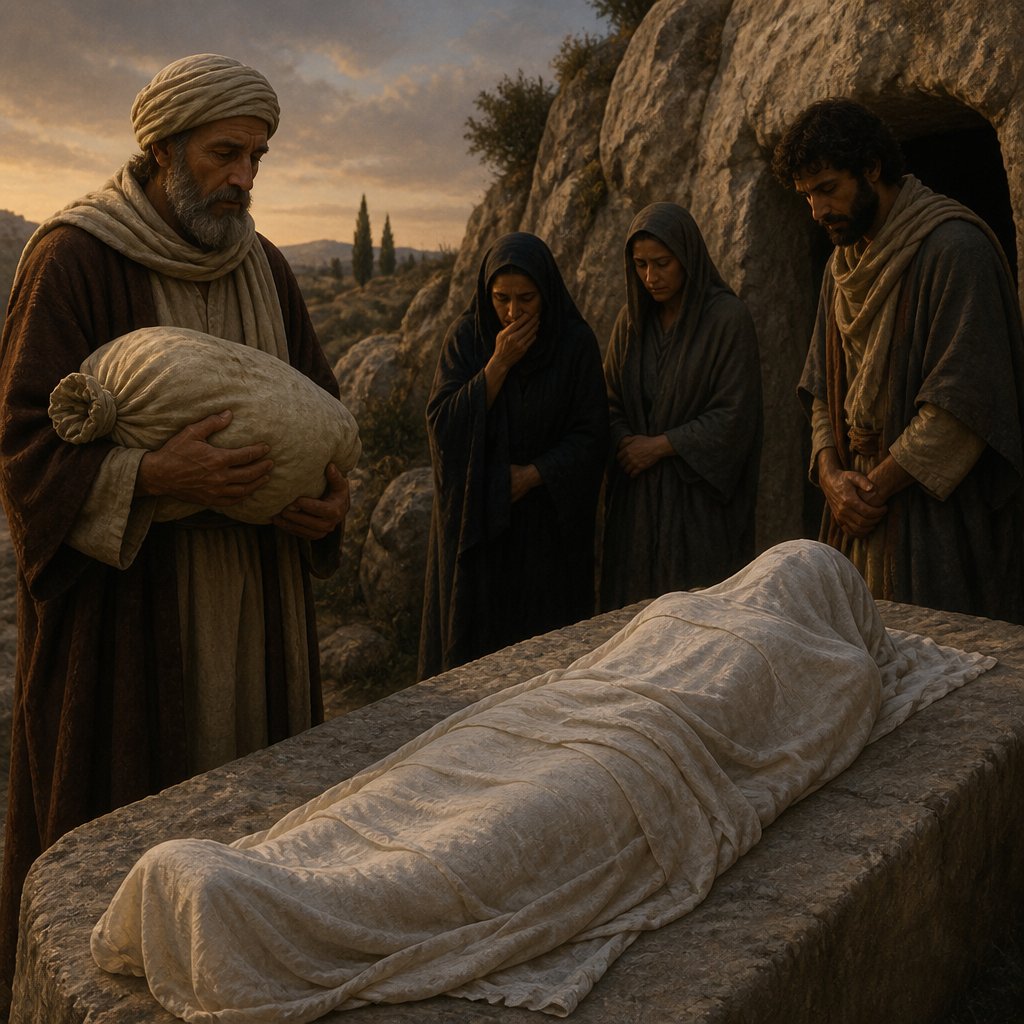
John 19:39 in the King James Version (KJV) of the Bible reads: "And there came also Nicodemus, which at the first came to Jesus by night, and brought a mixture of myrrh and aloes, about an hundred pound weight." This verse comes at the end of the account of Jesus' crucifixion and burial, and it carries a significant meaning within the broader context of the Gospel of John and the overarching story of Jesus' life and ministry.
To truly grasp the full implications of this verse, it's essential to examine the broader context in which it exists. In the preceding verses, we read about the death of Jesus on the cross, the piercing of his side, and the subsequent request made by Joseph of Arimathea for the body of Jesus. This sets the stage for the appearance of Nicodemus in this crucial moment.
Nicodemus is a character who is introduced earlier in the Gospel of John, in chapter 3, where he comes to Jesus by night seeking to understand his teachings. Throughout the narrative, Nicodemus represents the secret discipleship, the hesitant follower who is slow to openly declare his allegiance to Jesus. However, in this climactic moment, we see Nicodemus stepping out of the shadows and into the forefront of Jesus' story.
The act of Nicodemus bringing a mixture of myrrh and aloes, weighing about a hundred pounds, has deep symbolic significance. Both myrrh and aloes were used in ancient Jewish burial customs, particularly as part of the embalming process. Myrrh, with its bitter taste and strong aroma, was used not only to mask the scent of decay but also to symbolize suffering and death. Aloes, on the other hand, was known for its soothing and healing properties, and it was often used to impart a sense of comfort and restoration.
The sheer quantity of these substances that Nicodemus brings is also worth noting. A hundred pounds of myrrh and aloes was an extravagant and lavish amount, and it conveys the depth of Nicodemus' reverence and love for Jesus. It also mirrors the extravagant love and sacrifice that Jesus displayed through his crucifixion, further underscoring the parallel between Nicodemus' actions and the ultimate act of selfless love demonstrated by Jesus on the cross.
Furthermore, the symbolism behind the myrrh and aloes points to the themes of suffering, sacrifice, and ultimately, redemption. As Nicodemus painstakingly applies these ingredients to Jesus' body in preparation for burial, we are reminded of the immense suffering that Jesus endured on the cross, as well as the profound sacrifice he made for the salvation of humanity. Yet, within this act of preparation for burial, there is also a glimmer of hope and the promise of restoration. The myrrh and aloes serve as a testament to the transformative power of Jesus' death and resurrection, foreshadowing the ultimate victory over death and the promise of new life for all who believe in him.
In a broader theological sense, Nicodemus' role in this scene signifies the turning point in his journey of faith. By openly aligning himself with Jesus, particularly in the aftermath of his death, Nicodemus demonstrates a profound shift from secrecy to boldness in his discipleship. His actions speak to the themes of transformation, courage, and the redemption of hesitant believers, illustrating that no one is beyond the reach of God's grace and that even the most reluctant followers can ultimately become powerful witnesses for the truth of the gospel.
In conclusion, John 19:39 captures a pivotal moment in the Gospel of John, where Nicodemus emerges from the shadows to play a crucial role in the burial of Jesus. The symbolism of the myrrh and aloes, the lavish quantity of these substances, and the broader themes of suffering, sacrifice, and redemption all work together to convey a profound message about the transformative power of Jesus' death and resurrection. Nicodemus' actions serve as a poignant reminder of the potential for radical transformation and bold witness in the lives of those who are touched by the love of Christ.
Get our apps


Artwork for John 19:39

John 19:39 - "And there came also Nicodemus, which at the first came to Jesus by night, and brought a mixture of myrrh and aloes, about an hundred pound weight."

John 19:39-40 - "And there came also Nicodemus, which at the first came to Jesus by night, and brought a mixture of myrrh and aloes, about an hundred pound weight. Then took they the body of Jesus, and wound it in linen clothes with the spices, as the manner of the Jews is to bury."
"And there came also Nicodemus, which at the first came to Jesus by night, and brought a mixture of myrrh and aloes, about an hundred pound weight." - John 19:39
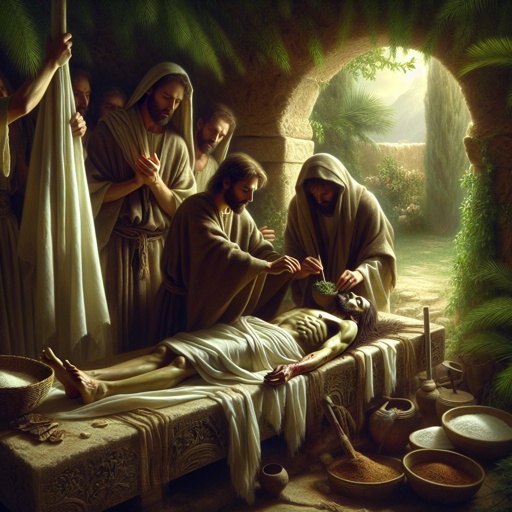
John 19:39-42 - "And Nicodemus, who at first came to Jesus by night, also came, bringing a mixture of myrrh and aloes, about a hundred pounds. Then they took the body of Jesus, and bound it in strips of linen with the spices, as the custom of the Jews is to bury. Now in the place where He was crucified there was a garden, and in the garden a new tomb in which no one had yet been laid. So there they laid Jesus, because of the Jews’ Preparation Day, for the tomb was nearby."
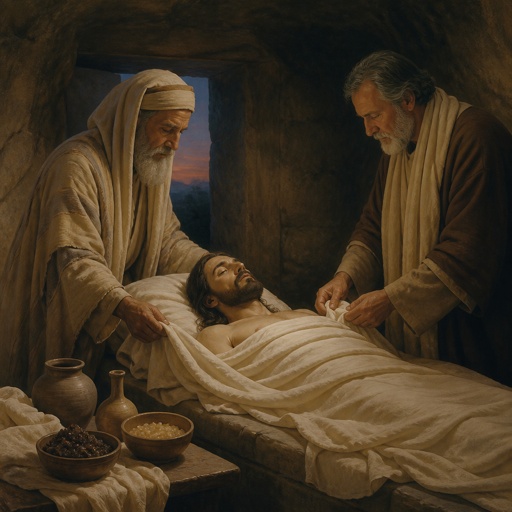
"And there came also Nicodemus, which at the first came to Jesus by night, and brought a mixture of myrrh and aloes, about an hundred pound weight. Then took they the body of Jesus, and wound it in linen clothes with the spices, as the manner of the Jews is to bury." - John 19:39-40
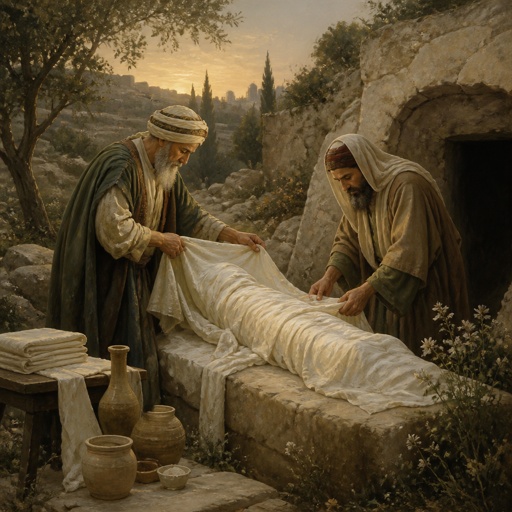
"And Nicodemus, who at first came to Jesus by night, also came, bringing a mixture of myrrh and aloes, about a hundred pounds. Then they took the body of Jesus, and bound it in strips of linen with the spices, as the custom of the Jews is to bury. Now in the place where He was crucified there was a garden, and in the garden a new tomb in which no one had yet been laid. So there they laid Jesus, because of the Jews’ Preparation Day, for the tomb was nearby." - John 19:39-42

John 7:37-39

John 7:37-39

John 12:39 - "Therefore they could not believe, because that Esaias said again,"

John 10:39 - "Therefore they sought again to take him: but he escaped out of their hand,"

Joshua 19:39 - "This is the inheritance of the tribe of the children of Naphtali according to their families, the cities and their villages."

John 5:39 - "¶ Search the scriptures; for in them ye think ye have eternal life: and they are they which testify of me."

Job 39:19 - "Hast thou given the horse strength? hast thou clothed his neck with thunder?"

Job 39:19-25 – "Do you give the horse its strength or clothe its neck with a flowing mane?"

Acts 19:39 - "But if ye enquire any thing concerning other matters, it shall be determined in a lawful assembly."

Luke 19:39 - "And some of the Pharisees from among the multitude said unto him, Master, rebuke thy disciples."

"Therefore they could not believe, because that Esaias said again," - John 12:39

John 4:39 - "¶ And many of the Samaritans of that city believed on him for the saying of the woman, which testified, He told me all that ever I did."

Job 39:19 KJV (19) Hast thou given the horse strength? hast thou clothed his neck with thunder?

Exodus 39:19 - "And they made two rings of gold, and put them on the two ends of the breastplate, upon the border of it, which was on the side of the ephod inward."

John 9:39 - "¶ And Jesus said, For judgment I am come into this world, that they which see not might see; and that they which see might be made blind."

John 7:39 - "(But this spake he of the Spirit, which they that believe on him should receive: for the Holy Ghost was not yet given; because that Jesus was not yet glorified.)"

John 1:39 - "He saith unto them, Come and see. They came and saw where he dwelt, and abode with him that day: for it was about the tenth hour."

John 19:38

John 19:1

John 19:19 - "¶ And Pilate wrote a title, and put it on the cross. And the writing was, JESUS OF NAZARETH THE KING OF THE JEWS."

John 17.6-19

John 18:39 - "But ye have a custom, that I should release unto you one at the passover: will ye therefore that I release unto you the King of the Jews?"

John 8:39 - "They answered and said unto him, Abraham is our father. Jesus saith unto them, If ye were Abraham's children, ye would do the works of Abraham."

John 19:1-3