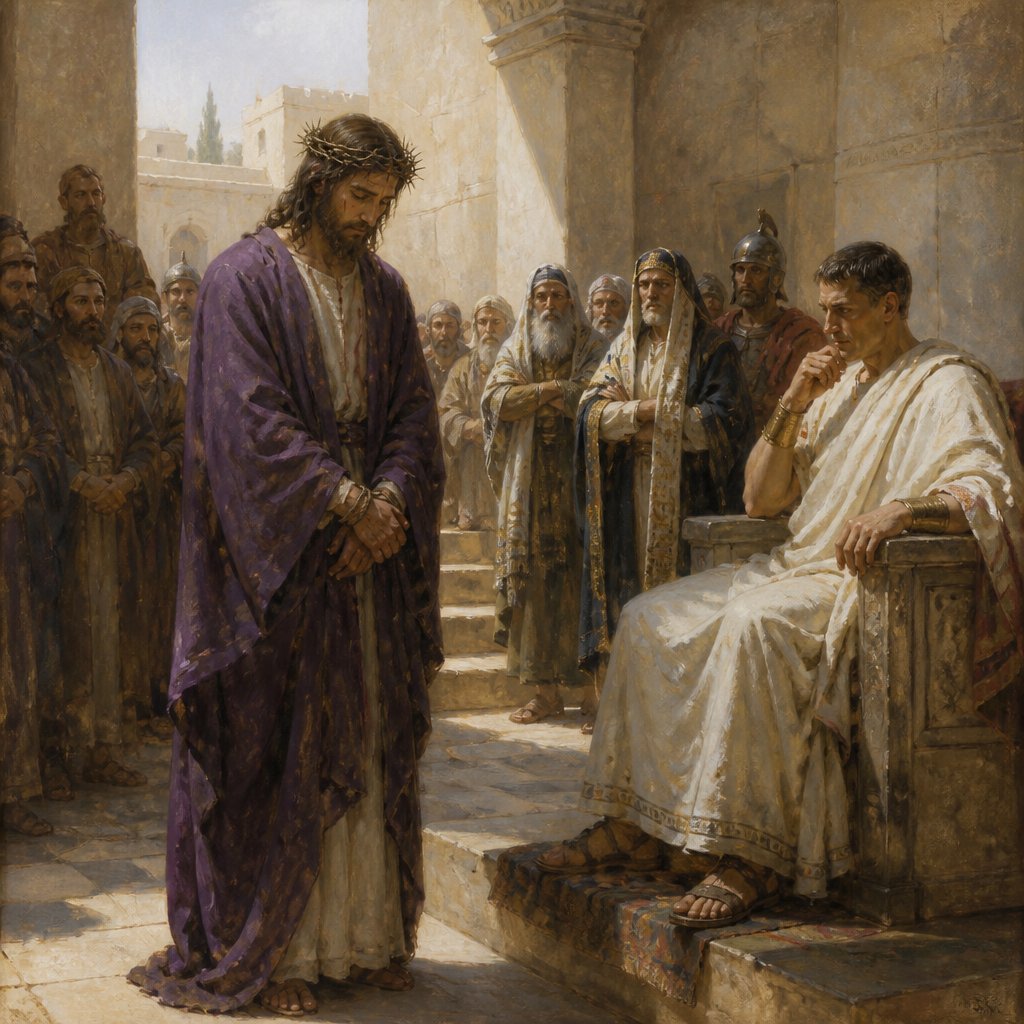
John 19:1-16 from the King James Version of the Bible is a passage that narrates the events leading up to the crucifixion of Jesus Christ. This passage is a pivotal moment in the New Testament, as it depicts the ultimate sacrifice that Jesus made for humanity. The verses are rich with symbolism and themes that are integral to Christian theology, and provide insight into the nature of Jesus as both human and divine.
The passage begins with Jesus being handed over by Pontius Pilate to be crucified. This act represents the culmination of the conflict between Jesus and the religious and political authorities of the time, as well as the fulfillment of the prophecy of his impending death. Pilate, the Roman governor, symbolizes the secular power that ultimately carries out the crucifixion, while the Jewish leaders who hand Jesus over represent the religious opposition to his teachings and claims.
One of the central themes in this passage is the sovereignty of God. Despite the actions of Pilate and the Jewish leaders, it is ultimately God's plan that is being fulfilled through the crucifixion of Jesus. This theme highlights the idea that even in the face of human evil and injustice, God's will and purpose will ultimately prevail. It also emphasizes the idea that Jesus willingly laid down his life as part of God's redemptive plan for humanity.
Another theme present in this passage is the suffering and sacrifice of Jesus. The physical and emotional torment that Jesus endures during his trial and crucifixion is depicted in vivid detail. This suffering is deeply symbolic and holds profound theological significance. In Christian theology, Jesus' suffering and death are understood as a necessary and redemptive act, through which humanity is offered forgiveness and salvation. The brutality of the crucifixion serves as a powerful reminder of the depth of God's love for humanity, and the extent to which Jesus was willing to go in order to bring about reconciliation between God and humanity.
The passage also highlights the dual nature of Jesus as both fully human and fully divine. On the one hand, Jesus experiences the very real and intense pain of physical torture and emotional anguish. On the other hand, he also demonstrates a supernatural calm and composure in the face of his accusers and tormentors. This duality of Jesus' nature is a central tenet of Christian belief and is essential to understanding the significance of his sacrifice on the cross.
In addition to these themes, the passage also contains important symbolism. The crown of thorns placed on Jesus' head represents the mockery and derision he endured as the "King of the Jews." This symbol serves as a powerful reminder of the contrast between the earthly perception of Jesus' kingship and the true nature of his divine sovereignty. The purple robe that is put on Jesus is another symbol of the mockery and humiliation he endured, as purple was traditionally associated with royalty.
Overall, John 19:1-16 is a powerful and poignant passage that encapsulates the central themes and theological truths of the Christian faith. It provides a deep and profound insight into the nature of Jesus' sacrifice and the redemptive significance of his death on the cross. The passage serves as a reminder of the love and mercy of God, and the transformative power of Jesus' resurrection. It is a testament to the enduring relevance and significance of the crucifixion as a central event in Christian theology, and a source of hope and inspiration for believers.
Get our apps


Artwork for John 19:1-16

John 19:1-16 - "Then Pilate took Jesus and had him flogged. The soldiers twisted together a crown of thorns and put it on his head. They clothed him in a purple robe and went up to him again and again, saying, “Hail, king of the Jews!” And they slapped him in the face. Once more Pilate came out and said to the Jews gathered there, “Look, I am bringing him out to you to let you know that I find no basis for a charge against him.” When Jesus came out wearing the crown of thorns and the purple robe, Pilate said to them, “Here is the man!” As soon as the chief priests and their officials saw him, they shouted, “Crucify! Crucify!” But Pilate answered, “You take him and crucify him. As for me, I find no basis for a charge against him.” The Jewish leaders insisted, “We have a law, and according to that law he must die, because he claimed to be the Son of God.” When Pilate heard this, he was even more afraid, and he went back inside the palace. “Where do you come from?” he asked Jesus, but Jesus gave him no answer. “Do you refuse to speak to me?” Pilate said. “Don’t you realize I have power either to free you or to crucify you?” Jesus answered, “You would have no power over me if it were not given to you from above. Therefore the one who handed me over to you is guilty of a greater sin.” From then on, Pilate tried to set Jesus free, but the Jewish leaders kept shouting, “If you let this man go, you are no friend of Caesar. Anyone who claims to be a king opposes Caesar.” When Pilate heard this, he brought Jesus out and sat down on the judge’s seat at a place known as the Stone Pavement (which in Aramaic is Gabbatha). It was the day of Preparation of the Passover; it was about noon. “Here is your king,” Pilate said to the Jews. But they shouted, “Take him away! Take him away! Crucify him!” “Shall I crucify your king?” Pilate asked. “We have no king but Caesar,” the chief priests answered. Finally Pilate handed him over to them to be crucified."
"Then Pilate took Jesus and had him flogged. The soldiers twisted together a crown of thorns and put it on his head. They clothed him in a purple robe and went up to him again and again, saying, “Hail, king of the Jews!” And they slapped him in the face. Once more Pilate came out and said to the Jews gathered there, “Look, I am bringing him out to you to let you know that I find no basis for a charge against him.” When Jesus came out wearing the crown of thorns and the purple robe, Pilate said to them, “Here is the man!” As soon as the chief priests and their officials saw him, they shouted, “Crucify! Crucify!” But Pilate answered, “You take him and crucify him. As for me, I find no basis for a charge against him.” The Jewish leaders insisted, “We have a law, and according to that law he must die, because he claimed to be the Son of God.” When Pilate heard this, he was even more afraid, and he went back inside the palace. “Where do you come from?” he asked Jesus, but Jesus gave him no answer. “Do you refuse to speak to me?” Pilate said. “Don’t you realize I have power either to free you or to crucify you?” Jesus answered, “You would have no power over me if it were not given to you from above. Therefore the one who handed me over to you is guilty of a greater sin.” From then on, Pilate tried to set Jesus free, but the Jewish leaders kept shouting, “If you let this man go, you are no friend of Caesar. Anyone who claims to be a king opposes Caesar.” When Pilate heard this, he brought Jesus out and sat down on the judge’s seat at a place known as the Stone Pavement (which in Aramaic is Gabbatha). It was the day of Preparation of the Passover; it was about noon. “Here is your king,” Pilate said to the Jews. But they shouted, “Take him away! Take him away! Crucify him!” “Shall I crucify your king?” Pilate asked. “We have no king but Caesar,” the chief priests answered. Finally Pilate handed him over to them to be crucified." - John 19:1-16

John 19:1

John 19:1-3

John 19:1 - "Then Pilate therefore took Jesus, and scourged him."

"Then Pilate therefore took Jesus, and scourged him." - John 19:1

John 19:16 - "Then delivered he him therefore unto them to be crucified. And they took Jesus, and led him away."

John 14:16

John 3:16

John 3:16

John 3:16

John 3:16

John 3-16

John 3:16

John 3:16

John 1:19 - "¶ And this is the record of John, when the Jews sent priests and Levites from Jerusalem to ask him, Who art thou?"

Exodus 19:16-20

1 John 4:19 - "We love him, because he first loved us."

1 John 5:19 - "And we know that we are of God, and the whole world lieth in wickedness."

John 1:16 - "And of his fulness have all we received, and grace for grace."

1 Chronicles 16:19 - "When ye were but few, even a few, and strangers in it."

John 16:1 - "These things have I spoken unto you, that ye should not be offended."

1 John 3:19 - "And hereby we know that we are of the truth, and shall assure our hearts before him."

1 John 2:16 - "For all that is in the world, the lust of the flesh, and the lust of the eyes, and the pride of life, is not of the Father, but is of the world."
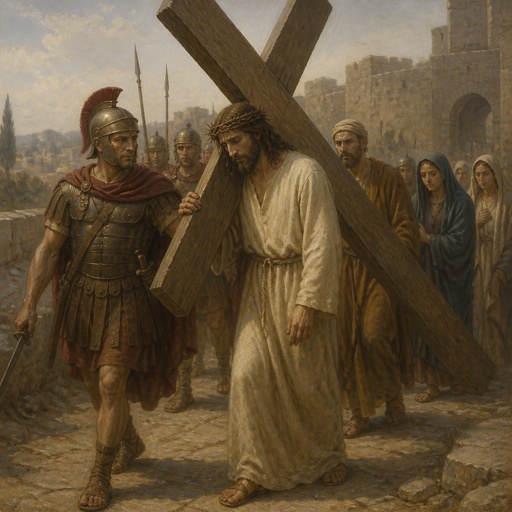
"Then delivered he him therefore unto them to be crucified. And they took Jesus, and led him away." - John 19:16

1 Corinthians 16:19 - "The churches of Asia salute you. Aquila and Priscilla salute you much in the Lord, with the church that is in their house."

1 Samuel 19:16 - "And when the messengers were come in, behold, there was an image in the bed, with a pillow of goats' hair for his bolster."

John 16:19 - "Now Jesus knew that they were desirous to ask him, and said unto them, Do ye enquire among yourselves of that I said, A little while, and ye shall not see me: and again, a little while, and ye shall see me?"

1 John 4;19

John 16:33