What does John 19:6 mean?
“When the chief priests therefore and officers saw him, they cried out, saying, Crucify him, crucify him. Pilate saith unto them, Take ye him, and crucify him: for I find no fault in him.” — John 19:6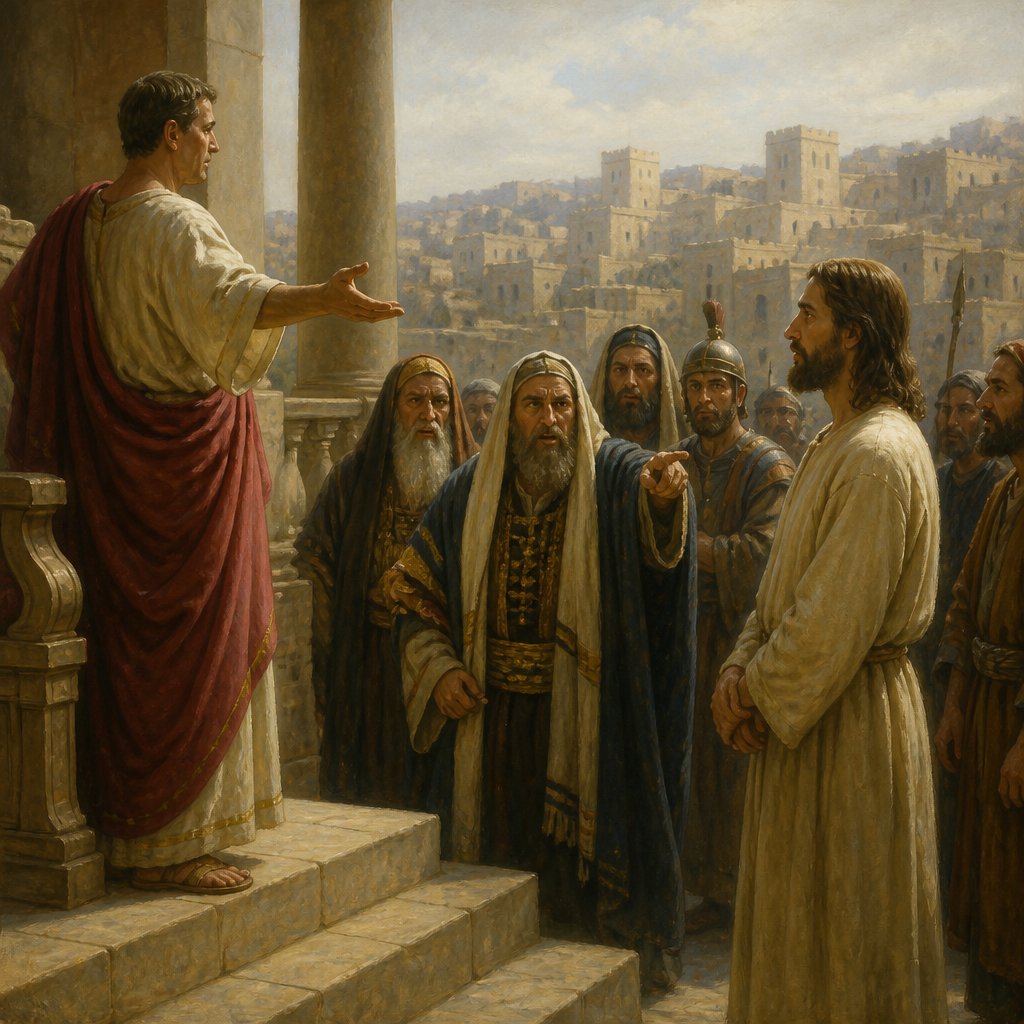
John 19:6 from the King James Version of the Bible reads, "When the chief priests and officers saw him, they cried out, saying, Crucify him, crucify him. Pilate saith unto them, Take ye him, and crucify him: for I find no fault in him."
This verse is a significant moment in the crucifixion of Jesus Christ and has deep implications for Christian theology and belief. The context of this verse is crucial to understanding its meaning and impact. At this point in the narrative, Jesus has been arrested, put on trial, and sentenced to death by crucifixion. Pilate, the Roman governor, is presiding over the trial, and the Jewish leaders are adamant in their desire for Jesus to be crucified.
The chief priests and officers, representing the Jewish religious authorities, are the ones who cry out for Jesus to be crucified. Their response is one of rejection and condemnation, illustrating the extent of their opposition to Jesus and his teachings. Throughout the Gospels, Jesus has clashed with the religious leaders, challenging their traditions and interpretations of the law. The fact that they are the ones calling for his crucifixion emphasizes the deep divide between Jesus and the religious establishment of his time.
Pilate's response in this verse is significant as well. He declares that he finds no fault in Jesus, indicating that he does not see any reason for Jesus to be executed. This declaration serves to highlight the innocence of Jesus and the unjust nature of his impending crucifixion. Pilate's reluctance to condemn Jesus is a recurring theme in the crucifixion narrative and reflects the political tensions of the time.
One of the central themes of this verse is the injustice of Jesus' death. Throughout Christian theology, the crucifixion is understood as a pivotal moment in God's plan for salvation, but it is also recognized as a grave injustice. Jesus, who is without fault, is condemned to die a criminal's death at the hands of the political and religious authorities of his time. This injustice serves as a powerful symbol of the brokenness of the world and the need for redemption.
The rejection of Jesus by the religious leaders and the Roman governor also carries symbolic significance. It represents the broader rejection of Jesus by the world he came to save. In the Gospel of John, Jesus is described as the "Word" who "was with God, and the Word was God" (John 1:1). Despite his divine nature and the signs and miracles he performed, Jesus is ultimately rejected and condemned by the very people he came to save.
Furthermore, this verse raises questions about the nature of authority and power. The religious leaders and the Roman governor wield significant authority, yet their actions are unjust and ultimately futile in the face of God's ultimate plan. The contrast between their earthly power and the divine purpose of Jesus' sacrifice underscores the theme of God's sovereignty and the limitations of human authority.
In Christian theology, the crucifixion is ultimately understood as a redemptive act. Jesus' death on the cross is believed to atone for the sins of humanity and reconcile humanity to God. This verse from John 19 is a crucial part of the larger narrative of Jesus' sacrifice, emphasizing the innocence of Jesus and the unjust circumstances of his crucifixion.
In conclusion, John 19:6 from the King James Version of the Bible is a pivotal moment in the crucifixion narrative, emphasizing the rejection and condemnation of Jesus by the religious and political authorities of his time. It highlights the injustice of Jesus' death, the rejection of Jesus by the world he came to save, and the limited nature of human authority in the face of God's ultimate plan. This verse serves as a powerful reminder of the theological and symbolic significance of the crucifixion in Christian belief and underscores the profound implications of Jesus' sacrifice for the redemption of humanity.
Get our apps


Artwork for John 19:6

John 19:6 - "When the chief priests therefore and officers saw him, they cried out, saying, Crucify him, crucify him. Pilate saith unto them, Take ye him, and crucify him: for I find no fault in him."
"When the chief priests therefore and officers saw him, they cried out, saying, Crucify him, crucify him. Pilate saith unto them, Take ye him, and crucify him: for I find no fault in him." - John 19:6
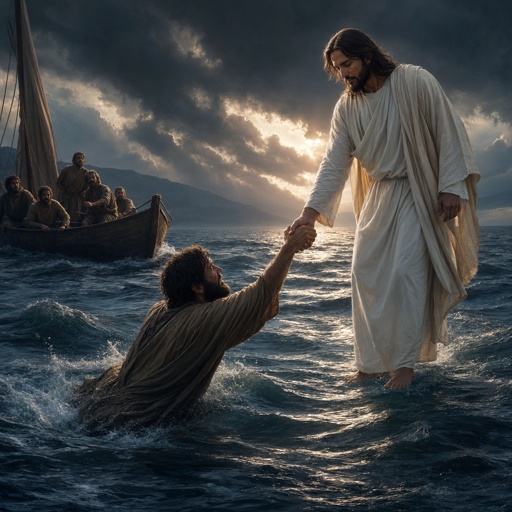
"So when they had rowed about five and twenty or thirty furlongs, they see Jesus walking on the sea, and drawing nigh unto the ship: and they were afraid." - John 6:19

John 6:19 - "So when they had rowed about five and twenty or thirty furlongs, they see Jesus walking on the sea, and drawing nigh unto the ship: and they were afraid."

John 19:38

John 19:1

John 19:19 - "¶ And Pilate wrote a title, and put it on the cross. And the writing was, JESUS OF NAZARETH THE KING OF THE JEWS."

John 17.6-19

John 19:1-3

John 19:25-27
John 1:6 - "¶ There was a man sent from God, whose name was John."

John 6:63

John 6:63

John 1:19 - "¶ And this is the record of John, when the Jews sent priests and Levites from Jerusalem to ask him, Who art thou?"

John 19:25-27

John 19:26-27

John 21:15-19

John 6:63

John 6:63

John 10:19 - "¶ There was a division therefore again among the Jews for these sayings."
John 6:12

John 6:40

John 21:6

John 14:6

John 19:1 - "Then Pilate therefore took Jesus, and scourged him."

John 21:6

John 6:16

John 6:37

John 21:6

John 6:40