What does John 20:14 mean?
“And when she had thus said, she turned herself back, and saw Jesus standing, and knew not that it was Jesus.” — John 20:14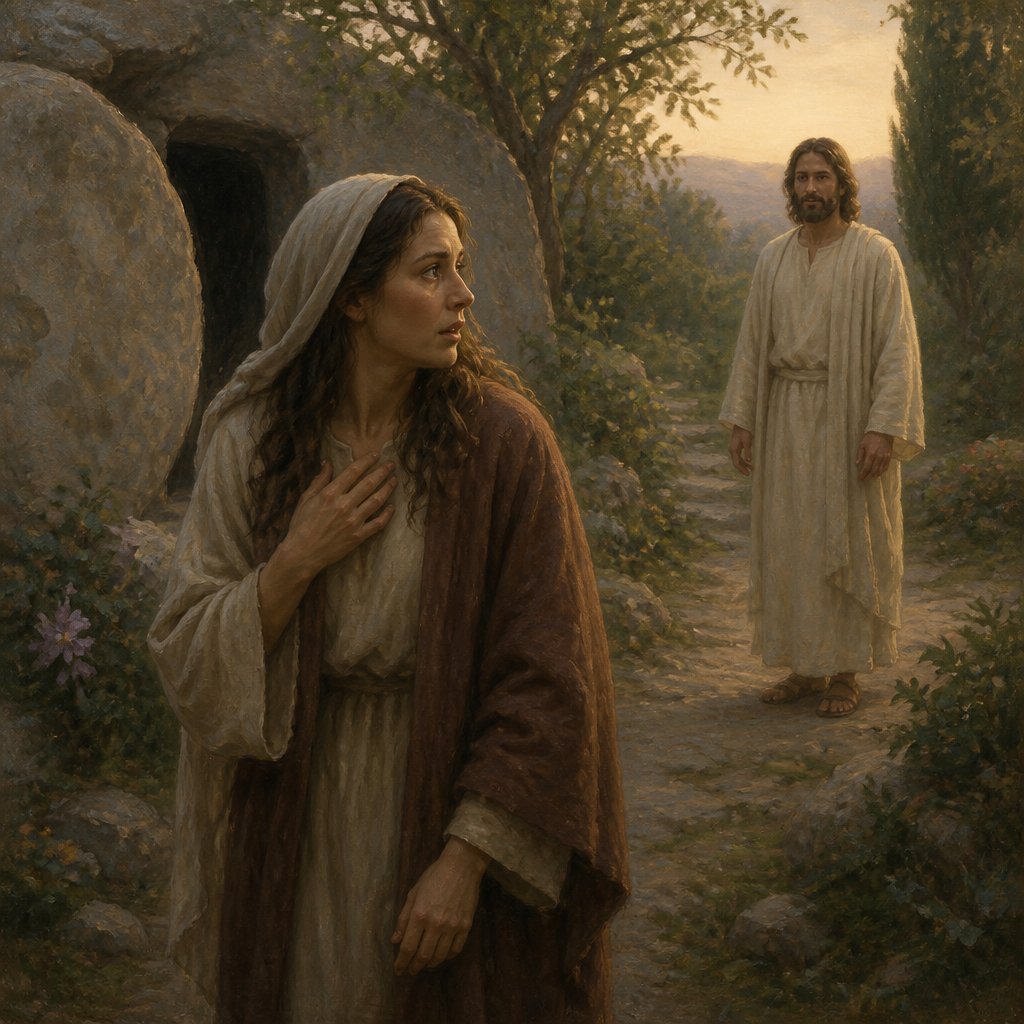
The verse John 20:14 from the King James Version of the Bible reads, "And when she had thus said, she turned herself back, and saw Jesus standing, and knew not that it was Jesus."
This particular verse is part of the larger story of Jesus' resurrection, and it emphasizes the profound nature of Jesus' appearance to Mary Magdalene. It is an important moment in the narrative of Jesus' resurrection, and it carries with it themes of recognition, faith, and the profound impact of encountering the divine.
In the context of the larger story, Mary Magdalene had gone to Jesus' tomb on the first day of the week, only to find that the stone had been rolled away and the tomb was empty. Distraught and concerned about what had happened to Jesus' body, she encounters Jesus, who she initially mistakes for the gardener. It is at this moment that she does not recognize him, as indicated in the verse.
The theme of recognition is central to this verse, as it underscores the idea of perceiving the divine in unexpected ways. Mary Magdalene, in her grief and confusion, could not initially recognize Jesus, even though he was standing right in front of her. This lack of recognition speaks to the idea that encountering the divine often requires a shift in perception and an openness to the unexpected. It also speaks to the human tendency to overlook or dismiss the divine when it appears in ways that do not align with our expectations.
The theme of faith is also present in this verse, as it highlights the importance of belief and trust in recognizing the divine. Despite initially mistaking Jesus for the gardener, Mary Magdalene eventually comes to realize who he is, and her faith in Jesus is affirmed. This speaks to the idea that recognizing the divine often requires a deep-seated belief in its existence, as well as a willingness to be open to the unexpected and the miraculous.
Furthermore, the encounter between Jesus and Mary Magdalene is symbolic of the profound impact of encountering the divine. For Mary Magdalene, this moment was deeply transformative and life-changing, as it solidified her faith in Jesus and his resurrection. This encounter represents a significant turning point in the narrative of Jesus' resurrection and the establishment of the early Christian faith.
In addition to these thematic considerations, there is also a symbolic element to the verse. The fact that Mary Magdalene initially mistakes Jesus for the gardener can be seen as a symbolic representation of the idea that the divine often appears in unexpected or mundane forms. This serves as a reminder to remain open to the possibility of encountering the divine in everyday life, and to not dismiss or overlook the potential for transcendent experiences in unlikely places.
In conclusion, John 20:14 from the King James Version of the Bible is a rich and multi-layered verse that carries with it themes of recognition, faith, and the profound impact of encountering the divine. It is a pivotal moment in the narrative of Jesus' resurrection, and it serves as a reminder of the transformative power of faith and the need to remain open to the unexpected and the miraculous in our lives.
Get our apps


Artwork for John 20:14

John 20:14

John 20:14 - "And when she had thus said, she turned herself back, and saw Jesus standing, and knew not that it was Jesus."
"And when she had thus said, she turned herself back, and saw Jesus standing, and knew not that it was Jesus." - John 20:14

John 14:20 - "At that day ye shall know that I am in my Father, and ye in me, and I in you."
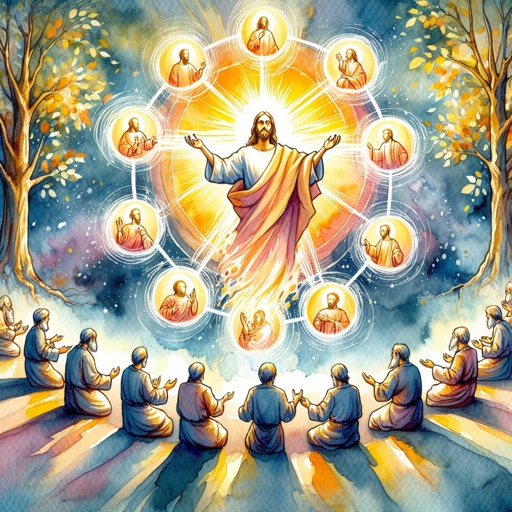
John 14:20 At that day you will know that I am in My Father, and you in Me, and I in you.
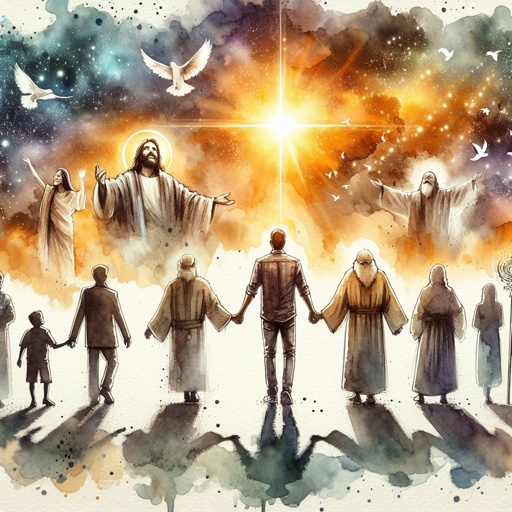
John 14:20 At that day you will know that I am in My Father, and you in Me, and I in you.
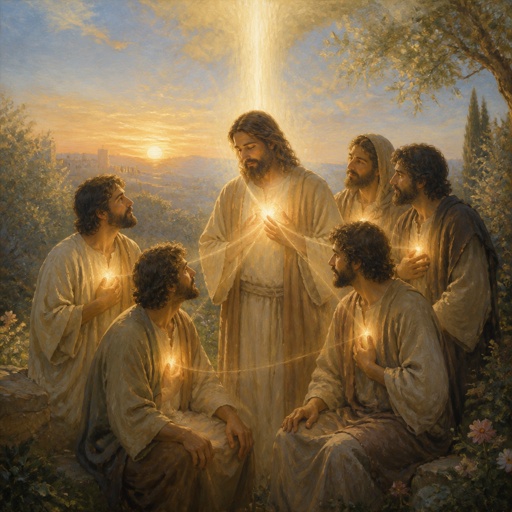
"At that day ye shall know that I am in my Father, and ye in me, and I in you." - John 14:20

John 20:21

John 14

John 14:30

John 20:27

John 20:27

John 20:11-12

John 20:11-13

John 3:14

John 14:16

John 14:6

John 20:30-31

John 14:28

John 14:14 - "If ye shall ask any thing in my name, I will do it."
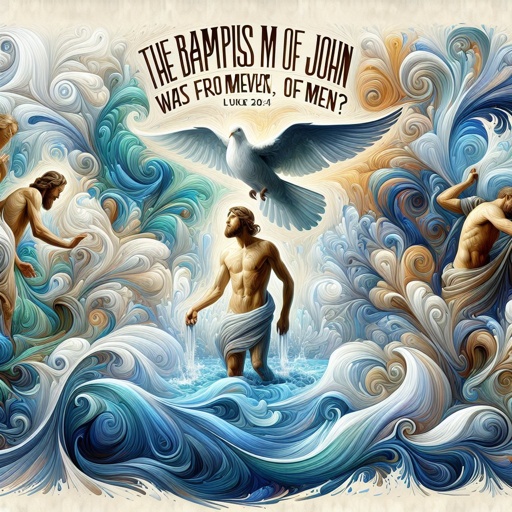
Luke 20:4 - "The baptism of John, was it from heaven, or of men?"

Exodus 20:14

John 14:15-21

John 14:23-29

Genesis 20-14

John 6:20 - "But he saith unto them, It is I; be not afraid."

John 14:23-29

1 John 2:14

John 14:23-29

1 John 2:14