What does John 21:23 mean?
“Then went this saying abroad among the brethren, that that disciple should not die: yet Jesus said not unto him, He shall not die; but, If I will that he tarry till I come, what is that to thee?” — John 21:23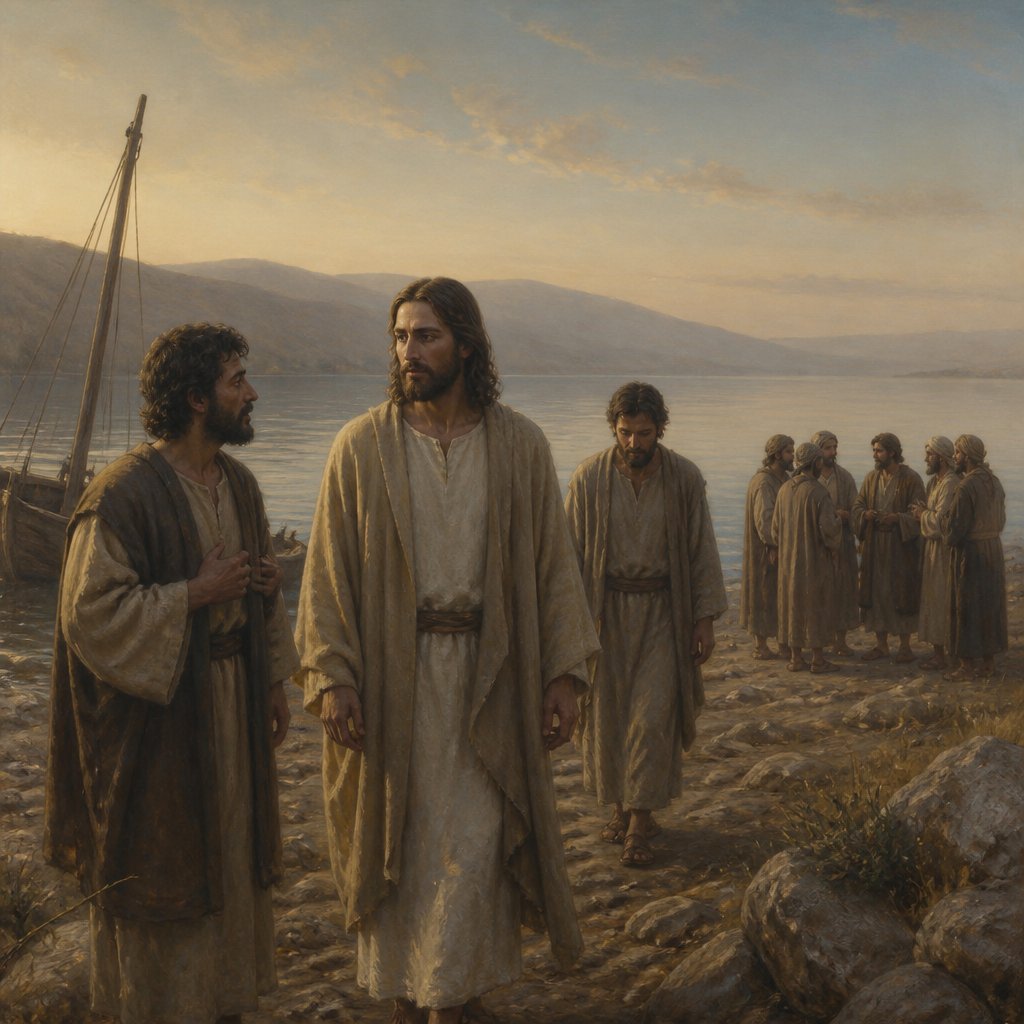
John 21:23 (KJV) says, "Then went this saying abroad among the brethren, that that disciple should not die: yet Jesus said not unto him, He shall not die; but, If I will that he tarry till I come, what is that to thee?"
This verse is found in the final chapter of the Gospel of John, which is the fourth book of the New Testament. It is a verse that has puzzled and intrigued many readers over the centuries due to its enigmatic nature and the potential theological implications it holds. In order to fully understand its meaning, it is important to consider the context in which it appears, as well as the broader themes and symbolism present in the Gospel of John.
The Gospel of John is unique among the four canonical Gospels in its portrayal of Jesus and his teachings. The author of the Gospel, traditionally attributed to the apostle John, presents Jesus as the divine Logos, or Word, who became flesh and dwelt among humanity. Throughout the Gospel, there is an emphasis on the dual nature of Jesus as both fully human and fully divine, as well as his role as the Savior of the world. Additionally, the Gospel of John contains a number of "I am" sayings in which Jesus identifies himself with various metaphors, such as "I am the bread of life" and "I am the light of the world."
In the immediate context of John 21:23, the verse is part of an exchange between Jesus and the apostle Peter. In the preceding verses, Jesus has reinstated Peter as a leader of the disciples and has given him the charge to "feed my sheep" (John 21:17). Peter then looks at the disciple whom Jesus loved (traditionally interpreted as John the apostle) and asks Jesus, "Lord, and what shall this man do?" (John 21:21, KJV). Jesus responds by saying, "If I will that he tarry till I come, what is that to thee? follow thou me" (John 21:22, KJV). The verse in question, John 21:23, explains that a misunderstanding arose among the disciples about the meaning of Jesus' words, leading to a rumor that the beloved disciple would not die.
One possible interpretation of this verse is that it serves as a corrective to the rumor that the beloved disciple would not die. Jesus clarifies that he did not actually say the beloved disciple would not die, but rather that it was not their concern whether or not he would live until Jesus' return. This interpretation underscores the theme of trust and obedience to Christ, as Peter is reminded to focus on his own calling rather than being preoccupied with the fate of others.
Symbolically, this verse can be seen as emphasizing the uniqueness of each disciple's journey and calling. Just as Peter is given his own specific charge by Jesus, the beloved disciple is given his own destiny that is not necessarily tied to the others. This speaks to the idea that each individual has a distinct purpose and role in the larger plan of God, and that comparing or speculating about others' paths is ultimately fruitless.
In a broader theological context, this verse can also be seen as addressing eschatological concerns about the return of Christ and the fate of the disciples. The phrase "till I come" has led some scholars to interpret it as referring to the second coming of Christ, leading to speculation about the potential longevity of the beloved disciple's life. However, Jesus' statement can also be interpreted as a way of redirecting the disciples' attention away from speculations about the future and towards the present task of following him faithfully.
In conclusion, John 21:23 is a complex and multi-layered verse that invites careful consideration of its context, themes, and potential implications. It underscores the importance of trust and obedience to Jesus, the uniqueness of each individual's calling, and the redirection of focus away from speculative concerns about the future. It also serves as a reminder of the enigmatic and thought-provoking nature of the Gospel of John, which continues to inspire deep reflection and theological inquiry.
Get our apps


Artwork for John 21:23
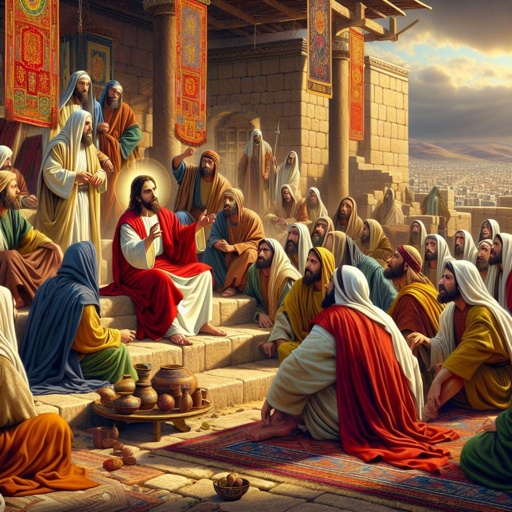
John 21:23 - "Then went this saying abroad among the brethren, that that disciple should not die: yet Jesus said not unto him, He shall not die; but, If I will that he tarry till I come, what is that to thee?"

"Then went this saying abroad among the brethren, that that disciple should not die: yet Jesus said not unto him, He shall not die; but, If I will that he tarry till I come, what is that to thee?" - John 21:23

John 20:21

john 21:9

John 21:6

Leviticus 23:21

Leviticus 23:21

John 21:21 - "Peter seeing him saith to Jesus, Lord, and what shall this man do?"

John 3:23 - "¶ And John also was baptizing in Aenon near to Salim, because there was much water there: and they came, and were baptized."

John 14:23-29

John 21:6

John 21:17

John 21:25

John 21:6

John 21:6

Leviticus 23:21

Leviticus 23:21

Genesis 21-23

Leviticus 23:21

Leviticus 23:21

John 14:23-29

John 14:15-21

John 14:23-29
Matthew 7:21-23

Acts 1:21-23

John 10:23 - "And Jesus walked in the temple in Solomon's porch."

John 21:15-19

John 2:21 - "But he spake of the temple of his body."

John 15:23 - "He that hateth me hateth my Father also."

Luke 23:21 - "But they cried, saying, Crucify him, crucify him."