What does John 4:26 mean?
“Jesus saith unto her, I that speak unto thee am he.” — John 4:26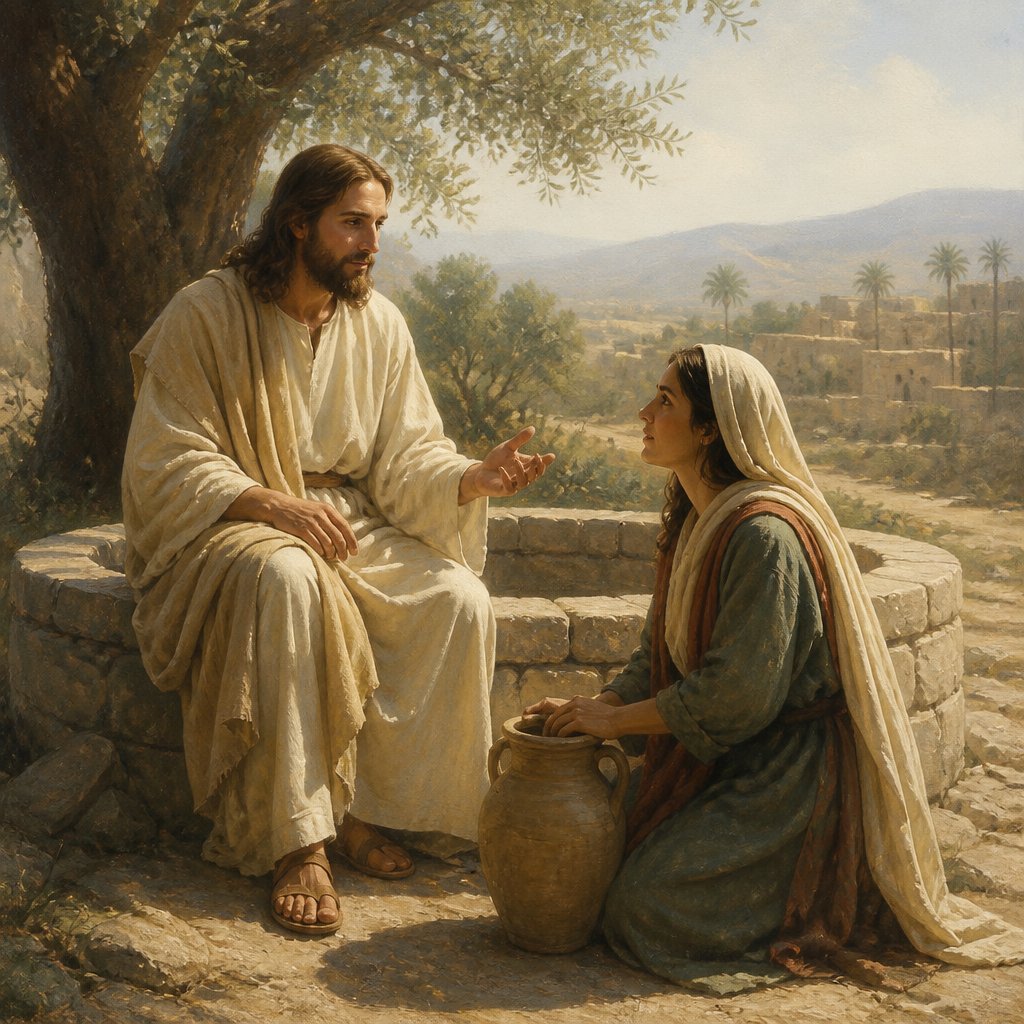
John 4:26 (KJV) - "Jesus saith unto her, I that speak unto thee am he."
This verse is part of a larger passage in the book of John that details the encounter between Jesus and the Samaritan woman at the well. In this particular verse, Jesus has just revealed to the woman that he is the Messiah, the long-awaited Savior that the Jewish people had been anticipating. The depth and significance of this statement cannot be overstated, as it represents a pivotal moment in the life and ministry of Jesus Christ.
The context of this verse is crucial to understanding its full meaning. At the beginning of John 4, Jesus and his disciples are traveling through Samaria when they come to a town called Sychar. Jesus, weary from the journey, sits down by a well while his disciples go into the town to buy food. It is at this well that the Samaritan woman approaches, and Jesus engages her in conversation. This encounter is already significant in itself, as it breaks several social and cultural norms of the time. Jesus, a Jewish man, is speaking to a Samaritan woman, something that would have been highly unusual in that society.
As their conversation progresses, Jesus demonstrates his knowledge of the woman's personal life, revealing details about her past and present situation. In doing so, he shifts her focus from physical water to spiritual fulfillment, offering her "living water" - a metaphor for the eternal life and spiritual nourishment that he alone can provide. The woman is intrigued and recognizes Jesus as a prophet, but she is still grappling with the idea of who he truly is.
It is in the midst of this dialogue that Jesus utters the profound words in John 4:26. In a simple yet powerful declaration, he reveals his true identity to the woman. "I that speak unto thee am he." These words affirm that Jesus is indeed the long-anticipated Messiah, the fulfillment of Old Testament prophecies and the hope of the world. This declaration carries immense weight and significance, as it marks a pivotal moment of revelation and understanding.
One of the key themes of this verse is the concept of Jesus' identity and mission. Throughout the gospels, Jesus consistently presents himself as the Son of God, the Savior of humanity, and the fulfillment of God's promises to His people. In John 4:26, Jesus boldly proclaims his true nature, inviting the woman to recognize and accept him as the Messiah. This theme of identity is central to the Christian faith, as it establishes Jesus as the cornerstone of belief and salvation.
Another important theme present in this verse is the universal offer of salvation. In speaking to the Samaritan woman, Jesus demonstrates his willingness to engage with those who are outsiders or considered unclean by traditional religious standards. His offer of living water and his revelation of his true identity are extended to all people, regardless of their ethnicity, gender, or social status. This inclusivity and universality of salvation is a recurring theme in the ministry of Jesus, and it underscores the transformative power of his message for all people.
The symbolism in John 4:26 is rich and multifaceted. The well itself serves as a symbol of physical and spiritual nourishment, representing the deep thirst and longing for fulfillment that all people experience. Jesus' offer of "living water" as a contrast to the physical water from the well symbolizes the eternal satisfaction and spiritual sustenance that he provides. Additionally, the encounter between Jesus and the Samaritan woman symbolizes the breaking down of barriers and the extension of grace to those who are marginalized or overlooked by society.
In conclusion, John 4:26 is a verse of profound significance within the larger narrative of the gospel of John. It encapsulates the themes of Jesus' identity and mission, the universal offer of salvation, and the transformative power of his message. The symbolism inherent in this verse adds layers of depth and meaning, reflecting the timeless truths and enduring relevance of Jesus' words. Ultimately, the declaration "I that speak unto thee am he" serves as a powerful affirmation of Jesus' identity as the Messiah and the source of living water for all who seek him.
Get our apps


Artwork for John 4:26

John 4:26 - "Jesus saith unto her, I that speak unto thee am he."
"Jesus saith unto her, I that speak unto thee am he." - John 4:26

John 15:26 NLT

John 19:26-27

John 1:26 - "John answered them, saying, I baptize with water: but there standeth one among you, whom ye know not;"

John 11:26 - "And whosoever liveth and believeth in me shall never die. Believest thou this?"

John 10:26 - "But ye believe not, because ye are not of my sheep, as I said unto you."

John 4:4 - "And he must needs go through Samaria."

John 3:26 - "And they came unto John, and said unto him, Rabbi, he that was with thee beyond Jordan, to whom thou barest witness, behold, the same baptizeth, and all men come to him."

1 John 2:26 - "These things have I written unto you concerning them that seduce you."

Matthew 21:26 - "But if we shall say, Of men; we fear the people; for all hold John as a prophet."

John 9:26 - "Then said they to him again, What did he to thee? how opened he thine eyes?"

John 5:26 - "For as the Father hath life in himself; so hath he given to the Son to have life in himself;"

John 4:16

John 3:4

John 4:16

John 4:16

John 4:16

John 4:16

Deuteronomy 26:4-10

Leviticus 26: 4-6

Deuteronomy 26:4-10
Leviticus 26: 4-6

Leviticus 26: 4-6

John 4:16

John 4:16

John 4:16

John 3:4

John 4:16

John 4:16