What does John 6:41 mean?
“The Jews then murmured at him, because he said, I am the bread which came down from heaven.” — John 6:41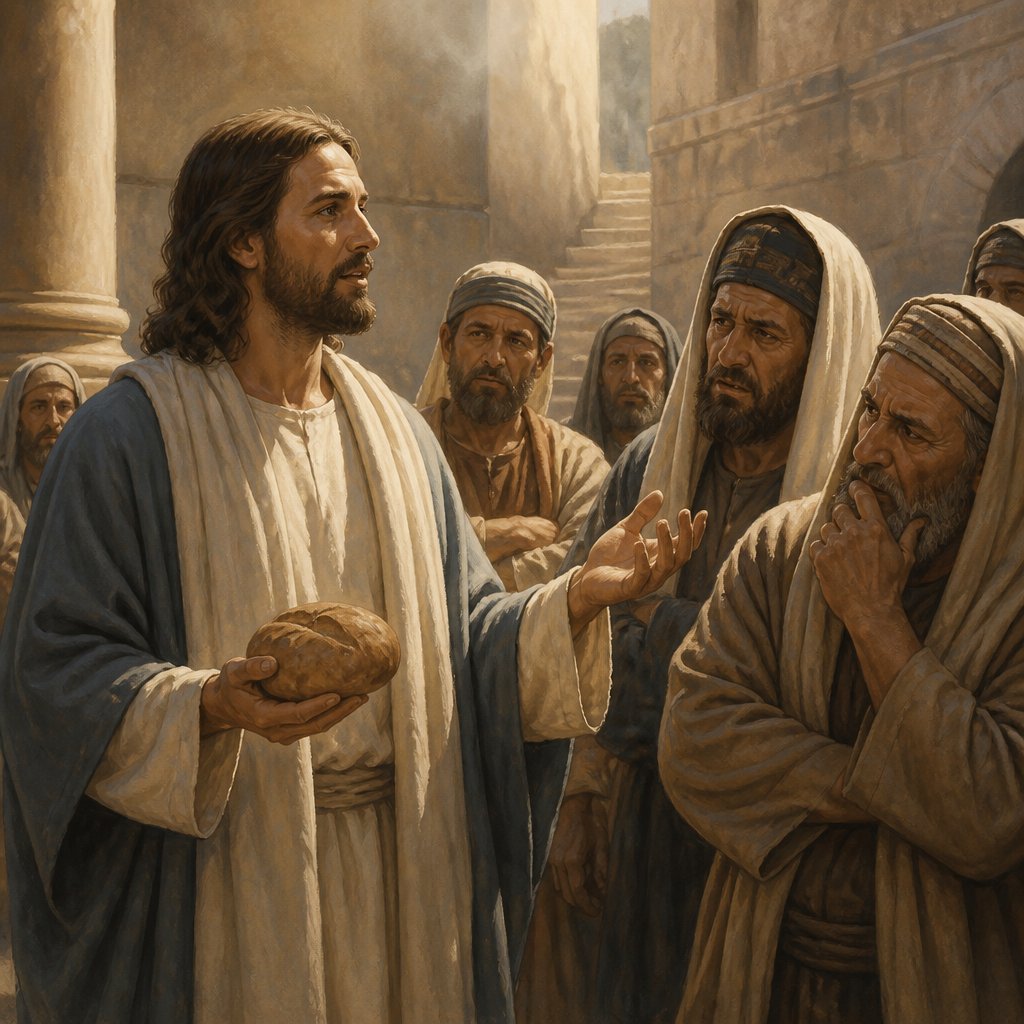
John 6:41 King James Version (KJV)
"The Jews then murmured at him, because he said, I am the bread which came down from heaven."
The Gospel of John is the fourth book of the New Testament and is attributed to John the Apostle. John 6:41 is part of a larger discourse in which Jesus reveals himself as the bread of life. This verse specifically focuses on the response of the Jews to his claim.
The theme of Jesus being the bread of life is a central and recurring theme throughout the Gospel of John. In the verses leading up to John 6:41, Jesus performs the miracle of the feeding of the five thousand by multiplying loaves of bread and fish. This miracle not only demonstrates his divine power but also foreshadows the ultimate provision of spiritual nourishment through faith in him.
John 6:41, in the context of the larger passage, captures the disbelief and resistance of the Jews to Jesus' claim of being the bread that came down from heaven. The Jews murmured against him, expressing their skepticism and lack of understanding. This reaction serves to highlight the contrast between their physical hunger for bread and their spiritual hunger for the true sustenance that only Jesus can provide.
The symbolism in this verse is rich and multifaceted. Bread is a basic and essential food item, representing sustenance and nourishment. In the Old Testament, manna was provided from heaven to sustain the Israelites during their journey in the wilderness. This served as a foreshadowing of the true bread from heaven that is Jesus Christ.
The claim of Jesus being the bread from heaven is a direct assertion of his divine nature and origin. It signifies his pre-existence and his role in providing spiritual nourishment and life. By identifying himself with this symbol, Jesus is communicating that he alone can satisfy the spiritual hunger and needs of humanity.
The reaction of the Jews in murmuring against Jesus reflects the tension and disbelief that often accompanies the revelation of spiritual truths. Throughout the Gospel of John, Jesus encounters resistance and misunderstanding from various groups, and this verse is no exception. The response of the Jews serves as a reminder of the inherent struggle in accepting and embracing divine truths.
Furthermore, this verse also addresses the concept of faith and understanding. The Jews' murmuring at Jesus reveals their lack of faith and their inability to comprehend the spiritual truth he presents. This challenges the readers to examine their own response to Jesus' claims and consider their own level of faith and understanding.
In conclusion, John 6:41 is a pivotal verse in the Gospel of John that captures the tension and resistance to Jesus' claim of being the bread of life. It emphasizes the symbolism of bread as representing spiritual nourishment and highlights the disbelief and lack of understanding exhibited by the Jews. Ultimately, this verse serves as a call to faith and reflection, urging readers to consider the implications of Jesus' identity and the sustenance he offers to those who believe in him.
Get our apps


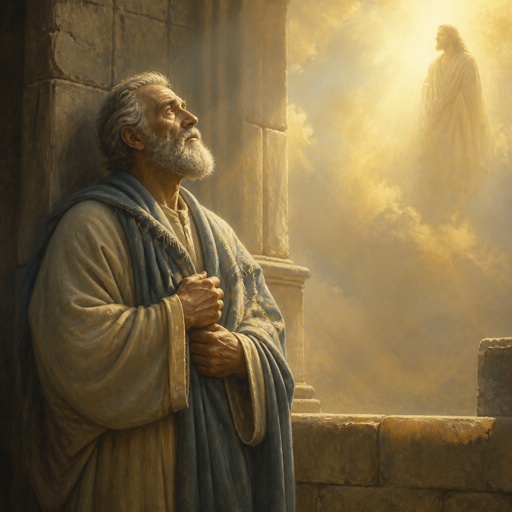
Artwork for John 6:41

John 6:41 - "The Jews then murmured at him, because he said, I am the bread which came down from heaven."
"The Jews then murmured at him, because he said, I am the bread which came down from heaven." - John 6:41

John 10:41 - "And many resorted unto him, and said, John did no miracle: but all things that John spake of this man were true."

John 9:1-41

John 5:41 - "I receive not honour from men."

John 4:41 - "And many more believed because of his own word;"

Mark 10:41 - "And when the ten heard it, they began to be much displeased with James and John."

John 7:41 - "Others said, This is the Christ. But some said, Shall Christ come out of Galilee?"

John 12:41 - "These things said Esaias, when he saw his glory, and spake of him."

"I receive not honour from men." - John 5:41

1 Chronicles 6:41 - "The son of Ethni, the son of Zerah, the son of Adaiah,"

John 19:41 - "Now in the place where he was crucified there was a garden; and in the garden a new sepulchre, wherein was never man yet laid."

"And many resorted unto him, and said, John did no miracle: but all things that John spake of this man were true." - John 10:41
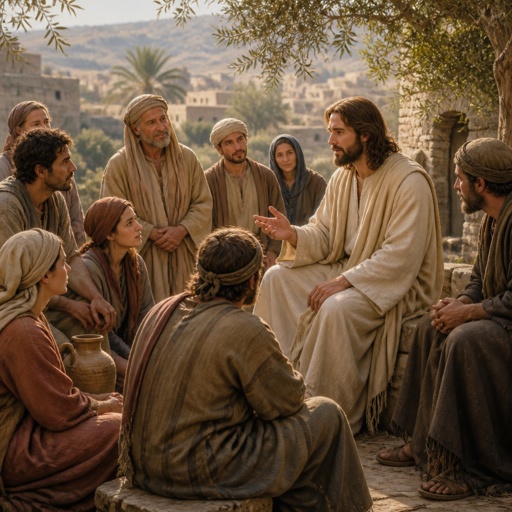
"And many more believed because of his own word;" - John 4:41

John 8:41 - "Ye do the deeds of your father. Then said they to him, We be not born of fornication; we have one Father, even God."

Genesis 41:6 - "And, behold, seven thin ears and blasted with the east wind sprung up after them."

Job 41:6 - "Shall the companions make a banquet of him? shall they part him among the merchants?"

Luke 6:41 - "And why beholdest thou the mote that is in thy brother's eye, but perceivest not the beam that is in thine own eye?"

"And when the ten heard it, they began to be much displeased with James and John." - Mark 10:41

John 1:41 - "He first findeth his own brother Simon, and saith unto him, We have found the Messias, which is, being interpreted, the Christ."

Isaiah 41:6 - "They helped every one his neighbour; and every one said to his brother, Be of good courage."
John 1:6 - "¶ There was a man sent from God, whose name was John."

John 6:63

John 6:63

John 9:41 - "Jesus said unto them, If ye were blind, ye should have no sin: but now ye say, We see; therefore your sin remaineth."

"Then they took away the stone from the place where the dead was laid. And Jesus lifted up his eyes, and said, Father, I thank thee that thou hast heard me." - John 11:41

John 6:63

John 6:63

John 11:41 - "Then they took away the stone from the place where the dead was laid. And Jesus lifted up his eyes, and said, Father, I thank thee that thou hast heard me."
"These things said Esaias, when he saw his glory, and spake of him." - John 12:41