What does John 7:26 mean?
“But, lo, he speaketh boldly, and they say nothing unto him. Do the rulers know indeed that this is the very Christ?” — John 7:26
John 7:26 (KJV): "But, lo, he speaketh boldly, and they say nothing unto him. Do the rulers know indeed that this is the very Christ?"
In this verse, we see a moment of tension and intrigue as the people witness Jesus speaking boldly and fearlessly, challenging the religious authorities of his time. The verse captures the curiosity and doubt of the crowd as they question whether the rulers truly recognize Jesus as the Christ, the promised Messiah.
The context of this verse is crucial to understanding its significance. In the preceding verses, Jesus is in Jerusalem during the Feast of Tabernacles, and he is teaching in the temple. The people are divided in their opinions about him, with some believing he is a prophet and others questioning his authority and origins. The religious leaders, particularly the Pharisees and chief priests, are seeking to arrest Jesus, but they are hesitant to take action because of the reaction from the crowd.
One of the themes highlighted in this verse is the contrast between Jesus' boldness and the silence of the rulers. Jesus is unafraid to speak the truth and challenge the religious establishment, while the authorities are seemingly paralyzed by indecision and fear. This dynamic sets the stage for the ongoing conflict between Jesus and the religious leaders, as well as the growing anticipation of his role as the Messiah.
The mention of the "rulers" in the verse also points to the political and religious power structures of the time. The term "rulers" refers to the Jewish authorities who held sway over the people, and their response or lack thereof to Jesus' boldness suggests a level of uncertainty and unease. This ambiguity serves to heighten the suspense and uncertainty surrounding Jesus' identity and mission.
The question posed in the verse, "Do the rulers know indeed that this is the very Christ?" reflects the skepticism and confusion of the crowd. They are grappling with the possibility that the religious leaders may have knowledge about Jesus that they are not sharing with the public. This inquiry serves as a catalyst for the ongoing debate about Jesus' true identity and the extent of the religious leaders' insight into the matter.
Symbolically, this verse represents the ongoing struggle between truth and authority. Jesus' boldness symbolizes the unwavering commitment to his divine purpose, even in the face of opposition and skepticism. The silence of the rulers symbolizes their reluctance to acknowledge Jesus as the Messiah, despite possibly knowing the truth. This tension between truth and power is a recurring theme throughout the Gospel of John and serves as a precursor to the ultimate battle between Jesus and the religious authorities.
In conclusion, John 7:26 captures a pivotal moment in the Gospel narrative, showcasing the conflict and uncertainty surrounding Jesus' identity and the reactions of the religious leaders. This verse provides a snapshot of the complex power dynamics and theological implications at play, and it sets the stage for the unfolding drama of Jesus' ministry and the growing anticipation of his role as the promised Messiah.
Get our apps


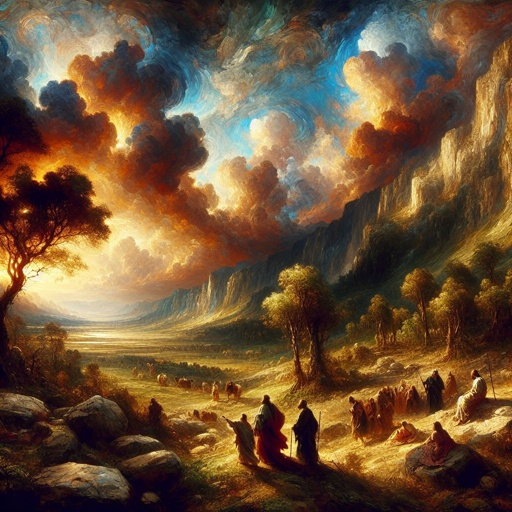
Artwork for John 7:26

John 7:26 - "But, lo, he speaketh boldly, and they say nothing unto him. Do the rulers know indeed that this is the very Christ?"

"But, lo, he speaketh boldly, and they say nothing unto him. Do the rulers know indeed that this is the very Christ?" - John 7:26

John 15:26 NLT

John 19:26-27

John 1:26 - "John answered them, saying, I baptize with water: but there standeth one among you, whom ye know not;"
John 7:38

John 15:7

John 7:38

Proverbs 7:26

John 15:7

John 7:38

John 7:38

John 11:26 - "And whosoever liveth and believeth in me shall never die. Believest thou this?"

John 7:17-18

John 7:37-39

John 7:17-18

John 7:37-39

John 7:17-18

John 7:17-18

John 7:38

John 4:26 - "Jesus saith unto her, I that speak unto thee am he."

John 10:26 - "But ye believe not, because ye are not of my sheep, as I said unto you."

Proverbs 7:26-27

John 3:26 - "And they came unto John, and said unto him, Rabbi, he that was with thee beyond Jordan, to whom thou barest witness, behold, the same baptizeth, and all men come to him."

1 John 2:26 - "These things have I written unto you concerning them that seduce you."

"But what went ye out for to see? A prophet? Yea, I say unto you, and much more than a prophet." - Luke 7:26

John 7:38

John 7:38

Matthew 21:26 - "But if we shall say, Of men; we fear the people; for all hold John as a prophet."

John 9:26 - "Then said they to him again, What did he to thee? how opened he thine eyes?"