What does John 9:28 mean?
“Then they reviled him, and said, Thou art his disciple; but we are Moses’ disciples.” — John 9:28
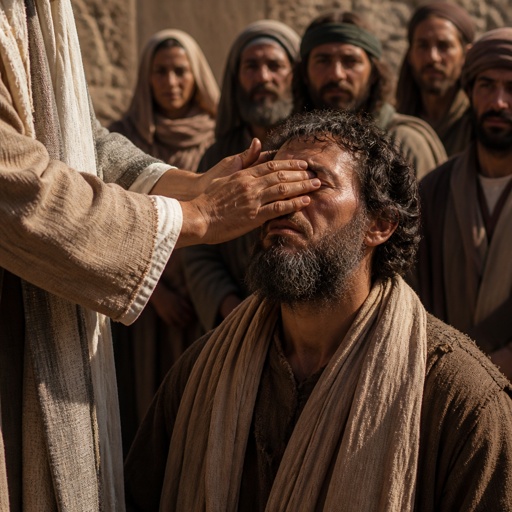
In the book of John, chapter 9, verse 28 of the King James Version (KJV) of the Bible, the verse reads, "Then they reviled him, and said, Thou art his disciple; but we are Moses' disciples." This verse is part of the story of Jesus healing a man who was born blind. The healing took place on the Sabbath day, and this act of healing stirred up controversy and division among the people.
At this point in the story, the Pharisees, who were questioning the man who was healed, were trying to discredit Jesus and his miraculous works. They were seeking to undermine the authority of Jesus and were questioning the authenticity of the healing that took place. The Pharisees reviled the man who was healed, accusing him of being a disciple of Jesus rather than a follower of Moses. This accusation was meant to discredit the man and to cause division among the people.
The verse reflects the underlying theme of spiritual blindness and the contrast between the physical act of seeing and the spiritual act of understanding and believing. Throughout the Gospel of John, there is a recurring theme of spiritual blindness and the contrast between those who physically see but do not understand, and those who are spiritually blind yet come to a deeper understanding of Jesus and his teachings.
The accusation made by the Pharisees also reflects the theme of division and conflict within the religious community. The Pharisees were threatened by Jesus and sought to undermine his authority and discredit his miraculous works. This division and conflict would ultimately lead to Jesus' crucifixion, as the religious leaders saw him as a threat to their own authority and power.
In terms of context, this verse is situated within the broader narrative of Jesus' ministry and his interactions with the religious leaders of his time. The healing of the blind man and the subsequent questioning by the Pharisees serve as a demonstration of Jesus' authority and power, as well as a test of the man's faith and allegiance. The Pharisees' accusation against the man who was healed also serves as a reflection of their own spiritual blindness and refusal to accept Jesus as the Messiah.
Symbolically, this verse can be seen as a representation of the conflict between the old and the new, between the traditional religious practices symbolized by Moses, and the new teachings and authority brought by Jesus. The Pharisees' accusation highlights the resistance to change and the fear of losing authority and control. The healing of the blind man represents the new vision and understanding brought by Jesus' teachings, and the reviling and rejection of the healed man symbolize the opposition and persecution faced by those who choose to follow Jesus.
In conclusion, John 9:28 in the King James Version of the Bible is a significant verse that captures the themes of spiritual blindness, division, and conflict within the religious community. The verse serves as a reflection of the ongoing struggle between the old and the new, the traditional and the revolutionary, and the refusal to accept Jesus and his teachings. It reminds us of the importance of spiritual insight and understanding, and the courage to stand firm in the face of opposition and persecution.
Get our apps


Artwork for John 9:28

John 9:28 - "Then they reviled him, and said, Thou art his disciple; but we are Moses' disciples."

"Then they reviled him, and said, Thou art his disciple; but we are Moses' disciples." - John 9:28

Luke 9:28 - "¶ And it came to pass about an eight days after these sayings, he took Peter and John and James, and went up into a mountain to pray."

John 5:28

John 14:28

John 5:28

John 5:28

John 1:28 - "These things were done in Bethabara beyond Jordan, where John was baptizing."

"¶ And it came to pass about an eight days after these sayings, he took Peter and John and James, and went up into a mountain to pray." - Luke 9:28

Mark 8:28 - "And they answered, John the Baptist: but some say, Elias; and others, One of the prophets."

Luke 9:28-45

"These things were done in Bethabara beyond Jordan, where John was baptizing." - John 1:28

John 20:28 - "And Thomas answered and said unto him, My Lord and my God."

John 5:28 - "Marvel not at this: for the hour is coming, in the which all that are in the graves shall hear his voice,"

John 13:28 - "Now no man at the table knew for what intent he spake this unto him."

john 21:9

John 4:28 - "The woman then left her waterpot, and went her way into the city, and saith to the men,"
John 9:10

John 10:9

John 10:9

John 10:9

John 6:28 - "Then said they unto him, What shall we do, that we might work the works of God?"

Acts 9:28 - "And he was with them coming in and going out at Jerusalem."

John 6:8-9

John 9:1-3

John 13:4-9

John 9:1-41

1 John 1:9

John 15:9-10

John 15:9-10