What does Joshua 10:20 mean?
“And it came to pass, when Joshua and the children of Israel had made an end of slaying them with a very great slaughter, till they were consumed, that the rest which remained of them entered into fenced cities.” — Joshua 10:20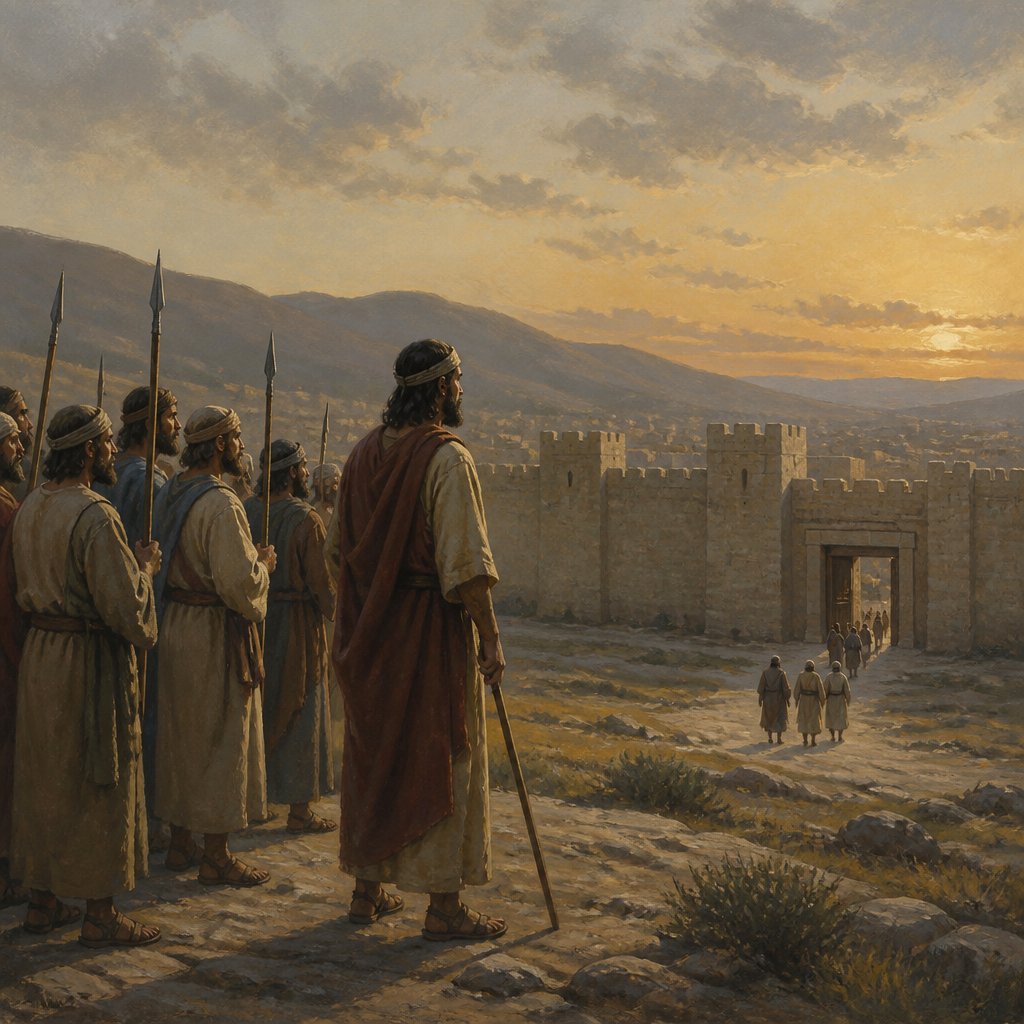
Joshua 10:20 in the King James Version of the Bible reads, "And it came to pass, when Joshua and the children of Israel had made an end of slaying them with a very great slaughter, till they were consumed, that the rest which remained of them entered into fenced cities."
This verse is found in the context of the Israelites' conquest of the Promised Land. After the Israelites crossed the Jordan River into Canaan, they faced numerous battles against the inhabitants of the land who resisted their presence. The passage leading up to Joshua 10:20 describes a particularly dramatic battle in which the Amorite kings in the south, including Jerusalem and Hebron, formed a coalition to attack the Gibeonites, who were in alliance with the Israelites. In response, Joshua and the Israelites came to the aid of the Gibeonites, resulting in a decisive victory for the Israelites over the Amorite alliance.
The verse describes the aftermath of the battle and the Israelites' pursuit of the defeated Amorite kings and their armies. It signifies the complete destruction and slaughter of the enemy forces. This event is important within the broader narrative of Joshua as it demonstrates the fulfillment of God's promise to give the land of Canaan to the Israelites and the defeat of their enemies.
One of the key themes present in this verse is the concept of divine conquest. Throughout the book of Joshua, there is a recurring emphasis on the idea that the Israelites' victory in battle is ultimately due to God's intervention and assistance. The imagery of the "very great slaughter" and the complete consumption of the enemy forces underscores the belief that it was God's will for the Israelites to possess the land and to displace its former inhabitants.
Another theme that can be discerned from this verse is the obedience and faithfulness of the Israelites. The alliance with the Gibeonites, which led to the battle with the Amorite kings, was a result of Joshua and the Israelites honoring their covenant with the Gibeonites, despite the latter's deception in securing the alliance. This demonstrates the importance of keeping one's word and honoring commitments, even in difficult and challenging circumstances.
The symbolism present in this verse is significant as well. The "fenced cities" mentioned at the end of the verse serve as a symbol of safety and security. After their defeat, the remaining Amorite forces sought refuge in these fortified cities in an attempt to escape the Israelites. This symbolizes the idea that God's judgment is inevitable and inescapable, as even the strongholds of the enemy ultimately cannot withstand the divine will.
It is also worth noting that the language used in this verse is rather harsh and depicts a scene of great violence and destruction. While this may be difficult for modern readers to reconcile with their understanding of God as loving and merciful, it is important to consider the historical and cultural context in which these events took place. In the ancient Near East, warfare was often brutal and merciless, and the language used in the Bible reflects this reality.
In conclusion, Joshua 10:20 portrays a significant moment in the Israelites' conquest of the Promised Land. It emphasizes the divine assistance and intervention in their battles, as well as the importance of faithfulness and obedience to God's commands. The imagery and symbolism present in the verse serve to underscore the themes of divine conquest, faithfulness, and the inevitability of God's judgment. It is a powerful reminder of the Israelites' journey and God's faithfulness to his promises.
Get our apps


Artwork for Joshua 10:20

Joshua 10:20 - "And it came to pass, when Joshua and the children of Israel had made an end of slaying them with a very great slaughter, till they were consumed, that the rest which remained of them entered into fenced cities."
"And it came to pass, when Joshua and the children of Israel had made an end of slaying them with a very great slaughter, till they were consumed, that the rest which remained of them entered into fenced cities." - Joshua 10:20

Joshua 20:1 - "The LORD also spake unto Joshua, saying,"

Joshua 1:10 - "¶ Then Joshua commanded the officers of the people, saying,"

Joshua 6:20

Joshua 6:20

Joshua 4:20 - "And those twelve stones, which they took out of Jordan, did Joshua pitch in Gilgal."

Joshua 19:20 - "And Rabbith, and Kishion, and Abez,"

Joshua 10:43 - "And Joshua returned, and all Israel with him, unto the camp to Gilgal."

Joshua 10:38 - "¶ And Joshua returned, and all Israel with him, to Debir; and fought against it:"

Joshua 10:15 - "¶ And Joshua returned, and all Israel with him, unto the camp to Gilgal."

Joshua 18:10 - "¶ And Joshua cast lots for them in Shiloh before the LORD: and there Joshua divided the land unto the children of Israel according to their divisions."

Joshua 10:17 - "And it was told Joshua, saying, The five kings are found hid in a cave at Makkedah."

"The LORD also spake unto Joshua, saying," - Joshua 20:1

Joshua 7:20 - "And Achan answered Joshua, and said, Indeed I have sinned against the LORD God of Israel, and thus and thus have I done:"

Joshua 10:9 - "Joshua therefore came unto them suddenly, and went up from Gilgal all night."

"¶ Then Joshua commanded the officers of the people, saying," - Joshua 1:10

Joshua 10:29 - "Then Joshua passed from Makkedah, and all Israel with him, unto Libnah, and fought against Libnah:"

Joshua 10:36 - "And Joshua went up from Eglon, and all Israel with him, unto Hebron; and they fought against it:"

Joshua 10:18 - "And Joshua said, Roll great stones upon the mouth of the cave, and set men by it for to keep them:"

Joshua 13:20 - "And Beth-peor, and Ashdoth-pisgah, and Beth-jeshimoth,"

Joshua 15:20 - "This is the inheritance of the tribe of the children of Judah according to their families."

Joshua 10:31 - "¶ And Joshua passed from Libnah, and all Israel with him, unto Lachish, and encamped against it, and fought against it:"

Joshua 10:34 - "¶ And from Lachish Joshua passed unto Eglon, and all Israel with him; and they encamped against it, and fought against it:"

Joshua 10:22 - "Then said Joshua, Open the mouth of the cave, and bring out those five kings unto me out of the cave."

Joshua 10:7 - "So Joshua ascended from Gilgal, he, and all the people of war with him, and all the mighty men of valour."

Joshua 12:20 - "The king of Shimron-meron, one; the king of Achshaph, one;"

Joshua 10:42 - "And all these kings and their land did Joshua take at one time, because the LORD God of Israel fought for Israel."

Joshua 7:10 - "¶ And the LORD said unto Joshua, Get thee up; wherefore liest thou thus upon thy face?"
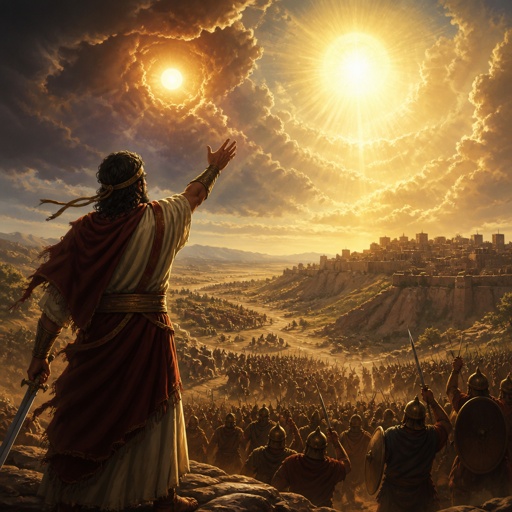
joshua 10:1-15