What does Joshua 11:12 mean?
“And all the cities of those kings, and all the kings of them, did Joshua take, and smote them with the edge of the sword, and he utterly destroyed them, as Moses the servant of the LORD commanded.” — Joshua 11:12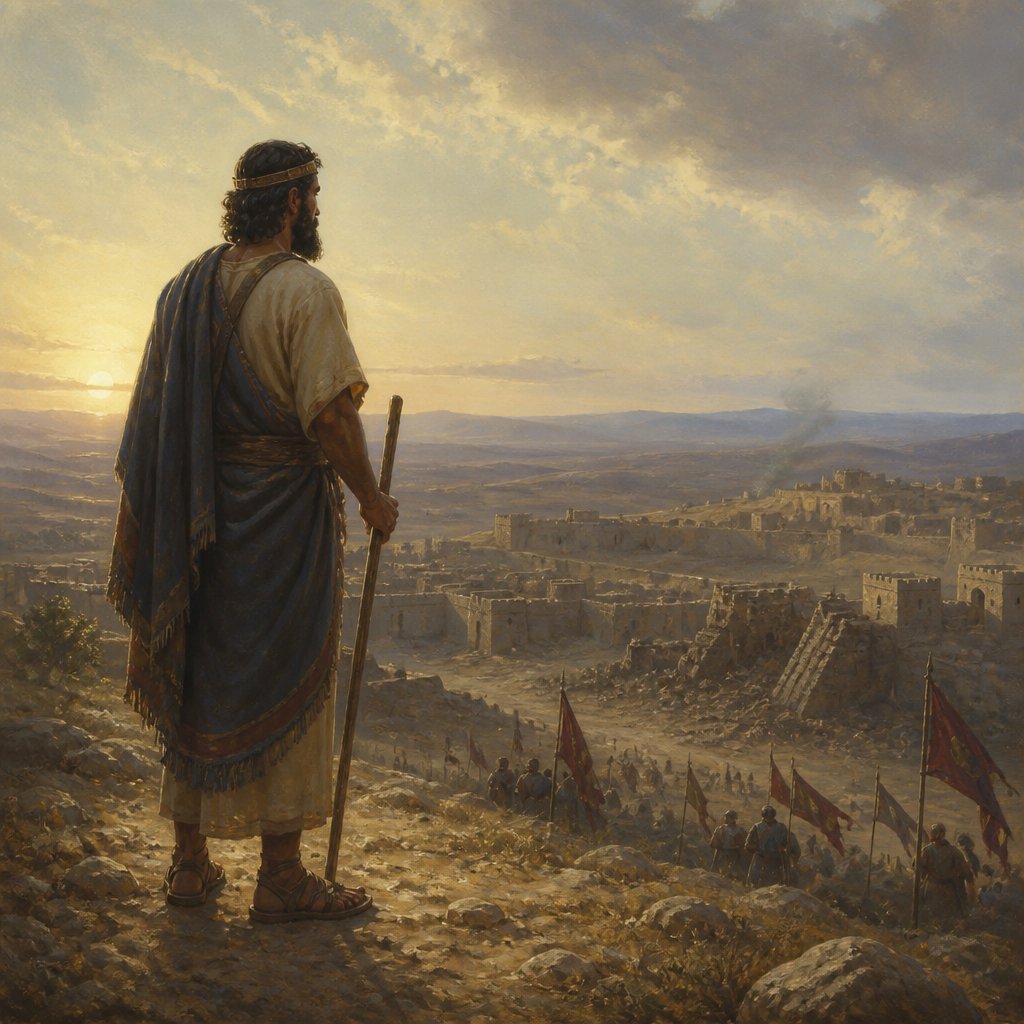
Joshua 11:12 (KJV) states: "And all the cities of those kings, and all the kings of them, did Joshua take, and smote them with the edge of the sword, and he utterly destroyed them, as Moses the servant of the Lord commanded."
This verse is a part of the larger narrative of the conquest of Canaan by the Israelites under the leadership of Joshua. In this verse, it is describing how Joshua and the Israelites were able to defeat the Canaanite kings and take control of their cities. The verse speaks to the military prowess of Joshua and the obedience of the Israelites in fulfilling the commandment of the Lord.
The broader context of this verse is the fulfillment of God's promise to give the land of Canaan to the descendants of Abraham. This promise was made to Abraham in the book of Genesis and was reiterated to Moses and Joshua as they led the Israelites out of Egypt and into the Promised Land. Throughout the book of Joshua, there are numerous accounts of battles and conquests as the Israelites claim the land that God had promised to them.
One of the key themes present in this verse is the theme of obedience. Joshua and the Israelites are carrying out the commandment of the Lord to utterly destroy the Canaanite cities and kings. This shows their obedience and devotion to God's will, even in the face of difficult and possibly morally challenging tasks. This obedience is a recurring theme throughout the book of Joshua, as the Israelites are constantly reminded to follow the laws and commandments of the Lord.
Another important theme in this verse is the theme of conquest. The Israelites are engaged in a military campaign to conquer the land of Canaan. This theme of conquest raises important questions about justice, violence, and the morality of war. The Israelites believe that they are carrying out God's will by conquering the land, but it also raises questions about the rights of the Canaanite people and the ethics of warfare.
In terms of symbolism, the conquest of Canaan can be seen as a symbol of the spiritual journey of the Israelites. The land of Canaan represents the promised land of rest and abundance that God has promised to His people. As the Israelites engage in battles and conquests, they are also engaged in a spiritual struggle to claim the blessings and promises of God. This can be seen as a metaphor for the Christian journey, where believers are called to overcome spiritual battles and claim the blessings and promises of God.
Overall, Joshua 11:12 is a significant verse in the larger narrative of the conquest of Canaan. It speaks to the themes of obedience, conquest, and spiritual struggle, and raises important questions about the ethics and morality of warfare. This verse is a reminder of the challenges and complexities of carrying out God's will and the importance of remaining faithful to His commandments.
Get our apps


Artwork for Joshua 11:12

Joshua 11:12 - "And all the cities of those kings, and all the kings of them, did Joshua take, and smote them with the edge of the sword, and he utterly destroyed them, as Moses the servant of the LORD commanded."
"And all the cities of those kings, and all the kings of them, did Joshua take, and smote them with the edge of the sword, and he utterly destroyed them, as Moses the servant of the LORD commanded." - Joshua 11:12

Joshua 12:11 - "The king of Jarmuth, one; the king of Lachish, one;"
"The king of Jarmuth, one; the king of Lachish, one;" - Joshua 12:11

Joshua 11:18 - "Joshua made war a long time with all those kings."

Joshua 1:12 - "¶ And to the Reubenites, and to the Gadites, and to half the tribe of Manasseh, spake Joshua, saying,"

Joshua 6:12 - "¶ And Joshua rose early in the morning, and the priests took up the ark of the LORD."

Joshua 12:12 - "The king of Eglon, one; the king of Gezer, one;"

Joshua 24:12

Joshua 24:12

Joshua 11:9 - "And Joshua did unto them as the LORD bade him: he houghed their horses, and burnt their chariots with fire."

Joshua 11:15 - "¶ As the LORD commanded Moses his servant, so did Moses command Joshua, and so did Joshua; he left nothing undone of all that the LORD commanded Moses."

Joshua 11:13 - "But as for the cities that stood still in their strength, Israel burned none of them, save Hazor only; that did Joshua burn."

Joshua 1:12-16

Joshua 1:12-16

Joshua 11:23 - "So Joshua took the whole land, according to all that the LORD said unto Moses; and Joshua gave it for an inheritance unto Israel according to their divisions by their tribes. And the land rested from war."

Joshua 11:7 - "So Joshua came, and all the people of war with him, against them by the waters of Merom suddenly; and they fell upon them."

Joshua 11:10 - "¶ And Joshua at that time turned back, and took Hazor, and smote the king thereof with the sword: for Hazor beforetime was the head of all those kingdoms."

John 1:1-2

John 1:1-2

John 1:1-2

John 1:1-2

John 1:1-2

Joshua 11:16 - "So Joshua took all that land, the hills, and all the south country, and all the land of Goshen, and the valley, and the plain, and the mountain of Israel, and the valley of the same;"

Joshua 11:21 - "¶ And at that time came Joshua, and cut off the Anakims from the mountains, from Hebron, from Debir, from Anab, and from all the mountains of Judah, and from all the mountains of Israel: Joshua destroyed them utterly with their cities."

Joshua 12:21 - "The king of Taanach, one; the king of Megiddo, one;"

Joshua 12:13 - "The king of Debir, one; the king of Geder, one;"

Joshua 12:17 - "The king of Tappuah, one; the king of Hepher, one;"

Joshua 12:15 - "The king of Libnah, one; the king of Adullam, one;"

Joshua 12:10 - "The king of Jerusalem, one; the king of Hebron, one;"