What does Joshua 13:12 mean?
“All the kingdom of Og in Bashan, which reigned in Ashtaroth and in Edrei, who remained of the remnant of the giants: for these did Moses smite, and cast them out.” — Joshua 13:12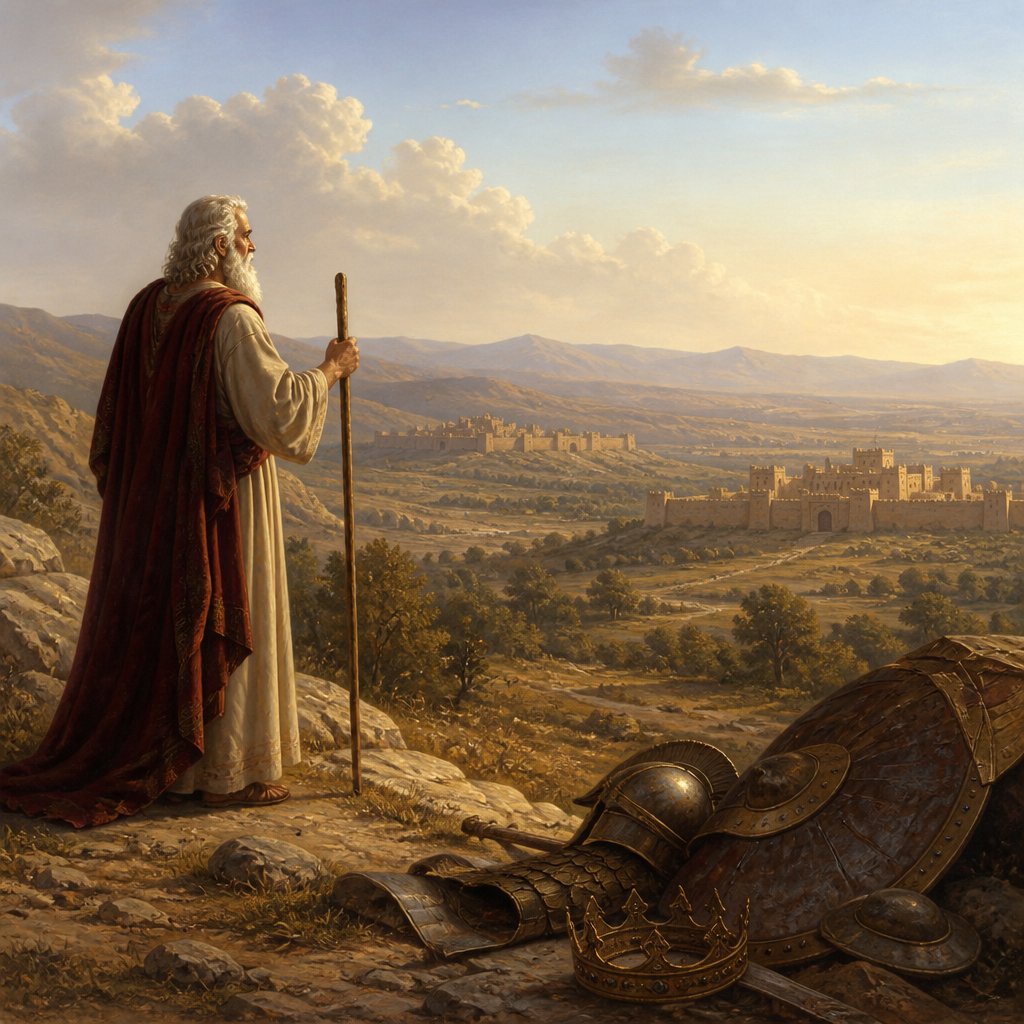
Joshua 13:12 (KJV): "All the kingdom of Og in Bashan, which reigned in Ashtaroth and in Edrei, who remained of the remnant of the giants: for these did Moses smite, and cast them out."
The book of Joshua is a pivotal historical and religious text in the Bible, depicting the conquest and division of the Promised Land among the twelve tribes of Israel. This particular verse occurs in a passage that describes the territories allocated to the tribe of Manasseh. These lands once belonged to the Amorites and King Og of Bashan, formidable enemies that the Israelites, under the leadership of Moses, had defeated and displaced during their journey towards Canaan.
The verse holds significant thematic and symbolic implications that can be explored further. One of the overarching themes in the book of Joshua is the fulfillment of God's promise to the Israelites and the divine commissioning of Joshua to lead the people into the land of Canaan. It underscores the faithfulness and power of God in fulfilling his covenant promises, and the verse serves as a reminder of God's faithfulness in fulfilling his promises to his people.
Furthermore, the conquest of the land and the defeat of King Og and the giants in Bashan represent the fulfillment of God's promise to give the land of Canaan to the descendants of Abraham. The giants in Bashan are symbolic of the powerful obstacles and enemies that the Israelites faced in claiming the Promised Land. By pointing out that Moses had smitten and cast them out, the verse emphasizes the miraculous and divine nature of the Israelites' victory over their enemies and the realization of God's promises.
The mention of Ashtaroth and Edrei, the cities where King Og reigned, also holds symbolic significance. These cities were centers of pagan worship and idolatry, and their conquest by the Israelites reflects the triumph of the true God over the gods of the Canaanite nations. It underscores the theme of spiritual warfare and the need for the Israelites to remain faithful to Yahweh and not to be swayed by the religious practices of the inhabitants of the land. It also serves as a warning against idolatry and the worship of false gods, emphasizing the exclusivity of Yahweh as the one true God.
Additionally, the mention of the "remnant of the giants" in the verse highlights the theme of God's sovereignty over the powers and principalities of the earth. The giants were known for their strength and stature, but their defeat at the hands of the Israelites demonstrates the ultimate power of God over all earthly forces. It serves as a testament to the Israelites that with God on their side, they can overcome any seemingly insurmountable obstacle. This theme is echoed throughout the Bible, emphasizing the belief in the omnipotence of God and His ability to aid His people in the face of overwhelming odds.
In conclusion, Joshua 13:12 is a verse that holds deep theological and symbolic significance within the larger context of the book of Joshua. It underscores the faithfulness of God in fulfilling his promises, the spiritual warfare the Israelites faced in claiming the Promised Land, and the ultimate sovereignty of God over the powers of the earth. It serves as a source of encouragement and a reminder of God's faithfulness and strength to His people, both in ancient times and for contemporary believers today.
Get our apps


Artwork for Joshua 13:12

Joshua 13:12 - "All the kingdom of Og in Bashan, which reigned in Ashtaroth and in Edrei, who remained of the remnant of the giants: for these did Moses smite, and cast them out."
"All the kingdom of Og in Bashan, which reigned in Ashtaroth and in Edrei, who remained of the remnant of the giants: for these did Moses smite, and cast them out." - Joshua 13:12

Joshua 12:13 - "The king of Debir, one; the king of Geder, one;"
"The king of Debir, one; the king of Geder, one;" - Joshua 12:13

Joshua 1:12 - "¶ And to the Reubenites, and to the Gadites, and to half the tribe of Manasseh, spake Joshua, saying,"

Joshua 6:12 - "¶ And Joshua rose early in the morning, and the priests took up the ark of the LORD."

Joshua 12:12 - "The king of Eglon, one; the king of Gezer, one;"

Joshua 14:13 - "And Joshua blessed him, and gave unto Caleb the son of Jephunneh Hebron for an inheritance."

Joshua 5:13

Joshua 24:12

Joshua 24:12

Joshua 13:18 - "And Jahazah, and Kedemoth, and Mephaath,"

Joshua 11:13 - "But as for the cities that stood still in their strength, Israel burned none of them, save Hazor only; that did Joshua burn."

Joshua 1:12-16

Joshua 1:12-16

Joshua 5:13 (KJVA) 13 And it came to pass, when Joshua was by Jericho, that he lifted up his eyes and looked, and, behold, there stood a man over against him with his sword drawn in his hand: and Joshua went unto him, and said unto him, Art thou for us, or for our adversaries?

Joshua 8:13 - "And when they had set the people, even all the host that was on the north of the city, and their liers in wait on the west of the city, Joshua went that night into the midst of the valley."

Joshua 13:13 - "Nevertheless the children of Israel expelled not the Geshurites, nor the Maachathites: but the Geshurites and the Maachathites dwell among the Israelites until this day."

Joshua 13:20 - "And Beth-peor, and Ashdoth-pisgah, and Beth-jeshimoth,"

Joshua 13:19 - "And Kirjathaim, and Sibmah, and Zareth-shahar in the mount of the valley,"

Exodus 17:13 - "And Joshua discomfited Amalek and his people with the edge of the sword."

Joshua 12:21 - "The king of Taanach, one; the king of Megiddo, one;"

Joshua 12:11 - "The king of Jarmuth, one; the king of Lachish, one;"

Joshua 12:17 - "The king of Tappuah, one; the king of Hepher, one;"

Joshua 12:15 - "The king of Libnah, one; the king of Adullam, one;"

Joshua 12:10 - "The king of Jerusalem, one; the king of Hebron, one;"

Joshua 12:18 - "The king of Aphek, one; the king of Lasharon, one;"

Joshua 12:14 - "The king of Hormah, one; the king of Arad, one;"

Joshua 12:19 - "The king of Madon, one; the king of Hazor, one;"

"¶ And to the Reubenites, and to the Gadites, and to half the tribe of Manasseh, spake Joshua, saying," - Joshua 1:12