What does Joshua 13:4 mean?
“From the south, all the land of the Canaanites, and Mearah that is beside the Sidonians, unto Aphek, to the borders of the Amorites:” — Joshua 13:4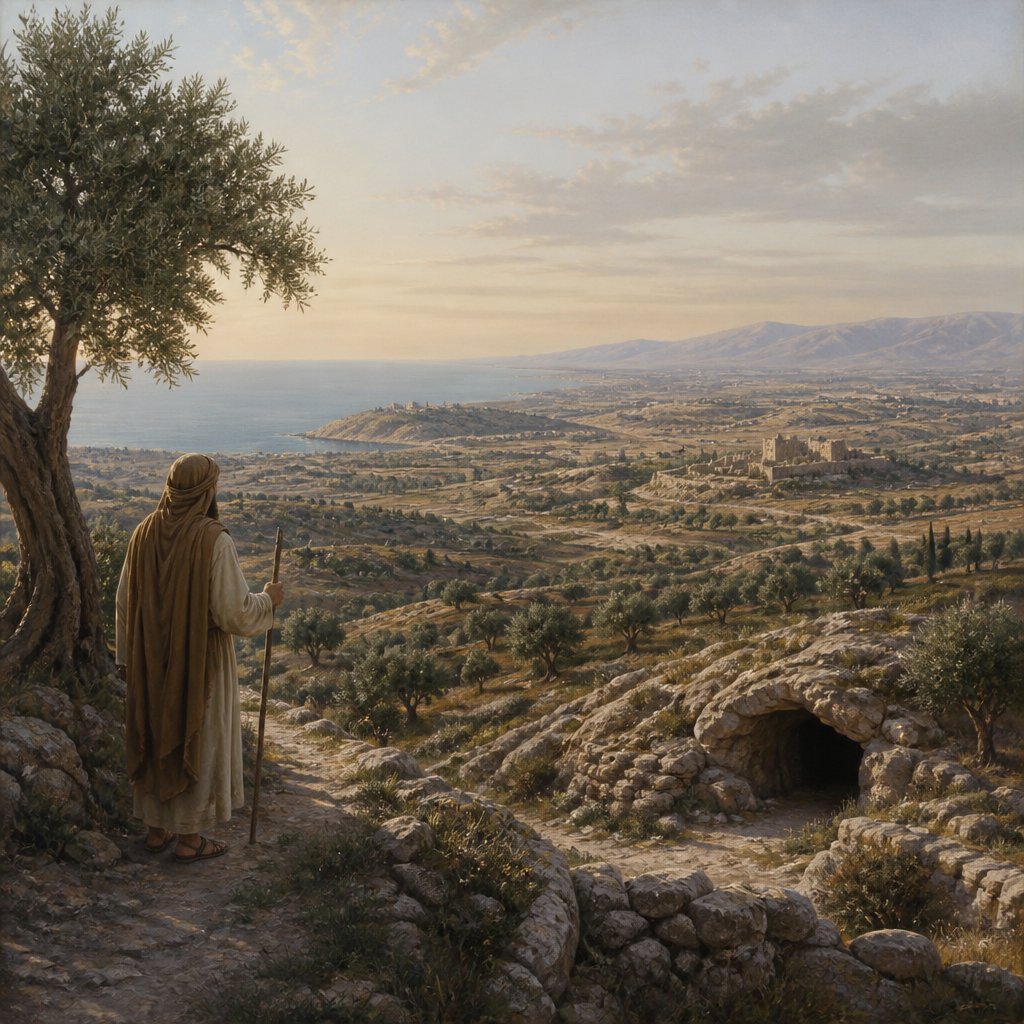
Joshua 13:4 (KJV) states, "From the south, all the land of the Canaanites, and Mearah that is beside the Sidonians unto Aphek, to the borders of the Amorites." This verse can be found in the Old Testament of the Bible, specifically in the book of Joshua. The verse is part of the record of the division of the land of Canaan among the 12 tribes of Israel.
To fully understand the meaning and significance of Joshua 13:4, it is important to consider the historical and cultural context in which it was written. The book of Joshua picks up where the book of Deuteronomy leaves off, as the Israelites are on the brink of entering the Promised Land. After the death of Moses, Joshua becomes the leader of the Israelites and is charged with the task of leading them into the land that was promised to them by God.
The division of the land of Canaan among the 12 tribes of Israel was a crucial aspect of establishing the Israelites as a nation. The process of dividing the land was not simply a matter of geographical allocation, but it was deeply rooted in their identity as God's chosen people. This division of the land was a tangible expression of God's faithfulness to his covenant with the Israelites, and it also served as a means of solidifying their possession of the Promised Land.
In Joshua 13:4, the land of the Canaanites is described as extending from the south all the way to the borders of the Amorites. This geographical description serves as a reminder of God's promise to the Israelites to give them the entire land of Canaan, including the territories of the Canaanites and the Amorites. The verse also mentions Mearah beside the Sidonians and Aphek, which are further landmarks that indicate the extent of the land that was to be allocated to the Israelites.
One of the key themes of Joshua 13:4 is the fulfillment of God's promises. Throughout the book of Joshua, we see God's faithfulness and his commitment to fulfill the covenant he made with the Israelites. The division of the land of Canaan is a tangible manifestation of God's promise to give the land to the descendants of Abraham, Isaac, and Jacob. This theme of faithfulness and fulfillment is a recurring motif in the Old Testament, and it serves to remind the reader of the reliability and trustworthiness of God.
Another important theme in this verse is the concept of inheritance. The land of Canaan was promised to the Israelites as an inheritance, and the division of the land among the tribes was a means of allocating their individual inheritances. This concept of inheritance has spiritual as well as practical significance. On one hand, it symbolizes the blessings and promises that God bestows upon his people. On the other hand, it underscores the responsibility of the Israelites to possess and steward the land that was given to them.
Symbolically, the division of the land of Canaan also foreshadows the spiritual blessings that are available to believers in Christ. In the New Testament, the apostle Paul writes about the concept of spiritual inheritance, emphasizing the riches and blessings that believers have received through their union with Christ. The division of the land in the Old Testament serves as a precursor to the spiritual inheritance that is available to all who are in Christ.
In conclusion, Joshua 13:4 is a verse that holds significance in the broader narrative of the Israelites' entry into the Promised Land. It is a part of the detailed account of the allocation of the land of Canaan among the 12 tribes of Israel, and it reflects God's faithfulness in fulfilling his promises. The verse not only serves as a historical record but also carries spiritual and symbolic implications for believers today. As we reflect on the division of the land of Canaan, we are reminded of God's faithfulness, his promises, and the inheritance that is available to those who are in Christ.
Get our apps


Artwork for Joshua 13:4

Joshua 13:4 - "From the south, all the land of the Canaanites, and Mearah that is beside the Sidonians, unto Aphek, to the borders of the Amorites:"
"From the south, all the land of the Canaanites, and Mearah that is beside the Sidonians, unto Aphek, to the borders of the Amorites:" - Joshua 13:4

Joshua 4:13 - "About forty thousand prepared for war passed over before the LORD unto battle, to the plains of Jericho."

Joshua 4:15 - "And the LORD spake unto Joshua, saying,"

Joshua 4:4 - "Then Joshua called the twelve men, whom he had prepared of the children of Israel, out of every tribe a man:"

Joshua 14:13 - "And Joshua blessed him, and gave unto Caleb the son of Jephunneh Hebron for an inheritance."

Joshua 5:13

Joshua 13:18 - "And Jahazah, and Kedemoth, and Mephaath,"

Joshua 11:13 - "But as for the cities that stood still in their strength, Israel burned none of them, save Hazor only; that did Joshua burn."
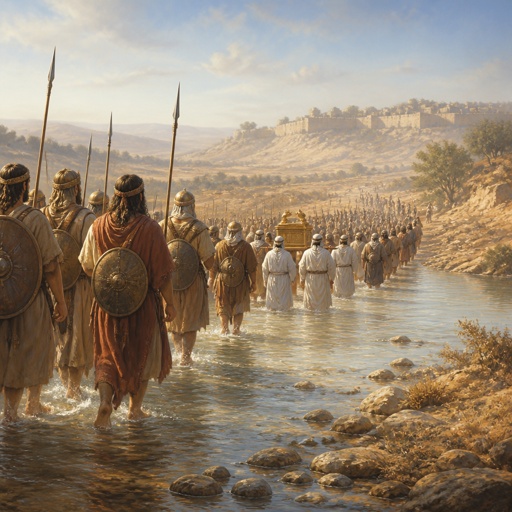
"About forty thousand prepared for war passed over before the LORD unto battle, to the plains of Jericho." - Joshua 4:13

Joshua 4:17 - "Joshua therefore commanded the priests, saying, Come ye up out of Jordan."

Joshua 4:20 - "And those twelve stones, which they took out of Jordan, did Joshua pitch in Gilgal."

Joshua 3:4

Joshua 3:4

"And the LORD spake unto Joshua, saying," - Joshua 4:15

Joshua 5:13 (KJVA) 13 And it came to pass, when Joshua was by Jericho, that he lifted up his eyes and looked, and, behold, there stood a man over against him with his sword drawn in his hand: and Joshua went unto him, and said unto him, Art thou for us, or for our adversaries?

Joshua 8:13 - "And when they had set the people, even all the host that was on the north of the city, and their liers in wait on the west of the city, Joshua went that night into the midst of the valley."

Joshua 13:13 - "Nevertheless the children of Israel expelled not the Geshurites, nor the Maachathites: but the Geshurites and the Maachathites dwell among the Israelites until this day."

Joshua 13:20 - "And Beth-peor, and Ashdoth-pisgah, and Beth-jeshimoth,"

Joshua 12:13 - "The king of Debir, one; the king of Geder, one;"

Joshua 13:19 - "And Kirjathaim, and Sibmah, and Zareth-shahar in the mount of the valley,"

Joshua 19:4 - "And Eltolad, and Bethul, and Hormah,"

Exodus 17:13 - "And Joshua discomfited Amalek and his people with the edge of the sword."

Joshua 4:1-8

Joshua 13:28 - "This is the inheritance of the children of Gad after their families, the cities, and their villages."

Joshua 4:1 - "And it came to pass, when all the people were clean passed over Jordan, that the LORD spake unto Joshua, saying,"

Joshua 4:14 - "¶ On that day the LORD magnified Joshua in the sight of all Israel; and they feared him, as they feared Moses, all the days of his life."

Joshua 4:1-8

Joshua 13:1 - "Now Joshua was old and stricken in years; and the LORD said unto him, Thou art old and stricken in years, and there remaineth yet very much land to be possessed."

Joshua 10:4 - "Come up unto me, and help me, that we may smite Gibeon: for it hath made peace with Joshua and with the children of Israel."