
Joshua 15:50 in the King James Version reads, "And Anab, and Eshtemoh, and Anim."
To fully understand the meaning and significance of this verse, it is important to consider the context in which it is found. The book of Joshua is the sixth book of the Bible and is a historical account of the Israelites entering and conquering the Promised Land under the leadership of Joshua, Moses' successor. This verse is part of the detailed description of the borders of the inheritance of the tribe of Judah. The land of Canaan was divided among the tribes of Israel, and this verse specifically lists some of the cities and villages within the territory allotted to the tribe of Judah.
Now let's take a closer look at the specific names mentioned in this verse: Anab, Eshtemoh, and Anim. These names may not be familiar to many modern readers, but they hold significant meaning within the context of the biblical narrative. Anab was a city in the southern part of Judah, while Eshtemoh was a village located in the same region. Anim was also a town within the territory of Judah. These place names may seem insignificant at first glance, but they serve to reinforce the idea that the land was divided and distributed among the tribes of Israel as God had promised to their forefathers.
From a symbolic perspective, this verse represents the fulfillment of God's promises to the Israelites. Throughout the Old Testament, God repeatedly assured the people of Israel that He would give them the land of Canaan as their inheritance. The division of the land among the tribes, as described in this verse, illustrates God's faithfulness in keeping His word and providing for His chosen people.
Furthermore, this verse serves as a reminder of the importance of God's covenant with His people. The division of the land was not a random or arbitrary act, but a deliberate fulfillment of the covenant promises God had made to Abraham, Isaac, and Jacob. The allocation of specific territories to each tribe within the larger inheritance of Canaan symbolizes the unique relationship between God and His chosen people. It highlights the special role and responsibility entrusted to each tribe as part of the larger covenant community.
The verse also underscores the significance of land and place within the biblical narrative. In ancient Israelite society, the land was integral to their identity, culture, and religious practices. The allocation of specific territories to each tribe reflected the interconnectedness of the people to their ancestral heritage and the divine promises associated with the land. This deep connection to the land is a recurring theme throughout the Bible, emphasizing the spiritual and symbolic importance of place in the lives of God's people.
In conclusion, Joshua 15:50 may appear as a simple list of names of cities and villages, but it holds rich symbolic and thematic significance within the broader biblical narrative. This verse serves as a tangible demonstration of God's faithfulness in fulfilling His promises, the importance of covenant relationships, and the deep connection between the land and the people of Israel. It reminds us of the enduring relevance of God's promises and the profound significance of place within the broader framework of God's redemptive plan for His people.
Get our apps


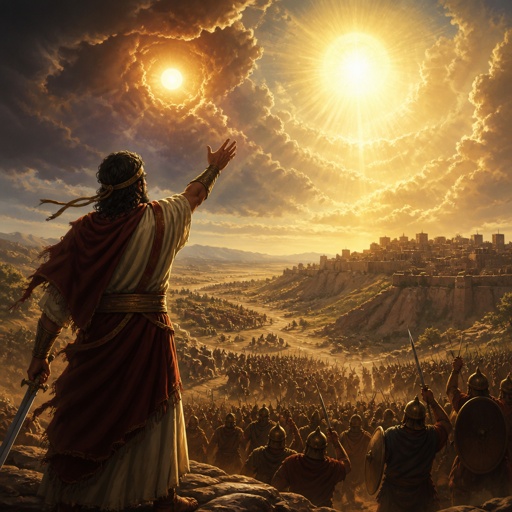
Artwork for Joshua 15:50

Joshua 15:50 - "And Anab, and Eshtemoh, and Anim,"

"And Anab, and Eshtemoh, and Anim," - Joshua 15:50

Joshua 4:15 - "And the LORD spake unto Joshua, saying,"

Joshua 19:50 - "According to the word of the LORD they gave him the city which he asked, even Timnath-serah in mount Ephraim: and he built the city, and dwelt therein."

Psalms 50:15 - "And call upon me in the day of trouble: I will deliver thee, and thou shalt glorify me."

Joshua 10:15 - "¶ And Joshua returned, and all Israel with him, unto the camp to Gilgal."

Joshua 24:15

Joshua 8:15 - "And Joshua and all Israel made as if they were beaten before them, and fled by the way of the wilderness."

Joshua 24:15

Joshua 24:15

"And the LORD spake unto Joshua, saying," - Joshua 4:15

Joshua 15:29 - "Baalah, and Iim, and Azem,"

Joshua 15:42 - "Libnah, and Ether, and Ashan,"

Joshua 15:30 - "And Eltolad, and Chesil, and Hormah,"

Joshua 15:40 - "And Cabbon, and Lahmam, and Kithlish,"

Joshua 15:23 - "And Kedesh, and Hazor, and Ithnan,"

Joshua 15:22 - "And Kinah, and Dimonah, and Adadah,"

Joshua 11:15 - "¶ As the LORD commanded Moses his servant, so did Moses command Joshua, and so did Joshua; he left nothing undone of all that the LORD commanded Moses."

Joshua 5:15 - "And the captain of the LORD'S host said unto Joshua, Loose thy shoe from off thy foot; for the place whereon thou standest is holy. And Joshua did so."

Joshua 15:39 - "Lachish, and Bozkath, and Eglon,"

Joshua 15:31 - "And Ziklag, and Madmannah, and Sansannah,"

Joshua 15:43 - "And Jiphtah, and Ashnah, and Nezib,"

Joshua 15:26 - "Amam, and Shema, and Moladah,"

Joshua 15:38 - "And Dilean, and Mizpeh, and Joktheel,"

Joshua 15:24 - "Ziph, and Telem, and Bealoth,"

Joshua 15:56 - "And Jezreel, and Jokdeam, and Zanoah,"

Joshua 15:52 - "Arab, and Dumah, and Eshean,"
joshua 10:1-15

Joshua 15:15 - "And he went up thence to the inhabitants of Debir: and the name of Debir before was Kirjath-sepher."

Joshua 9:15 - "And Joshua made peace with them, and made a league with them, to let them live: and the princes of the congregation sware unto them."