What does Joshua 19:33 mean?
“And their coast was from Heleph, from Allon to Zaanannim, and Adami, Nekeb, and Jabneel, unto Lakum; and the outgoings thereof were at Jordan:” — Joshua 19:33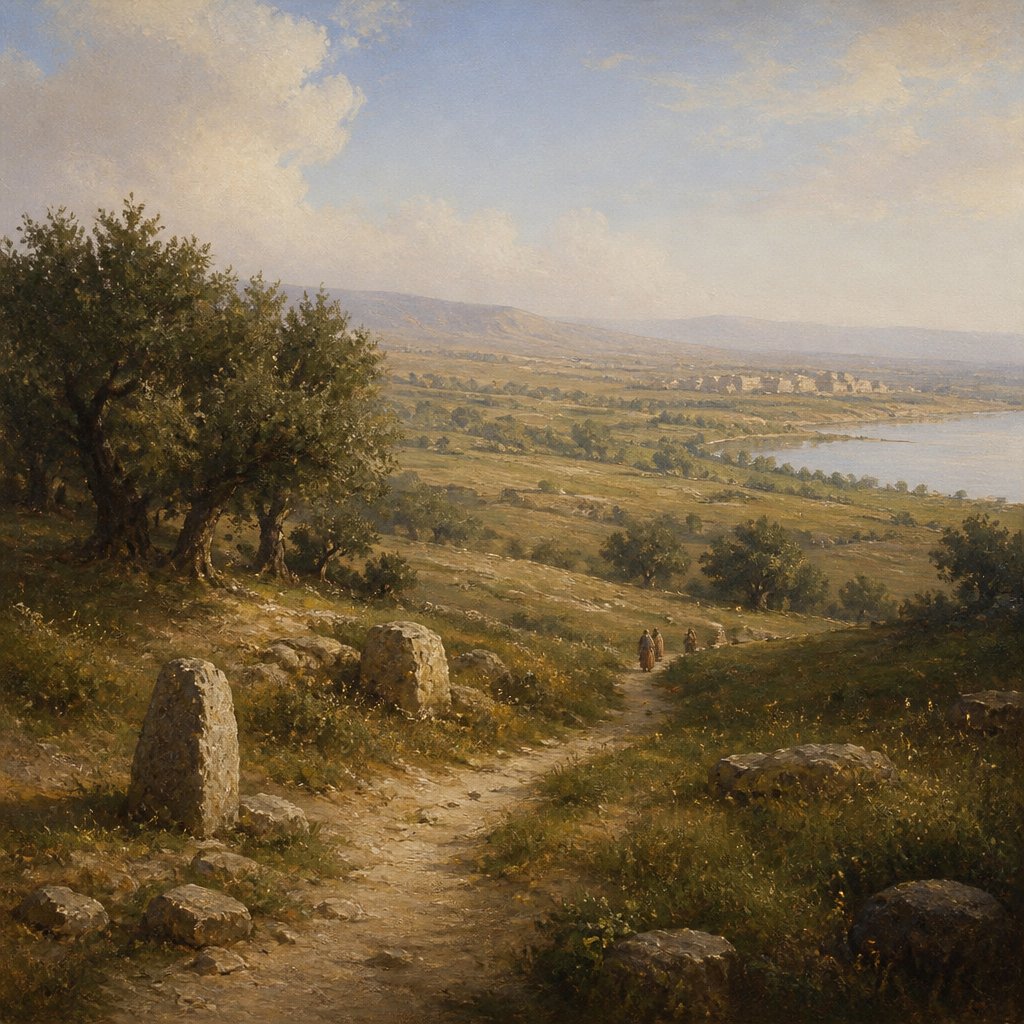
Joshua 19:33 in the King James Version of the Bible reads, "And their coast was from Heleph, from Allon to Zaanannim, and Adami, Nekeb, and Jabneel, unto Lakum; and the outgoings thereof were at Jordan."
This passage is part of a larger section detailing the territory allotted to the tribe of Naphtali in the Promised Land. The book of Joshua chronicles the Israelites' conquest and division of the land of Canaan, fulfilling God's promise to give them the land. The verse is part of a detailed description of the borders and cities within the territory that was given to the tribe of Naphtali.
In this verse, the specific locations mentioned name the boundaries of the land allotted to the tribe of Naphtali. Heleph, Allon, Zaanannim, Adami, Nekeb, Jabneel, and Lakum are all places within this territory, and the verse describes the boundary of the tribe's land as extending to the Jordan River. This type of detailed description of boundaries and landmarks is found throughout the book of Joshua as the land is divided among the twelve tribes of Israel.
From a historical and geographical context, this verse provides valuable insight into the division of land and the establishment of boundaries in ancient Israel. It demonstrates the meticulous organization and allocation of territory that was carried out under Joshua's leadership, following God's instructions for the division of the land.
Beyond its historical and geographical significance, this verse also holds spiritual and symbolic meaning. The division of the land among the tribes of Israel symbolizes God's faithfulness in fulfilling his promises to his people. Throughout the book of Joshua, the distribution of the land serves as a tangible representation of God's provision and the fulfillment of his covenant with the Israelites.
Furthermore, the specific names of the locations mentioned in this verse carry symbolic meaning as well. For example, "Heleph" means "change" or "succession," while "Allon" means "oak tree." These names may hold symbolic significance within the context of the verse, representing stability and growth within the boundaries of the tribe's land.
Additionally, the mention of the Jordan River as the boundary of the territory serves as a symbolic reminder of the Israelites' crossing of the Jordan into the Promised Land. The Jordan River holds significant spiritual and historical importance as it represents the transition from the wilderness to the fulfillment of God's promises.
In a broader thematic context, this verse emphasizes the importance of boundaries and land ownership within the Israelite community. The careful delineation of territory not only served to allocate resources and facilitate orderly settlement but also reinforced the idea of each tribe's inheritance and identity within the larger community of Israel.
Overall, Joshua 19:33 offers a detailed description of the boundary of the land allotted to the tribe of Naphtali, providing historical, geographical, and spiritual insight. This verse serves as a reminder of God's faithfulness in fulfilling his promises, the symbolic significance of the land and its boundaries, and the importance of order and inheritance within the community of Israel.
Get our apps


Artwork for Joshua 19:33

Joshua 19:33 - "And their coast was from Heleph, from Allon to Zaanannim, and Adami, Nekeb, and Jabneel, unto Lakum; and the outgoings thereof were at Jordan:"
"And their coast was from Heleph, from Allon to Zaanannim, and Adami, Nekeb, and Jabneel, unto Lakum; and the outgoings thereof were at Jordan:" - Joshua 19:33

Joshua 15:33 - "And in the valley, Eshtaol, and Zoreah, and Ashnah,"

Joshua 19:19 - "And Haphraim, and Shion, and Anaharath,"

Joshua 10:33 - "¶ Then Horam king of Gezer came up to help Lachish; and Joshua smote him and his people, until he had left him none remaining."

Joshua 21:33 - "All the cities of the Gershonites according to their families were thirteen cities with their suburbs."

Genesis 19-33
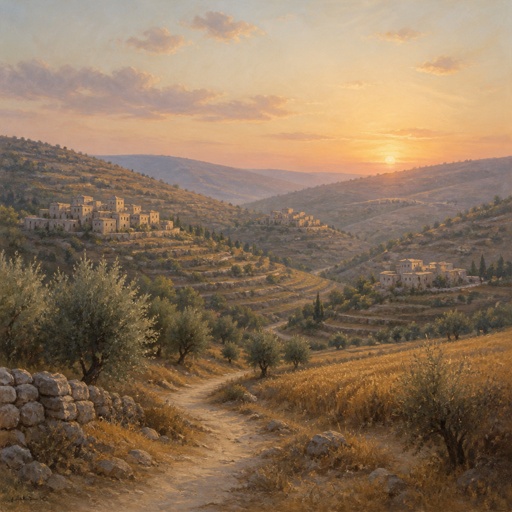
"And in the valley, Eshtaol, and Zoreah, and Ashnah," - Joshua 15:33

"And Haphraim, and Shion, and Anaharath," - Joshua 19:19

Joshua 19:4 - "And Eltolad, and Bethul, and Hormah,"

Joshua 19:42 - "And Shaalabbin, and Ajalon, and Jethlah,"

Joshua 19:44 - "And Eltekeh, and Gibbethon, and Baalath,"

Joshua 19:43 - "And Elon, and Thimnathah, and Ekron,"

Joshua 19:36 - "And Adamah, and Ramah, and Hazor,"

Joshua 19:20 - "And Rabbith, and Kishion, and Abez,"

Joshua 19:37 - "And Kedesh, and Edrei, and En-hazor,"

Joshua 19:3 - "And Hazar-shual, and Balah, and Azem,"

Joshua 19:5 - "And Ziklag, and Beth-marcaboth, and Hazar-susah,"

Jeremiah 33:19 - "¶ And the word of the LORD came unto Jeremiah, saying,"

Numbers 33:19 - "And they departed from Rithmah, and pitched at Rimmon-parez."

Joshua 19:45 - "And Jehud, and Bene-berak, and Gath-rimmon,"

Joshua 19:25 - "And their border was Helkath, and Hali, and Beten, and Achshaph,"

Joshua 13:33 - "But unto the tribe of Levi Moses gave not any inheritance: the LORD God of Israel was their inheritance, as he said unto them."

Joshua 19:18 - "And their border was toward Jezreel, and Chesulloth, and Shunem,"

Joshua 19:49 - "¶ When they had made an end of dividing the land for inheritance by their coasts, the children of Israel gave an inheritance to Joshua the son of Nun among them:"

Joshua 19:41 - "And the coast of their inheritance was Zorah, and Eshtaol, and Ir-shemesh,"

Joshua 19:2 - "And they had in their inheritance Beer-sheba, or Sheba, and Moladah,"

Joshua 19:46 - "And Me-jarkon, and Rakkon, with the border before Japho."

Joshua 12:19 - "The king of Madon, one; the king of Hazor, one;"
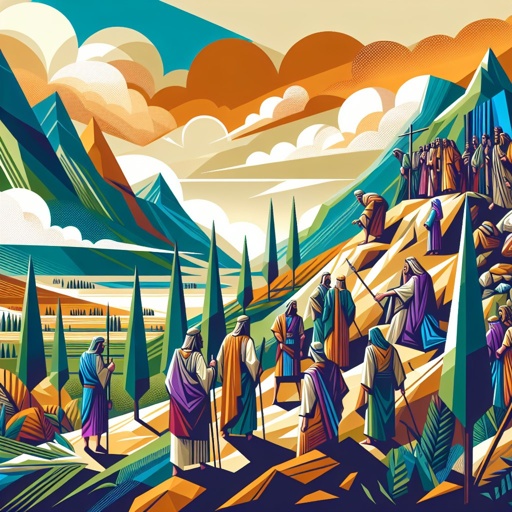
Joshua 24:33 - "And Eleazar the son of Aaron died; and they buried him in a hill that pertained to Phinehas his son, which was given him in mount Ephraim."