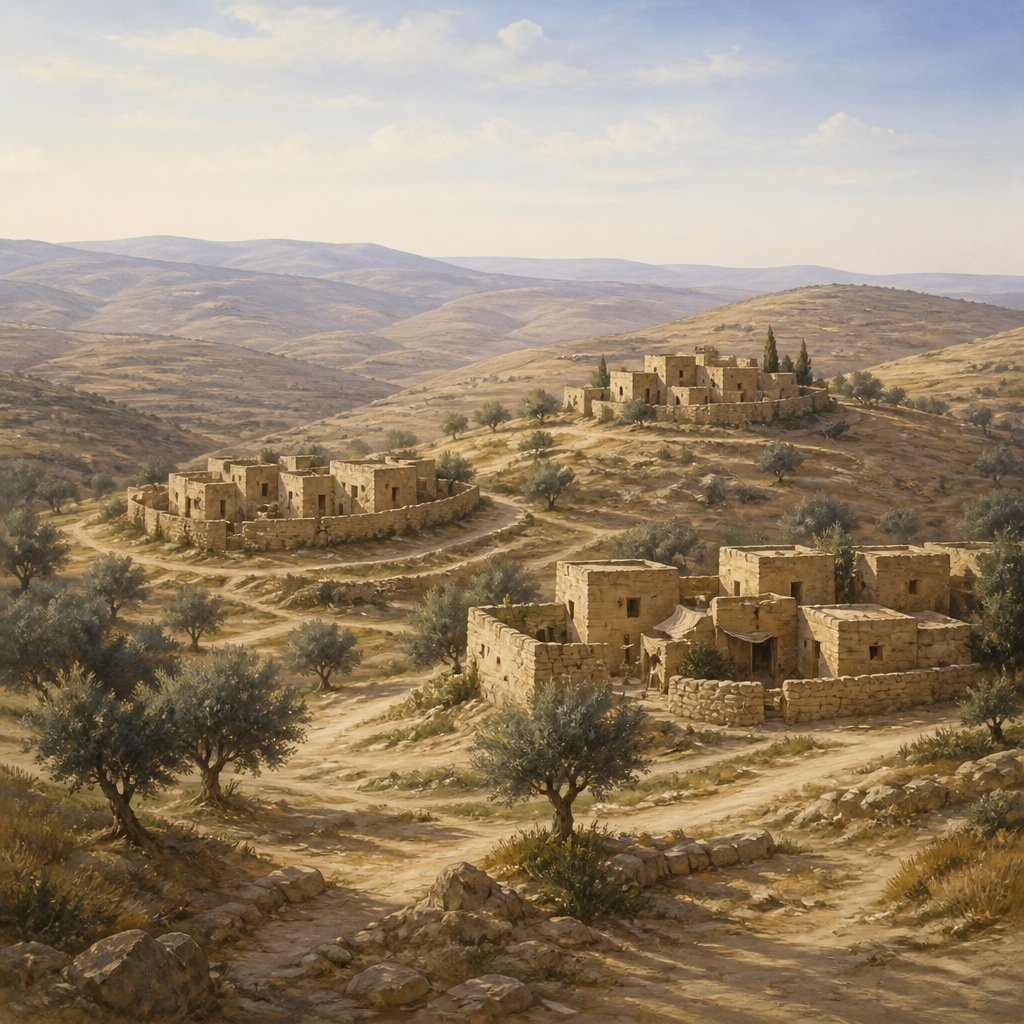
Joshua 19:4 (KJV) states: "And Elath, and Geba, six cities with their villages."
This verse is part of a larger passage in the Book of Joshua, which details the division of the land of Canaan among the tribes of Israel. In this particular verse, the allocation of cities to the tribe of Judah is being described. As the Israelites enter the Promised Land, the tribe of Judah is given specific territories and cities as their inheritances.
The verse carries a symbolic and spiritual meaning that is relevant to the Christian faith. It speaks to the concept of God's faithfulness in fulfilling his promises to his people. Just as the land of Canaan was allotted to the Israelites, believers are assured of the fulfillment of God's promises in their lives. It also highlights the importance of God's provision and the blessings that come with obedience and faithfulness.
Contextually, the division of the Promised Land among the twelve tribes of Israel was a significant event in biblical history. It marked the fulfillment of God's covenant with Abraham and the realization of the promise of a land flowing with milk and honey. This division also served to establish the boundaries and territories of each tribe, providing a sense of order and ownership as they settled in the land.
The theme of inheritance is central to this verse. In the biblical context, the distribution of cities and territories served as a tangible representation of the inheritance that God had promised to his people. This concept extends to the New Testament, where believers are reminded of their inheritance in Christ, who has secured for them an eternal inheritance through his redemptive work on the cross.
The cities mentioned in the verse, Elath and Geba, hold symbolic significance as well. Elath, located in the southernmost region of Judah, was a strategic city for trade and commerce. Its inclusion in the tribal allotment conveys the idea of prosperity and abundance that comes from God's provision. Geba, on the other hand, was a city known for its elevation, often symbolizing a place of refuge and security. Together, these cities represent the holistic nature of God's blessings, encompassing both material and spiritual aspects.
Moreover, the number six mentioned in the verse carries biblical symbolism. In the Bible, the number six often represents incompleteness or imperfection, as it falls short of the perfect number seven. This could be a reminder of the temporary nature of earthly possessions and territories, pointing believers to the eternal and perfect inheritance that awaits them in God's kingdom.
It is important to note that throughout the Old Testament, the division of land was not just an administrative or political act; it held deep theological and spiritual significance. The distribution of cities and territories was a tangible expression of God's faithfulness, provision, and sovereignty over his people. It was a reminder that their inheritance was not just a physical land, but a covenantal relationship with the Lord.
In summary, Joshua 19:4 holds powerful spiritual truths for believers. It serves as a reminder of God's faithfulness in fulfilling his promises, the concept of inheritance in the Christian faith, the symbolic significance of the cities allotted to the tribe of Judah, and the temporary nature of earthly possessions in contrast to the eternal inheritance in Christ. This verse highlights the timeless truths of God's provision and sovereignty, which resonate with believers today as they trust in the Lord's faithfulness and await their ultimate inheritance in the kingdom of God.
Get our apps


Artwork for Joshua 19:4

Joshua 19:4 - "And Eltolad, and Bethul, and Hormah,"

"And Eltolad, and Bethul, and Hormah," - Joshua 19:4

Joshua 4:19 - "¶ And the people came up out of Jordan on the tenth day of the first month, and encamped in Gilgal, in the east border of Jericho."

Joshua 19:19 - "And Haphraim, and Shion, and Anaharath,"

"And Haphraim, and Shion, and Anaharath," - Joshua 19:19

Joshua 4:15 - "And the LORD spake unto Joshua, saying,"

Joshua 19:42 - "And Shaalabbin, and Ajalon, and Jethlah,"

Joshua 4:4 - "Then Joshua called the twelve men, whom he had prepared of the children of Israel, out of every tribe a man:"

Joshua 19:44 - "And Eltekeh, and Gibbethon, and Baalath,"

Joshua 19:43 - "And Elon, and Thimnathah, and Ekron,"

Joshua 19:36 - "And Adamah, and Ramah, and Hazor,"

Joshua 19:20 - "And Rabbith, and Kishion, and Abez,"

Joshua 19:37 - "And Kedesh, and Edrei, and En-hazor,"

Joshua 19:3 - "And Hazar-shual, and Balah, and Azem,"

Joshua 19:5 - "And Ziklag, and Beth-marcaboth, and Hazar-susah,"

Joshua 19:45 - "And Jehud, and Bene-berak, and Gath-rimmon,"

Joshua 19:25 - "And their border was Helkath, and Hali, and Beten, and Achshaph,"

Joshua 19:18 - "And their border was toward Jezreel, and Chesulloth, and Shunem,"
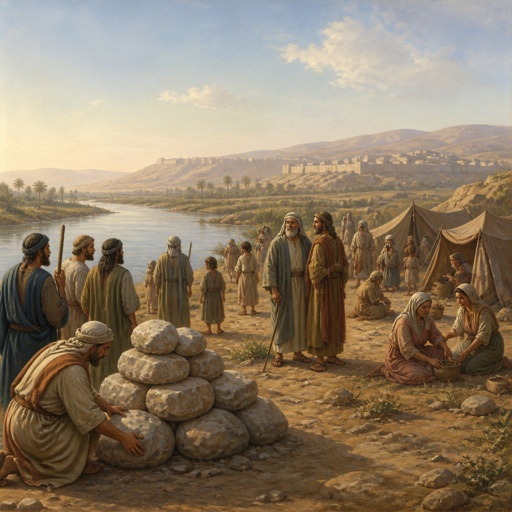
"¶ And the people came up out of Jordan on the tenth day of the first month, and encamped in Gilgal, in the east border of Jericho." - Joshua 4:19

Joshua 19:49 - "¶ When they had made an end of dividing the land for inheritance by their coasts, the children of Israel gave an inheritance to Joshua the son of Nun among them:"

Joshua 19:41 - "And the coast of their inheritance was Zorah, and Eshtaol, and Ir-shemesh,"

Joshua 19:2 - "And they had in their inheritance Beer-sheba, or Sheba, and Moladah,"

Joshua 12:19 - "The king of Madon, one; the king of Hazor, one;"

Joshua 19:46 - "And Me-jarkon, and Rakkon, with the border before Japho."

Joshua 4:17 - "Joshua therefore commanded the priests, saying, Come ye up out of Jordan."

Joshua 19:6 - "And Beth-lebaoth, and Sharuhen; thirteen cities and their villages:"

Joshua 13:19 - "And Kirjathaim, and Sibmah, and Zareth-shahar in the mount of the valley,"

Joshua 19:35 - "And the fenced cities are Ziddim, Zer, and Hammath, Rakkath, and Chinnereth,"

Joshua 4:20 - "And those twelve stones, which they took out of Jordan, did Joshua pitch in Gilgal."

Joshua 3:4