What does Joshua 2:13 mean?
“And that ye will save alive my father, and my mother, and my brethren, and my sisters, and all that they have, and deliver our lives from death.” — Joshua 2:13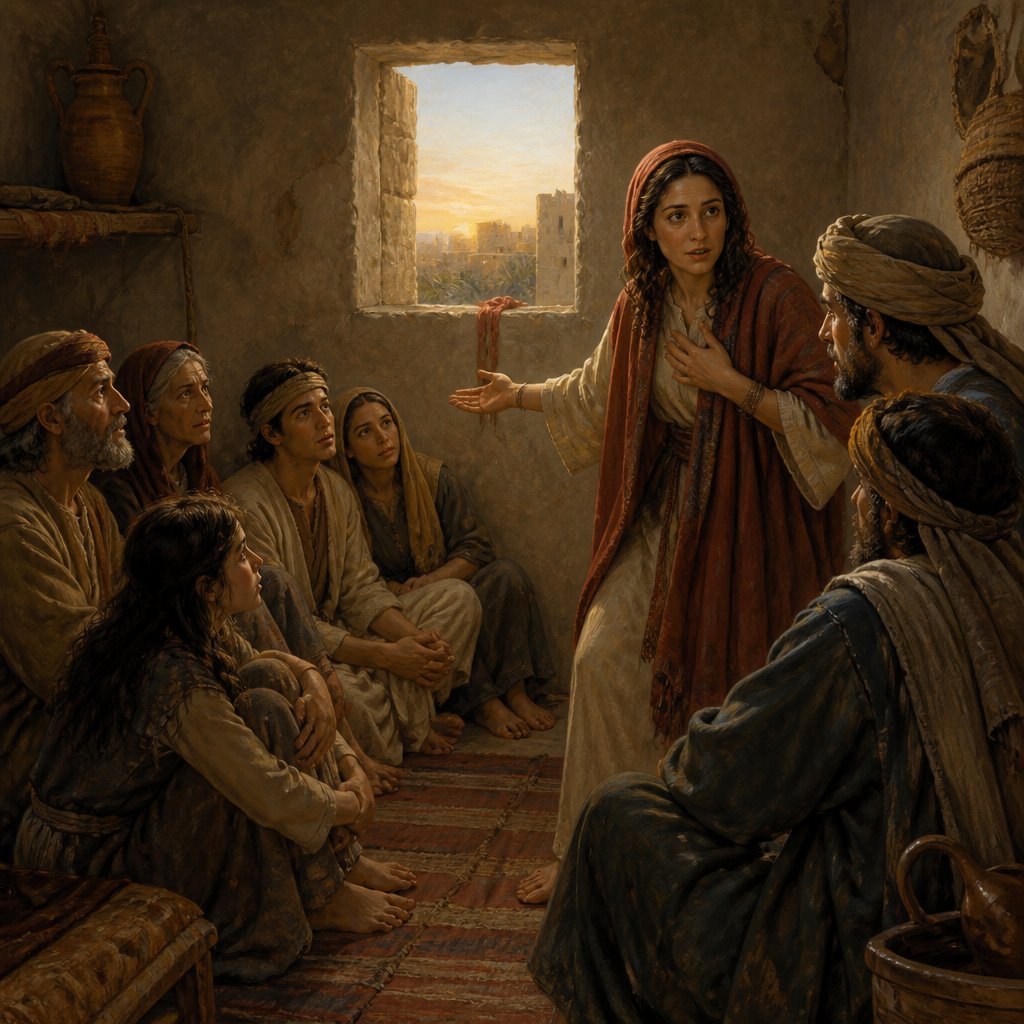
The Bible verse Joshua 2:13 from the King James Version reads, "And that ye will save alive my father, and my mother, and my brethren, and my sisters, and all that they have, and deliver our lives from death."
This verse is part of the narrative of the Israelites' conquest of the promised land, specifically the story of Rahab, a woman from the city of Jericho. This verse occurs as Rahab is speaking to the Israelite spies whom she has hidden, expressing her hope that they will spare her and her family when they capture the city.
To understand the full meaning and context of this verse, it is important to understand the broader themes of the book of Joshua and the significance of Rahab's story within it. The book of Joshua is primarily concerned with the Israelites' conquest of the land of Canaan, which was the land promised to them by God. Joshua, the leader of the Israelites, is tasked with leading the people in the military campaign to take possession of this land. The book emphasizes themes of obedience to God, faithfulness, and the fulfillment of God's promises.
Rahab's story is significant within the book of Joshua for a few reasons. First, she is a Canaanite woman who, despite being a member of the enemy population, shows faith in the God of Israel. This faith leads her to protect the Israelite spies and make a pact with them for the safety of her and her family. Her actions demonstrate the power of faith and the possibility of salvation for those outside of the nation of Israel.
Furthermore, Rahab's story serves as a reminder of God's faithfulness to fulfill his promises. Her plea for the safety of her family reflects the concern for the well-being of loved ones that is central to the human experience. The Israelite spies promise to honor her request, and Rahab's family is indeed spared when Jericho is captured, demonstrating God's faithfulness to those who trust in him.
The verse Joshua 2:13 speaks to the theme of salvation and deliverance. Rahab's plea for the salvation of her family members is deeply rooted in the idea of God as a savior and protector. This echoes the broader biblical theme of God as the ultimate source of deliverance from danger and death. In the New Testament, this theme is further developed through the person of Jesus Christ, who is seen as the ultimate savior and deliverer.
The symbolism in this verse is also significant. Rahab's plea for the salvation of her family members represents the universal human desire for safety and security for loved ones. It also serves as a foreshadowing of the inclusion of Gentiles (non-Jews) within the redemptive plan of God. Rahab, a Gentile woman, is shown to be a part of God's plan for the salvation of humanity, despite her status as an outsider.
In conclusion, Joshua 2:13 is a verse that holds significant thematic and symbolic meaning within the broader context of the book of Joshua and the biblical narrative as a whole. It speaks to the themes of faith, salvation, and God's faithfulness, and it serves as a powerful reminder of God's ability to bring about deliverance and redemption for all who trust in him. Rahab's story is a testament to the universal nature of God's redemptive plan, and her actions serve as a powerful example of faith in the midst of adversity.
Get our apps


Artwork for Joshua 2:13

Joshua 2:13 - "And that ye will save alive my father, and my mother, and my brethren, and my sisters, and all that they have, and deliver our lives from death."
"And that ye will save alive my father, and my mother, and my brethren, and my sisters, and all that they have, and deliver our lives from death." - Joshua 2:13

Joshua 13:2 - "This is the land that yet remaineth: all the borders of the Philistines, and all Geshuri,"
"This is the land that yet remaineth: all the borders of the Philistines, and all Geshuri," - Joshua 13:2

Joshua 14:13 - "And Joshua blessed him, and gave unto Caleb the son of Jephunneh Hebron for an inheritance."

Joshua 5:13

Joshua 13:18 - "And Jahazah, and Kedemoth, and Mephaath,"

Joshua 11:13 - "But as for the cities that stood still in their strength, Israel burned none of them, save Hazor only; that did Joshua burn."

Joshua 5:13 (KJVA) 13 And it came to pass, when Joshua was by Jericho, that he lifted up his eyes and looked, and, behold, there stood a man over against him with his sword drawn in his hand: and Joshua went unto him, and said unto him, Art thou for us, or for our adversaries?

Joshua 8:13 - "And when they had set the people, even all the host that was on the north of the city, and their liers in wait on the west of the city, Joshua went that night into the midst of the valley."

Joshua 13:13 - "Nevertheless the children of Israel expelled not the Geshurites, nor the Maachathites: but the Geshurites and the Maachathites dwell among the Israelites until this day."

Joshua 13:20 - "And Beth-peor, and Ashdoth-pisgah, and Beth-jeshimoth,"

Joshua 12:13 - "The king of Debir, one; the king of Geder, one;"

Joshua 13:19 - "And Kirjathaim, and Sibmah, and Zareth-shahar in the mount of the valley,"

Exodus 17:13 - "And Joshua discomfited Amalek and his people with the edge of the sword."

Joshua 13:28 - "This is the inheritance of the children of Gad after their families, the cities, and their villages."

Joshua 13:1 - "Now Joshua was old and stricken in years; and the LORD said unto him, Thou art old and stricken in years, and there remaineth yet very much land to be possessed."

"And Jahazah, and Kedemoth, and Mephaath," - Joshua 13:18

Joshua 9:2 - "That they gathered themselves together, to fight with Joshua and with Israel, with one accord."

Joshua 15:13 - "¶ And unto Caleb the son of Jephunneh he gave a part among the children of Judah, according to the commandment of the LORD to Joshua, even the city of Arba the father of Anak, which city is Hebron."

"And Joshua blessed him, and gave unto Caleb the son of Jephunneh Hebron for an inheritance." - Joshua 14:13

Joshua 13:15 - "¶ And Moses gave unto the tribe of the children of Reuben inheritance according to their families."

Joshua 5:13 - "¶ And it came to pass, when Joshua was by Jericho, that he lifted up his eyes and looked, and, behold, there stood a man over against him with his sword drawn in his hand: and Joshua went unto him, and said unto him, Art thou for us, or for our adversaries?"

Joshua 13:17 - "Heshbon, and all her cities that are in the plain; Dibon, and Bamoth-baal, and Beth-baal-meon,"

Exodus 24:13 - "And Moses rose up, and his minister Joshua: and Moses went up into the mount of God."

Joshua 13:26 - "And from Heshbon unto Ramath-mizpeh, and Betonim; and from Mahanaim unto the border of Debir;"

Joshua 13:11 - "And Gilead, and the border of the Geshurites and Maachathites, and all mount Hermon, and all Bashan unto Salcah;"

Joshua 13:7 - "Now therefore divide this land for an inheritance unto the nine tribes, and the half tribe of Manasseh,"

Joshua 2:9

Joshua 13:4 - "From the south, all the land of the Canaanites, and Mearah that is beside the Sidonians, unto Aphek, to the borders of the Amorites:"