What does Joshua 3:17 mean?
“And the priests that bare the ark of the covenant of the LORD stood firm on dry ground in the midst of Jordan, and all the Israelites passed over on dry ground, until all the people were passed clean over Jordan.” — Joshua 3:17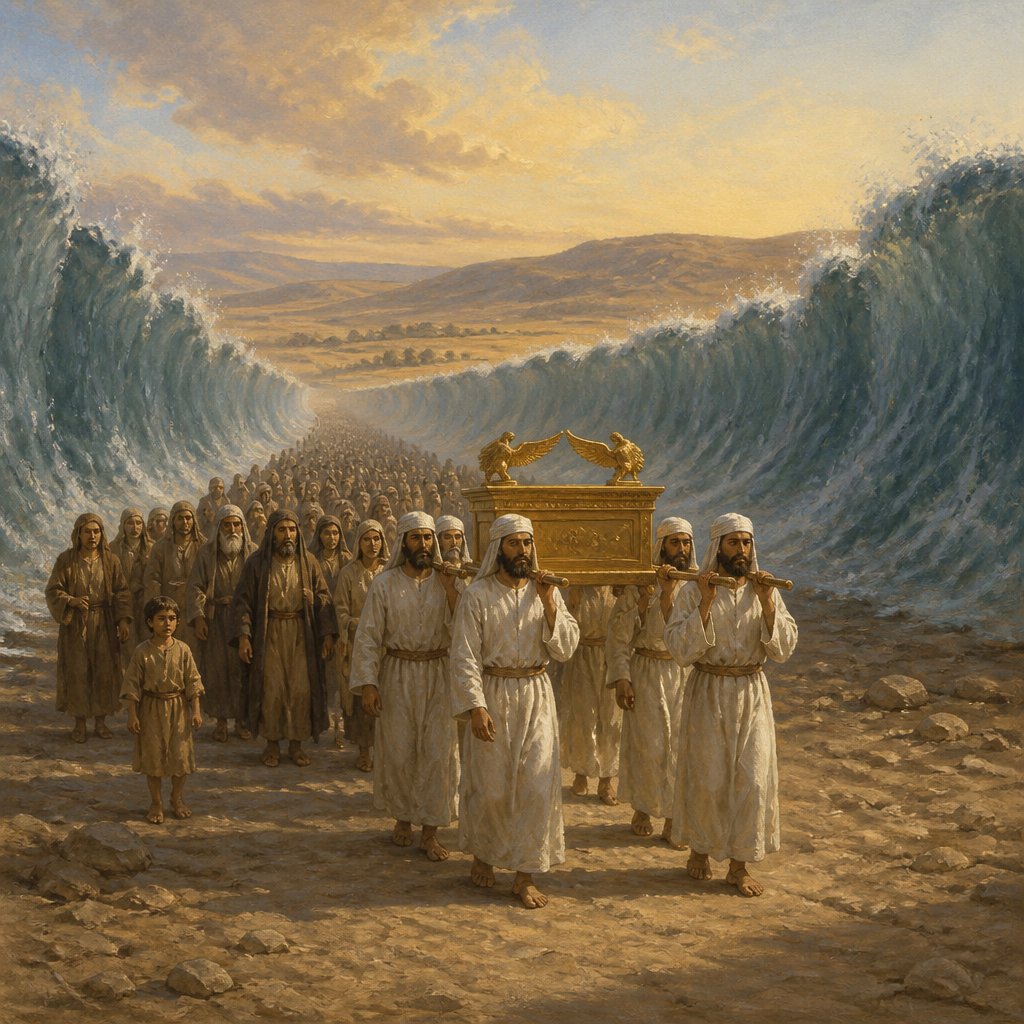
Joshua 3:17 in the KJV reads, “And the priests that bare the ark of the covenant of the LORD stood firm on dry ground in the midst of Jordan, and all the Israelites passed over on dry ground, until all the people were passed clean over Jordan.”
In its immediate context, this verse belongs to the moment when Israel, under Joshua’s leadership, crosses the river Jordan to enter the land the LORD had promised. The river is not merely a geographic obstacle; it is the final boundary between wilderness wandering and covenant inheritance. Earlier in the chapter the LORD has Joshua direct the people to follow the ark, and the priests bearing it step toward the water. When they do, the waters are cut off and Israel crosses. Joshua 3:17 describes the culminating picture of that miracle, focusing on where the priests stand, what they bear, and what happens to the entire nation as a result.
The first striking theme is the centrality of “the ark of the covenant of the LORD.” In the KJV wording, the ark is not a religious ornament carried alongside the people’s plans; it is the visible sign of the LORD’s covenant presence and rule among them. That the priests “bare the ark” places the crossing under the authority of the covenant-making God who brought Israel out of Egypt and who now brings them in. The people do not enter Canaan by mere strategy, strength, or momentum, but by a passage opened where the ark goes first. The verse therefore underscores that the transition into promise is fundamentally spiritual and covenantal: the LORD leads, and Israel follows.
The next emphasis is steadiness and assurance: “stood firm on dry ground in the midst of Jordan.” The priests do not hurry through; they stand. The Hebrew scene, as the KJV frames it, is of men stationed in the very place that ought to be dangerous and unstable. The Jordan is normally a barrier; yet here the priests occupy its center as if it were ordinary ground. The phrase “stood firm” communicates stability granted by God in the middle of what would naturally overwhelm them. It is as though the LORD turns the threatening middle into a place of footing. That location matters: they are not on the bank, but “in the midst.” The LORD’s power is shown not only in getting people out of trouble, but in holding them steady at the heart of it.
“On dry ground” repeats the language used in Israel’s earlier deliverance through the Red Sea. In the KJV, the echo is deliberate in effect even if unspoken: the same God who made a way through the sea now makes a way through the river. This continuity is crucial for Joshua’s leadership moment. Moses is gone; the people may wonder whether the LORD will be with Joshua as He was with Moses. The detail that the nation passes “on dry ground” testifies that the LORD has not changed, His covenant faithfulness has not diminished, and His presence remains with His people. In that sense, Joshua 3:17 is a bridge verse: it connects the exodus generation’s defining miracle with the next generation’s entrance into the land.
The verse also highlights God’s order and care for the whole community: “and all the Israelites passed over on dry ground, until all the people were passed clean over Jordan.” The repetition of “all” and the final phrase “passed clean over” presses the completeness of the deliverance. No one is left stranded, no one is swept away, no one is only halfway delivered. The crossing is not partial or fragile; it is thorough. The LORD’s act is sufficient for the entire nation, from the first to the last, and it remains in effect “until” the last person is safely across. The priests standing in the midst while everyone passes conveys a kind of covenantal guardianship: the ark remains in the center of the passage, as if the LORD Himself holds the way open until the work is finished.
Symbolically, Jordan functions as a boundary between an old season and a new one. Wilderness life, with its manna and wandering and delay, lies behind; inheritance and conflict and settled promise lie ahead. To cross Jordan is to step into a new stage of obedience. Yet Joshua 3:17 insists that the new stage begins the same way the old one did: by the LORD’s initiative and power, not by Israel’s ability. The people do walk; they “passed over.” Human obedience is real and required. But the path they walk exists only because God has made it. The dry ground becomes a picture of the LORD’s enabling grace: He commands His people forward, and He provides what they need to obey the command.
There is also a priestly and worshipful significance. The priests do not merely accompany the people; they bear the covenant sign and stand fixed in the riverbed. This places worship and the presence of God at the center of national life at the very outset of entering the land. Israel’s future in Canaan will depend not simply on possessing territory but on remaining in covenant fidelity to the LORD. By setting the ark in the midst of the crossing, the narrative teaches that the heart of Israel’s identity is not the land itself but the LORD who gives it and dwells among them.
The significance of Joshua 3:17, then, is that it portrays the LORD as the One who opens an impossible way, anchors His people in the midst of danger, and completes what He begins for the entire community, all under the sign of His covenant presence. It is a national testimony that the God of the exodus is still the God of Israel, that His promises are not abstract words but accomplished realities, and that the entrance into promise is marked by reverent following of the LORD, steady priestly mediation of His covenant sign, and a complete, “clean” passage from one side to the other.
Get our apps


Artwork for Joshua 3:17

Joshua 3:17 – "The priests who carried the ark of the covenant of the Lord stood firm on dry ground in the middle of the Jordan."
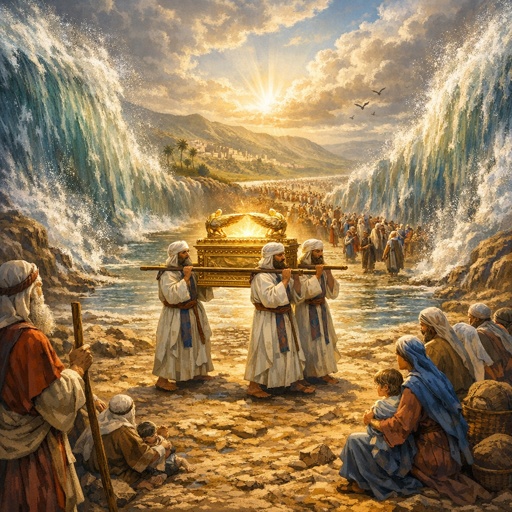
"And the priests that bare the ark of the covenant of the LORD stood firm on dry ground in the midst of Jordan, and all the Israelites passed over on dry ground, until all the people were passed clean over Jordan." - Joshua 3:17

Joshua 3:17 - "And the priests that bare the ark of the covenant of the LORD stood firm on dry ground in the midst of Jordan, and all the Israelites passed over on dry ground, until all the people were passed clean over Jordan."
"And the priests that bare the ark of the covenant of the LORD stood firm on dry ground in the midst of Jordan, and all the Israelites passed over on dry ground, until all the people were passed clean over Jordan." - Joshua 3:17

Joshua 3:1-17
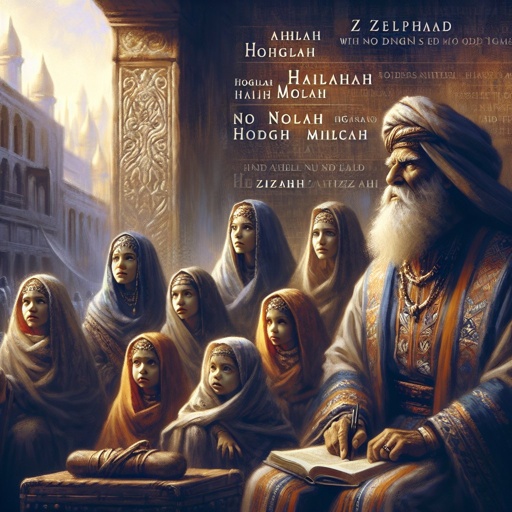
Joshua 17:3 - "¶ But Zelophehad, the son of Hepher, the son of Gilead, the son of Machir, the son of Manasseh, had no sons, but daughters: and these are the names of his daughters, Mahlah, and Noah, Hoglah, Milcah, and Tirzah."

Joshua 10:17 - "And it was told Joshua, saying, The five kings are found hid in a cave at Makkedah."

Joshua 17:17 - "And Joshua spake unto the house of Joseph, even to Ephraim and to Manasseh, saying, Thou art a great people, and hast great power: thou shalt not have one lot only:"

Joshua 24:17

Joshua 4:17 - "Joshua therefore commanded the priests, saying, Come ye up out of Jordan."

Joshua 24:17

Joshua 24:17

Joshua 6:17-25

Joshua 12:17 - "The king of Tappuah, one; the king of Hepher, one;"

Joshua 5:3 - "And Joshua made him sharp knives, and circumcised the children of Israel at the hill of the foreskins."

Exodus 17:13 - "And Joshua discomfited Amalek and his people with the edge of the sword."

Joshua 9:3 - "¶ And when the inhabitants of Gibeon heard what Joshua had done unto Jericho and to Ai,"

Joshua 3:4

Joshua 3:16

Joshua 3:14

Joshua 3:14

Joshua 1:3

Joshua 3:14

Joshua 3:14

Joshua 3:4

Joshua 3:5 - "And Joshua said unto the people, Sanctify yourselves: for to morrow the LORD will do wonders among you."

Joshua 3:9 - "¶ And Joshua said unto the children of Israel, Come hither, and hear the words of the LORD your God."

Zechariah 3:3 - "Now Joshua was clothed with filthy garments, and stood before the angel."

"And it was told Joshua, saying, The five kings are found hid in a cave at Makkedah." - Joshua 10:17

Joshua 8:3 - "¶ So Joshua arose, and all the people of war, to go up against Ai: and Joshua chose out thirty thousand mighty men of valour, and sent them away by night."