What does Joshua 6:26 mean?
“And Joshua adjured them at that time, saying, Cursed be the man before the LORD, that riseth up and buildeth this city Jericho: he shall lay the foundation thereof in his firstborn, and in his youngest son shall he set up the gates of it.” — Joshua 6:26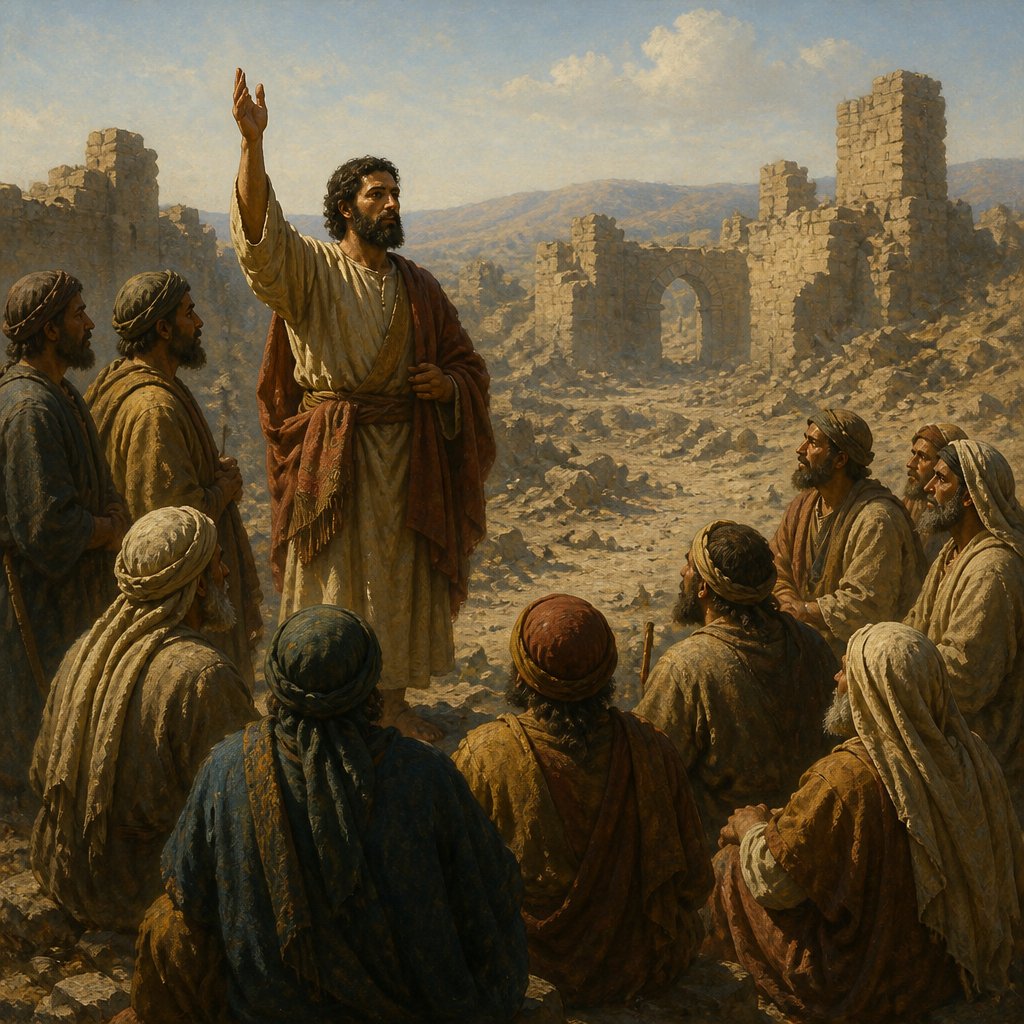
Joshua 6:26 in the King James Version reads, “And Joshua adjured them at that time, saying, Cursed be the man before the Lord, that riseth up and buildeth this city Jericho: he shall lay the foundation thereof in his firstborn, and in his youngest son shall he set up the gates of it.”
This verse concludes the narrative of the conquest of Jericho, a significant event in the Israelite’s history. The context of this verse is a solemn declaration made by Joshua as he admonishes the people, warning them of the consequences of disobeying the Lord’s commands. The fall of Jericho and the subsequent curse pronounced by Joshua reveal important themes such as obedience, divine judgment, and the power of God to fulfill his promises.
The context of Joshua 6:26 begins with the well-known story of the fall of Jericho. The city of Jericho was surrounded by impenetrable walls, and the inhabitants were known for their wealth and military might. God instructed Joshua to lead the Israelites in a unique and unconventional battle plan. They were instructed to march around the city once a day for six days, and then on the seventh day, to march around the city seven times, blow the trumpets and shout. Following these instructions, the walls of Jericho miraculously collapsed, and the Israelites were able to conquer the city.
After the fall of Jericho, Joshua adjured the people, warning them not to rebuild the city. He pronounced a curse on anyone who would try to do so. This curse was intended to be a deterrent to prevent the people from disobeying God’s command. This demonstrates an important theme of obedience and the consequences of disobedience. The people were to obey God’s instructions and not seek to rebuild the city, or they would suffer the repercussions.
Another significant theme in this verse is divine judgment. The curse pronounced by Joshua is a demonstration of God’s judgment on the city of Jericho. The destruction of Jericho was a result of God’s divine judgment on the city for its wickedness and idolatry. The city was considered to be a place of great moral corruption, and the people’s rejection of God’s authority led to their downfall. This theme reflects the biblical principle that disobedience to God’s commands will ultimately lead to judgment and punishment.
Additionally, this verse illustrates the power of God to fulfill His promises. The fall of Jericho and the subsequent curse pronounced by Joshua demonstrate God’s faithfulness in fulfilling His promises to the Israelites. God had promised to give them the land of Canaan, and the conquest of Jericho was a remarkable fulfillment of that promise. The miraculous collapse of the city’s walls revealed God’s supernatural power and His ability to overcome seemingly insurmountable obstacles. The curse pronounced by Joshua also emphasizes the severity of God’s judgment and the certainty of His promises.
Symbolically, the curse on Jericho serves as a warning to all who would oppose God’s will and seek to defy His authority. It represents the consequences of disobedience and the inevitable judgment that follows. Additionally, the fall of Jericho and the curse pronounced by Joshua foreshadow the ultimate victory of God’s people over their enemies. It serves as a reminder of God’s faithfulness, His power to fulfill His promises, and the importance of obedience to His commands.
In conclusion, Joshua 6:26 in the King James Version encapsulates important themes such as obedience, divine judgment, and the power of God to fulfill His promises. The context of this verse within the narrative of the conquest of Jericho highlights the significance of God’s judgment on the city and the consequences of disobedience. The curse pronounced by Joshua serves as a warning and a demonstration of God’s faithfulness and power to fulfill His promises. This verse continues to be a powerful reminder of the importance of obedience and the certainty of God’s judgment.
Get our apps


Artwork for Joshua 6:26

Joshua 6:26 - "¶ And Joshua adjured them at that time, saying, Cursed be the man before the LORD, that riseth up and buildeth this city Jericho: he shall lay the foundation thereof in his firstborn, and in his youngest son shall he set up the gates of it."
"¶ And Joshua adjured them at that time, saying, Cursed be the man before the LORD, that riseth up and buildeth this city Jericho: he shall lay the foundation thereof in his firstborn, and in his youngest son shall he set up the gates of it." - Joshua 6:26

Joshua 18:26 - "And Mizpeh, and Chephirah, and Mozah,"

Joshua 15:26 - "Amam, and Shema, and Moladah,"

Joshua 24:26 - "¶ And Joshua wrote these words in the book of the law of God, and took a great stone, and set it up there under an oak, that was by the sanctuary of the LORD."

Joshua 10:26 - "And afterward Joshua smote them, and slew them, and hanged them on five trees: and they were hanging upon the trees until the evening."

Joshua 8:26 - "For Joshua drew not his hand back, wherewith he stretched out the spear, until he had utterly destroyed all the inhabitants of Ai."

Joshua 6

"And Mizpeh, and Chephirah, and Mozah," - Joshua 18:26

"Amam, and Shema, and Moladah," - Joshua 15:26

Joshua 6:12 - "¶ And Joshua rose early in the morning, and the priests took up the ark of the LORD."

Joshua 6:27 - "So the LORD was with Joshua; and his fame was noised throughout all the country."

Joshua 19:26 - "And Alammelech, and Amad, and Misheal; and reacheth to Carmel westward, and to Shihor-libnath;"

Joshua 22:6 - "So Joshua blessed them, and sent them away: and they went unto their tents."

Joshua 21:26 - "All the cities were ten with their suburbs for the families of the children of Kohath that remained."

Joshua 6:20

Joshua 6:20

Joshua 6:6 - "¶ And Joshua the son of Nun called the priests, and said unto them, Take up the ark of the covenant, and let seven priests bear seven trumpets of rams' horns before the ark of the LORD."

Joshua 13:26 - "And from Heshbon unto Ramath-mizpeh, and Betonim; and from Mahanaim unto the border of Debir;"

Joshua 6:17-25

Joshua 6:2 - "And the LORD said unto Joshua, See, I have given into thine hand Jericho, and the king thereof, and the mighty men of valour."

Joshua 9:26 - "And so did he unto them, and delivered them out of the hand of the children of Israel, that they slew them not."

Joshua 22:26 - "Therefore we said, Let us now prepare to build us an altar, not for burnt offering, nor for sacrifice:"

Joshua 6:25 - "And Joshua saved Rahab the harlot alive, and her father's household, and all that she had; and she dwelleth in Israel even unto this day; because she hid the messengers, which Joshua sent to spy out Jericho."

Joshua 6:27 - "So the LORD was with Joshua; and his fame was noised throughout all the country."

Joshua 6:16 - "And it came to pass at the seventh time, when the priests blew with the trumpets, Joshua said unto the people, Shout; for the LORD hath given you the city."

Joshua 6:27 - "So the LORD was with Joshua; and his fame was noised throughout all the country."

Joshua 6:27 - "So the LORD was with Joshua; and his fame was noised throughout all the country."

Zechariah 3:6 - "And the angel of the LORD protested unto Joshua, saying,"

Joshua 19:6 - "And Beth-lebaoth, and Sharuhen; thirteen cities and their villages:"