What does Judges 1:8 mean?
“Now the children of Judah had fought against Jerusalem, and had taken it, and smitten it with the edge of the sword, and set the city on fire.” — Judges 1:8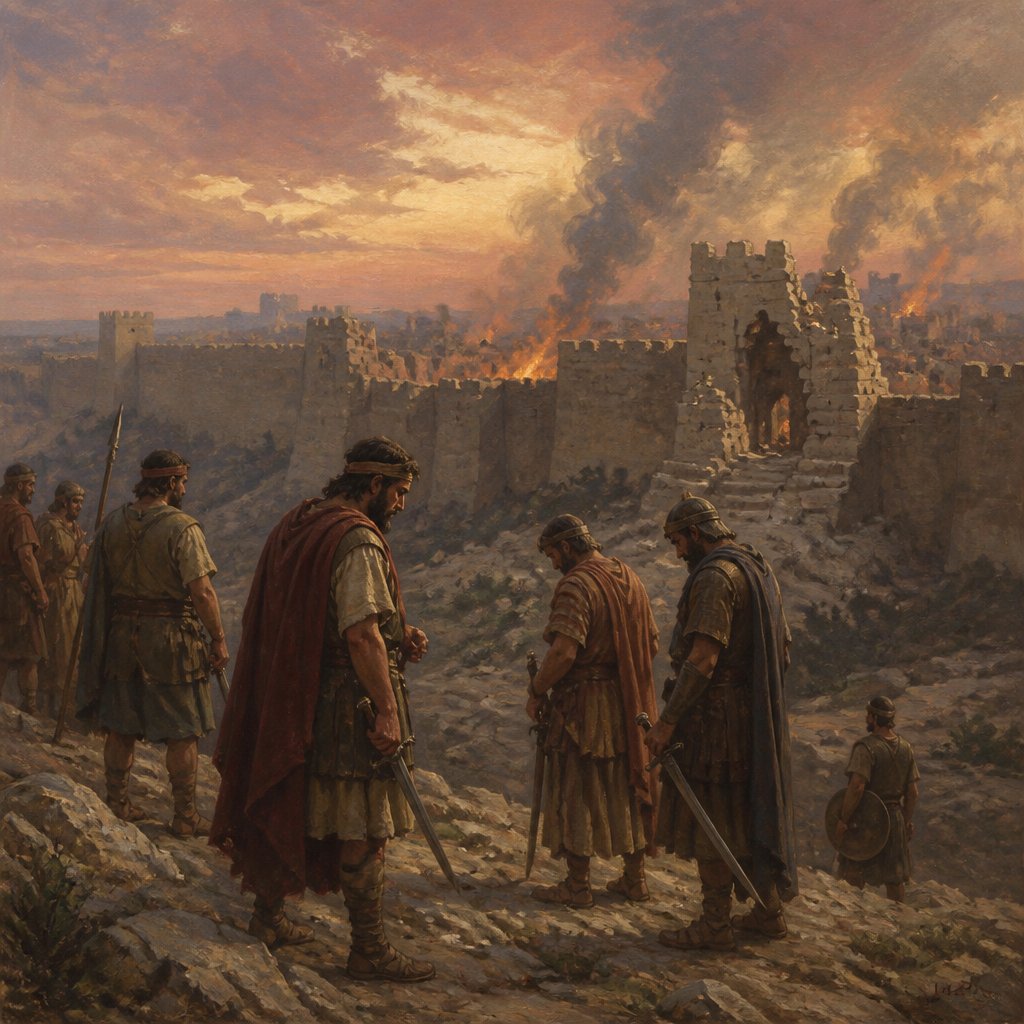
The Bible verse Judges 1:8 in the King James Version (KJV) reads: "Now the children of Judah had fought against Jerusalem, and had taken it, and smitten it with the edge of the sword, and set the city on fire."
This verse comes from the book of Judges in the Old Testament, which chronicles the period of time after the Israelites settled in the Promised Land. It is a historical narrative that tells the story of the Israelites' conquests and their struggles to establish themselves as a nation governed by God.
In this particular verse, the focus is on the tribe of Judah's conquest of Jerusalem. It describes how the children of Judah fought against the city, seized it, and destroyed it by setting it on fire. This event is significant in the biblical narrative as it signifies the Israelites' efforts to take possession of the land that God had promised to them.
The theme of conquest and warfare is prevalent throughout the book of Judges, as the Israelites sought to claim the land that was promised to them by God. The conquest of Jerusalem by the children of Judah is just one example of their struggle to establish their presence in the Promised Land. It reflects the ongoing battles and conflicts faced by the Israelites as they sought to assert their authority and claim the territory that God had allotted to them.
The context of this verse is important in understanding its significance within the larger narrative of the book of Judges. After the death of Joshua, who had led the Israelites into the Promised Land, the tribes of Israel were left without a central leader. As a result, they faced numerous challenges and conflicts as they sought to settle in the land and establish themselves as a nation.
The book of Judges depicts a cycle of apostasy, oppression, repentance, and deliverance, as the Israelites repeatedly turned away from God, faced the consequences of their actions, and were ultimately rescued by God's intervention through a series of judges. The conquest of Jerusalem by the children of Judah is a part of this larger cycle, demonstrating the Israelites' ongoing struggle to establish their presence in the land and the role of God in guiding and supporting them through their endeavors.
Symbolism in this verse can be seen in the conquest of Jerusalem itself. Jerusalem holds significant symbolic and spiritual importance throughout the Bible, as it is often associated with the presence of God and his chosen people. The fact that the children of Judah were able to take and conquer Jerusalem can be seen as a reflection of God's favor and support for the Israelites as they sought to claim the land that he had promised to them.
Furthermore, the act of setting the city on fire can also be seen as symbolic. Fire is often used in the Bible to represent purification, judgment, and the presence of God. In this context, the setting of Jerusalem on fire could be interpreted as a form of divine judgment and purification, as the Israelites sought to cleanse the land of its previous inhabitants and establish their own presence in accordance with God's will.
Overall, Judges 1:8 in the King James Version is a significant verse within the larger narrative of the book of Judges. It captures the ongoing struggles of the Israelites as they sought to claim the land that God had promised to them, and it reflects the themes of conquest, warfare, and divine support that are prevalent throughout the book. The verse also holds symbolic significance, particularly in its portrayal of Jerusalem and the act of setting the city on fire, which can be interpreted as reflections of God's favor and judgment.
Get our apps


Artwork for Judges 1:8

Judges 1:8 - "Now the children of Judah had fought against Jerusalem, and had taken it, and smitten it with the edge of the sword, and set the city on fire."
"Now the children of Judah had fought against Jerusalem, and had taken it, and smitten it with the edge of the sword, and set the city on fire." - Judges 1:8

1 Samuel 8:1 - "And it came to pass, when Samuel was old, that he made his sons judges over Israel."

1 Samuel 8:2 - "Now the name of his firstborn was Joel; and the name of his second, Abiah: they were judges in Beer-sheba."
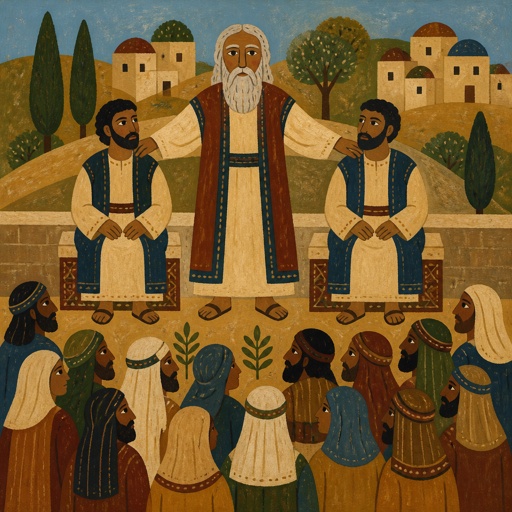
1 Samuel 8:1 - "And it came to pass, when Samuel was old, that he made his sons judges over Israel."

Judges 9:8-15

1 Samuel 8:6 - "¶ But the thing displeased Samuel, when they said, Give us a king to judge us. And Samuel prayed unto the LORD."

John 8:15 - "Ye judge after the flesh; I judge no man."

"And it came to pass, when Samuel was old, that he made his sons judges over Israel." - 1 Samuel 8:1

Judges 12:8 - "¶ And after him Ibzan of Beth-lehem judged Israel."

Judges 8:1 - "And the men of Ephraim said unto him, Why hast thou served us thus, that thou calledst us not, when thou wentest to fight with the Midianites? And they did chide with him sharply."

Judges 1:18 - "Also Judah took Gaza with the coast thereof, and Askelon with the coast thereof, and Ekron with the coast thereof."

1 Samuel 8:20 - "That we also may be like all the nations; and that our king may judge us, and go out before us, and fight our battles."

Judges 8:17 - "And he beat down the tower of Penuel, and slew the men of the city."

Judges 8:29 - "And Jerubbaal the son of Joash went and dwelt in his own house."

Proverbs 8:16 - "By me princes rule, and nobles, even all the judges of the earth."

Judges 8:13 - "¶ And Gideon the son of Joash returned from battle before the sun was up,"

Judges 8:8 - "¶ And he went up thence to Penuel, and spake unto them likewise: and the men of Penuel answered him as the men of Succoth had answered him."

1 Samuel 8:5 - "And said unto him, Behold, thou art old, and thy sons walk not in thy ways: now make us a king to judge us like all the nations."

Psalms 7:8 - "The LORD shall judge the people: judge me, O LORD, according to my righteousness, and according to mine integrity that is in me."

Judges 2:8 - "And Joshua the son of Nun, the servant of the LORD, died, being an hundred and ten years old."

1 Kings 8:32 - "Then hear thou in heaven, and do, and judge thy servants, condemning the wicked, to bring his way upon his head; and justifying the righteous, to give him according to his righteousness."

"Now the name of his firstborn was Joel; and the name of his second, Abiah: they were judges in Beer-sheba." - 1 Samuel 8:2

Gideon's ephod in Judges 8:29 and peoplw worshipping him

"¶ And after him Ibzan of Beth-lehem judged Israel." - Judges 12:8

Judges 18:8 - "And they came unto their brethren to Zorah and Eshtaol: and their brethren said unto them, What say ye?"

"Ye judge after the flesh; I judge no man." - John 8:15

Judges 8:30 - "And Gideon had threescore and ten sons of his body begotten: for he had many wives."

Judges 5:8 - "They chose new gods; then was war in the gates: was there a shield or spear seen among forty thousand in Israel?"

Judges 8:16 - "And he took the elders of the city, and thorns of the wilderness and briers, and with them he taught the men of Succoth."