What does Judges 12:15 mean?
“And Abdon the son of Hillel the Pirathonite died, and was buried in Pirathon in the land of Ephraim, in the mount of the Amalekites.” — Judges 12:15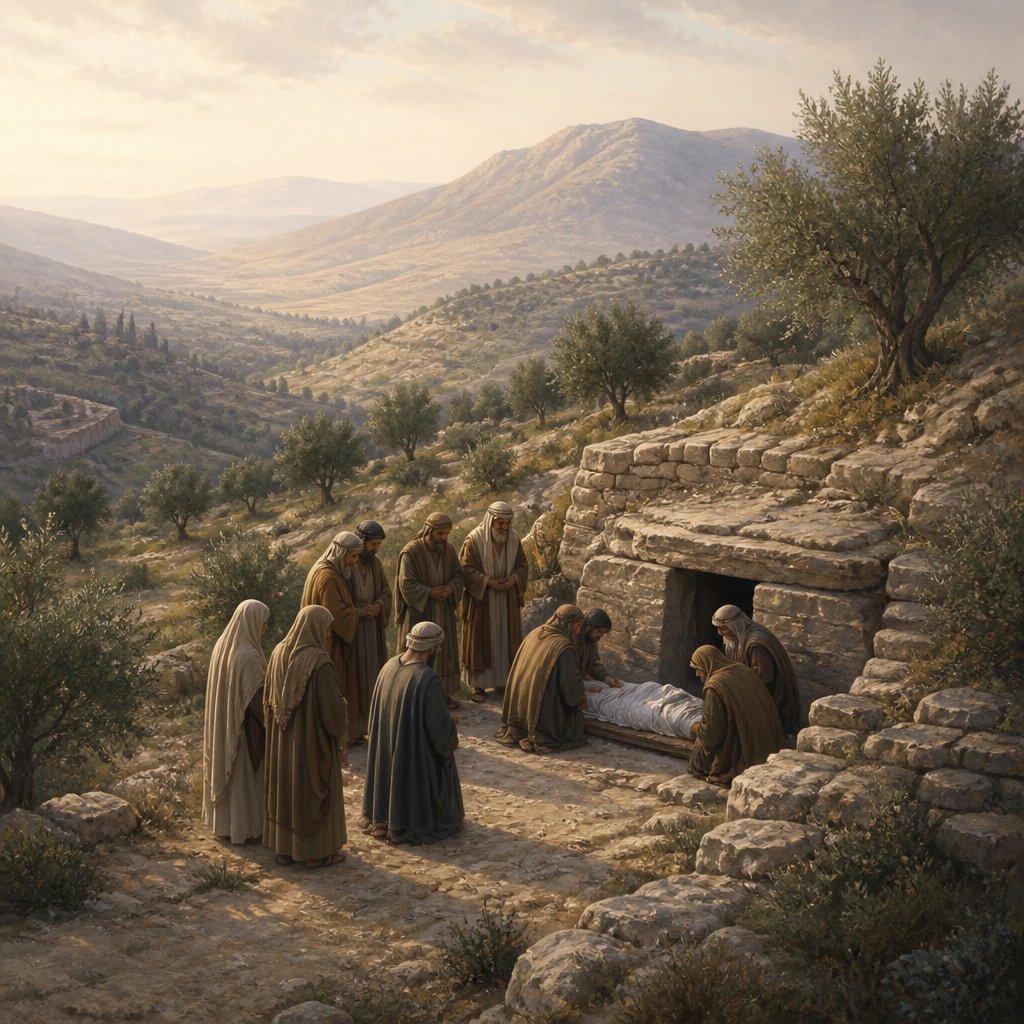
The Bible verse Judges 12:15 in the King James Version reads, "And Abdon the son of Hillel the Pirathonite died, and was buried in Pirathon in the land of Ephraim, in the mount of the Amalekites." This verse is a small part of a larger narrative found in the Book of Judges, which documents the period of time immediately following the Israelites' conquest of the Promised Land and the ensuing struggle to establish a stable and unified leadership.
The Book of Judges is a complex, multifaceted text that contains numerous stories of heroism, conflict, and spiritual struggle within the tribes of Israel. The narrative accounts documented in this book take place during a time when Israel was without a centralized government or king, and instead relied on a succession of charismatic and often controversial leaders known as judges. These judges served as military leaders, arbiters of justice, and spiritual guides for the Israelites, and their stories are marked by periods of faithfulness, apostasy, and divine intervention.
The figure of Abdon, the son of Hillel the Pirathonite, is one of the lesser-known judges of Israel. His brief mention in Judges 12:15 is indicative of the book's larger emphasis on documenting the succession of leaders as a reflection of the larger spiritual and political turmoil within Israel during this time. Abdon served as a judge for eight years, and his story is recounted in Judges 12:13-15. Not much is known about Abdon's accomplishments or specific contributions to Israelite society, as the biblical text provides only a bare outline of his life and death.
One of the key themes that can be drawn from the narrative of Abdon is the transient nature of human leadership and the cycles of rise and fall that characterized Israel's early history. The Book of Judges depicts a series of judges who rose to power, often in times of crisis or oppression, and then faded into obscurity or were succeeded by others. This cyclical pattern reflects the larger spiritual and political instability within Israel during this period, as well as the ongoing struggle to establish a cohesive national identity.
The mention of Abdon being buried in Pirathon in the land of Ephraim, in the mount of the Amalekites, also holds symbolic significance. The act of burial is a potent metaphor for the end of a person's earthly existence and serves as a reminder of the transient nature of human life. The geographical details of Abdon's burial place also carry deeper symbolic meaning. Pirathon was located in the territory of the tribe of Ephraim, a significant and influential tribe within Israel. The mention of the mount of the Amalekites, traditional enemies of Israel, adds a layer of complexity to the narrative, underscoring the ongoing struggle for dominance and survival within the region.
In a broader theological context, the story of Abdon and the other judges of Israel serves as a reminder of the ephemerality of earthly power and the need for divine guidance and intervention in the face of human weakness and fallibility. The Book of Judges reflects the recurring pattern of Israel's faithfulness to God, followed by apostasy and moral decay, which in turn leads to divine judgment and subsequent deliverance through the agency of the judges.
Ultimately, the brief mention of Abdon's death and burial in Judges 12:15 is a small part of a larger tapestry of narratives that collectively depict the tumultuous and formative period in Israel's history. The story of Abdon and the other judges serves as a cautionary tale about the dangers of spiritual complacency and moral decline, as well as a testament to the enduring presence of divine providence and redemption in the face of human frailty.
Get our apps


Artwork for Judges 12:15

Judges 12:15 - "And Abdon the son of Hillel the Pirathonite died, and was buried in Pirathon in the land of Ephraim, in the mount of the Amalekites."
"And Abdon the son of Hillel the Pirathonite died, and was buried in Pirathon in the land of Ephraim, in the mount of the Amalekites." - Judges 12:15

Judges 15:15

Judges 15:12 - "And they said unto him, We are come down to bind thee, that we may deliver thee into the hand of the Philistines. And Samson said unto them, Swear unto me, that ye will not fall upon me yourselves."

Judges 12:12 - "And Elon the Zebulonite died, and was buried in Aijalon in the country of Zebulun."

Judges 9:8-15

John 8:15 - "Ye judge after the flesh; I judge no man."

Judges 15:20 - "And he judged Israel in the days of the Philistines twenty years."

Judges 12:11 - "¶ And after him Elon, a Zebulonite, judged Israel; and he judged Israel ten years."

Judges 15:15 - "And he found a new jawbone of an ass, and put forth his hand, and took it, and slew a thousand men therewith."

Judges 12:8 - "¶ And after him Ibzan of Beth-lehem judged Israel."

Judges 12:10 - "Then died Ibzan, and was buried at Beth-lehem."

Judges 12:13 - "¶ And after him Abdon the son of Hillel, a Pirathonite, judged Israel."

Judges 4:15 – "The Lord routed Sisera and all his chariots and army by the sword."

Judges 15:9 - "¶ Then the Philistines went up, and pitched in Judah, and spread themselves in Lehi."

"And Elon the Zebulonite died, and was buried in Aijalon in the country of Zebulun." - Judges 12:12

Job 12:17 - "He leadeth counsellors away spoiled, and maketh the judges fools."

Judges 12:7 - "And Jephthah judged Israel six years. Then died Jephthah the Gileadite, and was buried in one of the cities of Gilead."

Judges 4:12 - "And they shewed Sisera that Barak the son of Abinoam was gone up to mount Tabor."

Judges 9:12 - "Then said the trees unto the vine, Come thou, and reign over us."

Judges 21:15 - "And the people repented them for Benjamin, because that the LORD had made a breach in the tribes of Israel."

Judges 17:12 - "And Micah consecrated the Levite; and the young man became his priest, and was in the house of Micah."

1 Corinthians 5:12 - "For what have I to do to judge them also that are without? do not ye judge them that are within?"

"And he judged Israel in the days of the Philistines twenty years." - Judges 15:20

"Ye judge after the flesh; I judge no man." - John 8:15

1 Samuel 24:15 - "The LORD therefore be judge, and judge between me and thee, and see, and plead my cause, and deliver me out of thine hand."

John 12:47 - "And if any man hear my words, and believe not, I judge him not: for I came not to judge the world, but to save the world."

Judges 18:15 - "And they turned thitherward, and came to the house of the young man the Levite, even unto the house of Micah, and saluted him."

Judges 12:14 - "And he had forty sons and thirty nephews, that rode on threescore and ten ass colts: and he judged Israel eight years."

"¶ And after him Ibzan of Beth-lehem judged Israel." - Judges 12:8