What does Judges 12:4 mean?
“Then Jephthah gathered together all the men of Gilead, and fought with Ephraim: and the men of Gilead smote Ephraim, because they said, Ye Gileadites are fugitives of Ephraim among the Ephraimites, and among the Manassites.” — Judges 12:4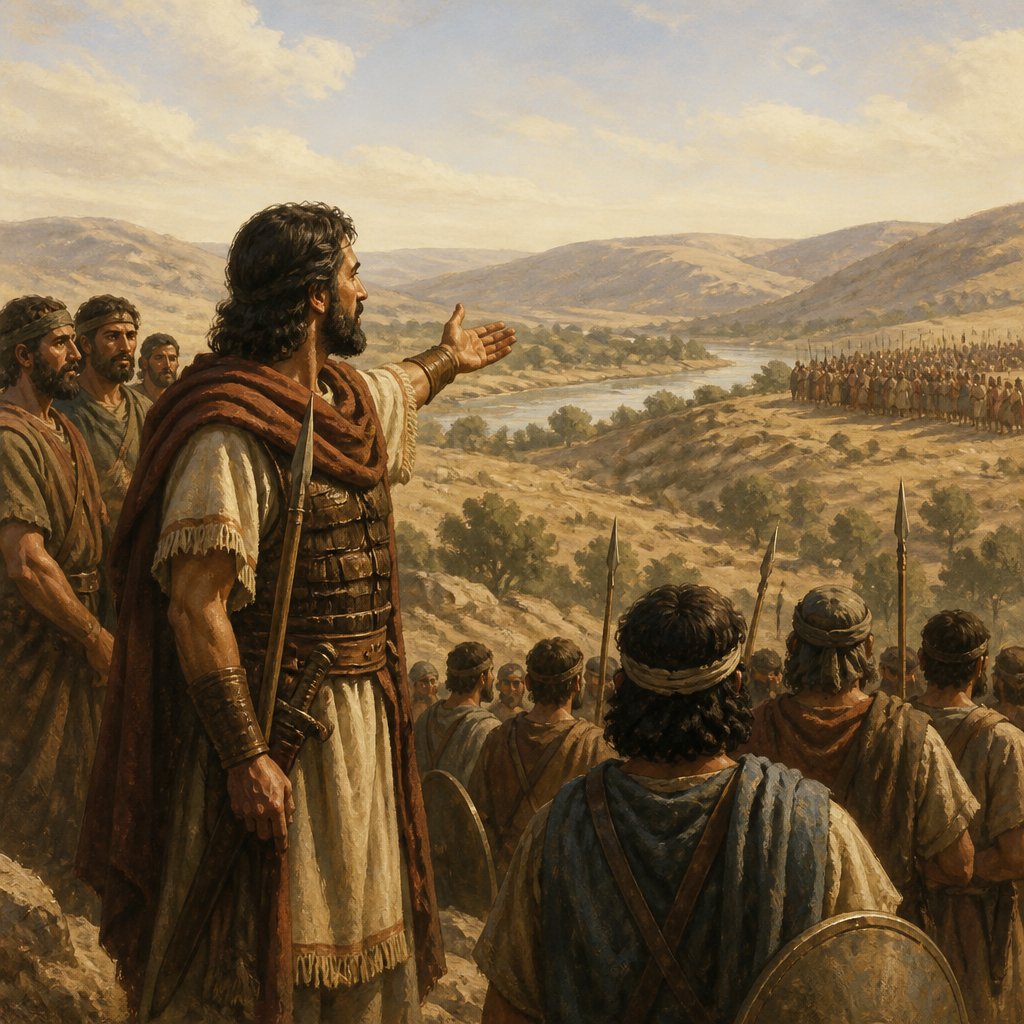
The Bible verse Judges 12:4 in the King James Version (KJV) reads, "Then Jephthah gathered together all the men of Gilead, and fought with Ephraim: and the men of Gilead smote Ephraim, because they said, Ye Gileadites are fugitives of Ephraim among the Ephraimites, and among the Manassites."
This verse comes from the book of Judges, which is part of the Old Testament. The book of Judges follows the conquest of the Promised Land and covers the period of time when Israel was ruled by judges. The verse is part of the narrative of Jephthah, one of the judges who led the Israelites in battle against their enemies.
The context of this verse is important to understand its meaning. Jephthah was a judge of Israel who had been rejected by his half-brothers and was forced to flee from his home. However, he was later called upon to lead the Israelites in battle against the Ammonites. In the course of the battle, Jephthah made a solemn vow to the Lord, promising to sacrifice the first thing that came out of his house if he was victorious. Despite his victory, the first thing that came out of his house upon his return was his beloved daughter, and he fulfilled his vow, leading to a tragic outcome.
In Judges 12:4, we see Jephthah's leadership and courage as he gathers the men of Gilead to fight against the tribe of Ephraim. The conflict between the two groups arose from a dispute over the status of the Gileadites. The Ephraimites accused the Gileadites of being fugitives and among the "least of the tribes of Israel." In response, the Gileadites engaged in battle with the Ephraimites and emerged victorious.
This verse highlights the themes of tribal conflict, pride, and the consequences of disrespect and misunderstanding. The underlying tension between the tribes of Israel led to a violent confrontation that resulted in loss of life. The verse serves as a cautionary tale about the destructive nature of pride and arrogance, and the importance of seeking reconciliation and understanding.
Symbolically, the conflict between the Gileadites and the Ephraimites can be seen as a representation of deeper divisions within the Israelite community. The tribes' inability to resolve their differences peacefully and resorting to violence speaks to the broader issue of disunity and strife within the nation. This verse also serves as a reminder of the importance of humility and respect for others, as well as the consequences of allowing pride and misunderstanding to drive a wedge between people.
In terms of biblical interpretation, this verse can be viewed as a lesson in the importance of humility and the dangers of pride. It also underscores the impact of words and accusations, as well as the need for reconciliation and understanding within the community. Additionally, it serves as a reminder of the need for effective leadership and conflict resolution to prevent further division and strife.
In conclusion, Judges 12:4 in the King James Version offers insight into the complexities of human relationships, the dangers of pride and arrogance, and the consequences of unresolved conflicts. It provides a cautionary example of how misunderstanding and disrespect can lead to violence and division, and underscores the importance of humility, reconciliation, and effective leadership. This verse serves as a powerful reminder of the need for mutual respect and understanding in our interactions with others, and the destructive nature of pride and conflict.
Get our apps


Artwork for Judges 12:4

Judges 12:4 - "Then Jephthah gathered together all the men of Gilead, and fought with Ephraim: and the men of Gilead smote Ephraim, because they said, Ye Gileadites are fugitives of Ephraim among the Ephraimites, and among the Manassites."
"Then Jephthah gathered together all the men of Gilead, and fought with Ephraim: and the men of Gilead smote Ephraim, because they said, Ye Gileadites are fugitives of Ephraim among the Ephraimites, and among the Manassites." - Judges 12:4

Judges 4:12 - "And they shewed Sisera that Barak the son of Abinoam was gone up to mount Tabor."
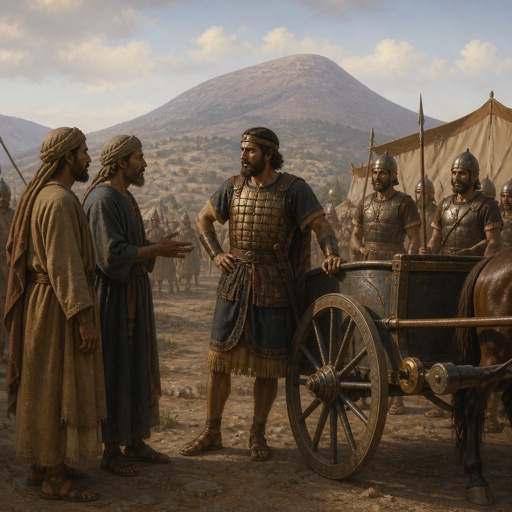
"And they shewed Sisera that Barak the son of Abinoam was gone up to mount Tabor." - Judges 4:12

Judges 4:4

Judges 12:12 - "And Elon the Zebulonite died, and was buried in Aijalon in the country of Zebulun."

Judges 4:4 - "¶ And Deborah, a prophetess, the wife of Lapidoth, she judged Israel at that time."

Judges 12:11 - "¶ And after him Elon, a Zebulonite, judged Israel; and he judged Israel ten years."

Judges 12:8 - "¶ And after him Ibzan of Beth-lehem judged Israel."

Judges 12:10 - "Then died Ibzan, and was buried at Beth-lehem."

Judges 12:13 - "¶ And after him Abdon the son of Hillel, a Pirathonite, judged Israel."

"And Elon the Zebulonite died, and was buried in Aijalon in the country of Zebulun." - Judges 12:12

Job 12:17 - "He leadeth counsellors away spoiled, and maketh the judges fools."

Judges 4:4 - "¶ And Deborah, a prophetess, the wife of Lapidoth, she judged Israel at that time."

Judges 12:7 - "And Jephthah judged Israel six years. Then died Jephthah the Gileadite, and was buried in one of the cities of Gilead."

Judges 9:12 - "Then said the trees unto the vine, Come thou, and reign over us."

"¶ And Deborah, a prophetess, the wife of Lapidoth, she judged Israel at that time." - Judges 4:4

Judges 17:12 - "And Micah consecrated the Levite; and the young man became his priest, and was in the house of Micah."

1 Corinthians 5:12 - "For what have I to do to judge them also that are without? do not ye judge them that are within?"

James 2:4 - "Are ye not then partial in yourselves, and are become judges of evil thoughts?"

John 12:47 - "And if any man hear my words, and believe not, I judge him not: for I came not to judge the world, but to save the world."

Judges 12:15 - "And Abdon the son of Hillel the Pirathonite died, and was buried in Pirathon in the land of Ephraim, in the mount of the Amalekites."

Judges 4:15 – "The Lord routed Sisera and all his chariots and army by the sword."

Judges 12:14 - "And he had forty sons and thirty nephews, that rode on threescore and ten ass colts: and he judged Israel eight years."

"¶ And after him Ibzan of Beth-lehem judged Israel." - Judges 12:8

"Then died Ibzan, and was buried at Beth-lehem." - Judges 12:10

"¶ And after him Elon, a Zebulonite, judged Israel; and he judged Israel ten years." - Judges 12:11

Judges 4:23 - "So God subdued on that day Jabin the king of Canaan before the children of Israel."

Judges 4:1 - "And the children of Israel again did evil in the sight of the LORD, when Ehud was dead."

Judges 11:4 - "¶ And it came to pass in process of time, that the children of Ammon made war against Israel."