What does Judges 15:2 mean?
“And her father said, I verily thought that thou hadst utterly hated her; therefore I gave her to thy companion: is not her younger sister fairer than she? take her, I pray thee, instead of her.” — Judges 15:2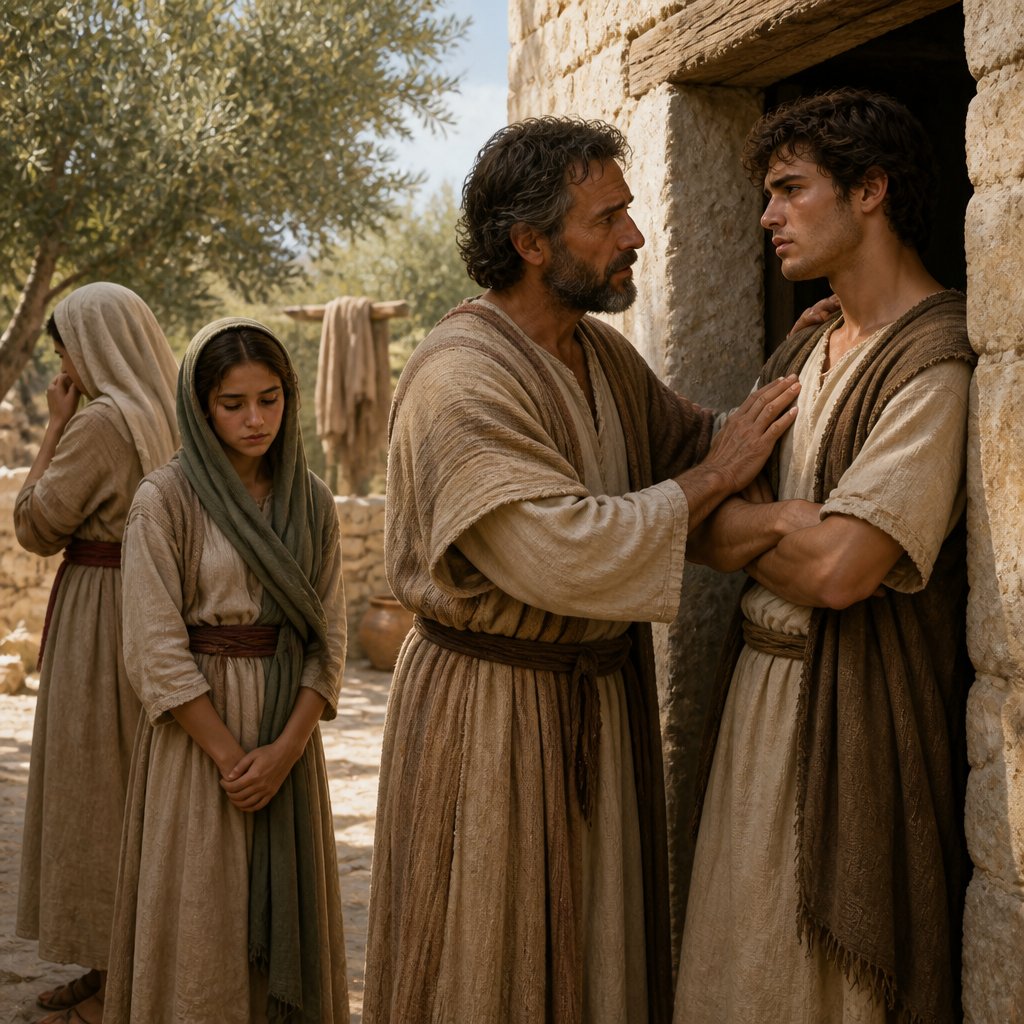
Judges 15:2 (KJV) says, "And her father said, I verily thought that thou hadst utterly hated her; therefore I gave her to thy companion: is not her younger sister fairer than she? take her, I pray thee, instead of her."
This verse is part of the larger narrative of the book of Judges, which tells of the tumultuous period in Israelite history after the death of Joshua, when the Israelites were ruled by a series of tribal leaders known as judges. The particular story in which this verse appears is about Samson, a judge known for his strength and his exploits against the Philistines.
In this verse, we see Samson's father-in-law attempting to appease him after an incident involving Samson's wife. This incident serves as a turning point in Samson's conflict with the Philistines and sets the stage for the events that follow.
The verse reveals several themes that are present throughout the book of Judges and the broader biblical narrative. One of the central themes is the idea of human fallibility and the consequences of sin. The story of Samson, including the events leading up to this verse, is characterized by human weakness, flawed decision-making, and the consequences of disobedience to God's laws. Samson's marriage to a Philistine woman and the subsequent conflict with her people highlight the dangers of intermarriage and the temptation to compromise one's beliefs for the sake of personal desires.
The verse also touches on the themes of justice and retribution. Throughout the book of Judges, the Israelites repeatedly fall into cycles of sin, oppression, cry for deliverance, and the rise of a judge to lead them to victory. The story of Samson's conflict with the Philistines is another example of this pattern, as he seeks vengeance for the wrongs done to him and his people.
Additionally, the verse reflects the theme of God's sovereignty and providence. Despite the flawed decisions of individuals, God remains in control and is able to work His purposes through even the most unlikely circumstances. This is evident in the way that God uses Samson, despite his personal failings, to accomplish His plan for the deliverance of Israel from the Philistines.
The context of this verse within the larger narrative of the book of Judges is crucial to understanding its significance. The story of Samson is one of the most well-known and dramatic accounts in the book, and it serves as a powerful illustration of the consequences of disobedience and the complexities of human nature. This verse marks a pivotal moment in the narrative, as it reveals the extent of the conflict between Samson and the Philistines and sets the stage for the events that follow.
Symbolism is also present in this verse, particularly in the imagery of the two women - Samson's wife and her younger sister. The use of women in this context symbolizes the themes of temptation, desire, and the consequences of compromising one's beliefs. The idea of choosing the "fairer" younger sister over the original wife also speaks to the fleeting nature of earthly beauty and the superficiality of human desires.
In conclusion, Judges 15:2 is a verse that holds significant meaning within the broader narrative of the book of Judges and the biblical canon as a whole. It touches on important themes such as human fallibility, justice, God's sovereignty, and the symbolism of temptation and desire. Understanding this verse in its context allows readers to glean valuable insights into the complexities of human nature and the enduring faithfulness of God.
Get our apps


Artwork for Judges 15:2
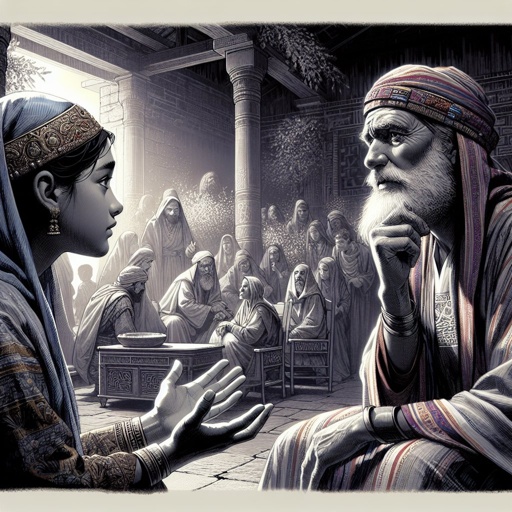
Judges 15:2 - "And her father said, I verily thought that thou hadst utterly hated her; therefore I gave her to thy companion: is not her younger sister fairer than she? take her, I pray thee, instead of her."
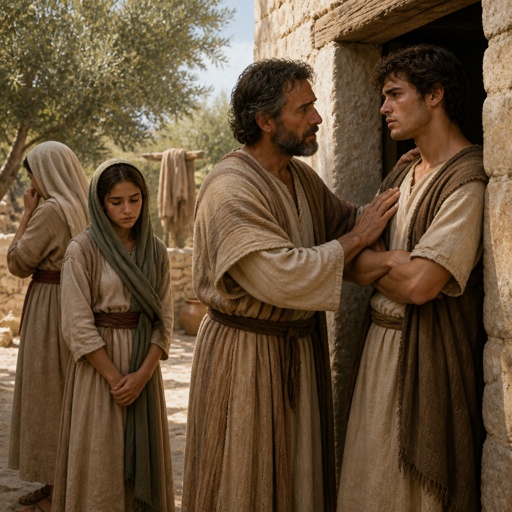
"And her father said, I verily thought that thou hadst utterly hated her; therefore I gave her to thy companion: is not her younger sister fairer than she? take her, I pray thee, instead of her." - Judges 15:2

Judges 15:15

1 Corinthians 2:15 - "But he that is spiritual judgeth all things, yet he himself is judged of no man."
Judges 2:15 - "Whithersoever they went out, the hand of the LORD was against them for evil, as the LORD had said, and as the LORD had sworn unto them: and they were greatly distressed."

Judges 9:8-15

John 8:15 - "Ye judge after the flesh; I judge no man."

Judges 15:20 - "And he judged Israel in the days of the Philistines twenty years."

Judges 15:15 - "And he found a new jawbone of an ass, and put forth his hand, and took it, and slew a thousand men therewith."

Judges 4:15 – "The Lord routed Sisera and all his chariots and army by the sword."

Judges 15:9 - "¶ Then the Philistines went up, and pitched in Judah, and spread themselves in Lehi."

2 Kings 15:5 - "¶ And the LORD smote the king, so that he was a leper unto the day of his death, and dwelt in a several house. And Jotham the king's son was over the house, judging the people of the land."

Judges 21:15 - "And the people repented them for Benjamin, because that the LORD had made a breach in the tribes of Israel."
"But he that is spiritual judgeth all things, yet he himself is judged of no man." - 1 Corinthians 2:15

Judges 12:15 - "And Abdon the son of Hillel the Pirathonite died, and was buried in Pirathon in the land of Ephraim, in the mount of the Amalekites."

"And he judged Israel in the days of the Philistines twenty years." - Judges 15:20

"Ye judge after the flesh; I judge no man." - John 8:15

2 Samuel 15:4 - "Absalom said moreover, Oh that I were made judge in the land, that every man which hath any suit or cause might come unto me, and I would do him justice!"

1 Samuel 24:15 - "The LORD therefore be judge, and judge between me and thee, and see, and plead my cause, and deliver me out of thine hand."

Judges 2:16 - "¶ Nevertheless the LORD raised up judges, which delivered them out of the hand of those that spoiled them."

Judges 18:15 - "And they turned thitherward, and came to the house of the young man the Levite, even unto the house of Micah, and saluted him."

Judges 2:31

Judges 15:8 - "And he smote them hip and thigh with a great slaughter: and he went down and dwelt in the top of the rock Etam."

Judges 15:16 - "And Samson said, With the jawbone of an ass, heaps upon heaps, with the jaw of an ass have I slain a thousand men."

Judges 11:15 - "And said unto him, Thus saith Jephthah, Israel took not away the land of Moab, nor the land of the children of Ammon:"

Judges 15:7 - "¶ And Samson said unto them, Though ye have done this, yet will I be avenged of you, and after that I will cease."

1 Samuel 7:15 - "And Samuel judged Israel all the days of his life."

Matthew 7:1-2 - "Do not judge, or you too will be judged. For in the same way you judge others, you will be judged, and with the measure you use, it will be measured to you."

Judges 15:3 - "¶ And Samson said concerning them, Now shall I be more blameless than the Philistines, though I do them a displeasure."

Judges 15:4 - "And Samson went and caught three hundred foxes, and took firebrands, and turned tail to tail, and put a firebrand in the midst between two tails."