What does Judges 16:31 mean?
“Then his brethren and all the house of his father came down, and took him, and brought him up, and buried him between Zorah and Eshtaol in the buryingplace of Manoah his father. And he judged Israel twenty years.” — Judges 16:31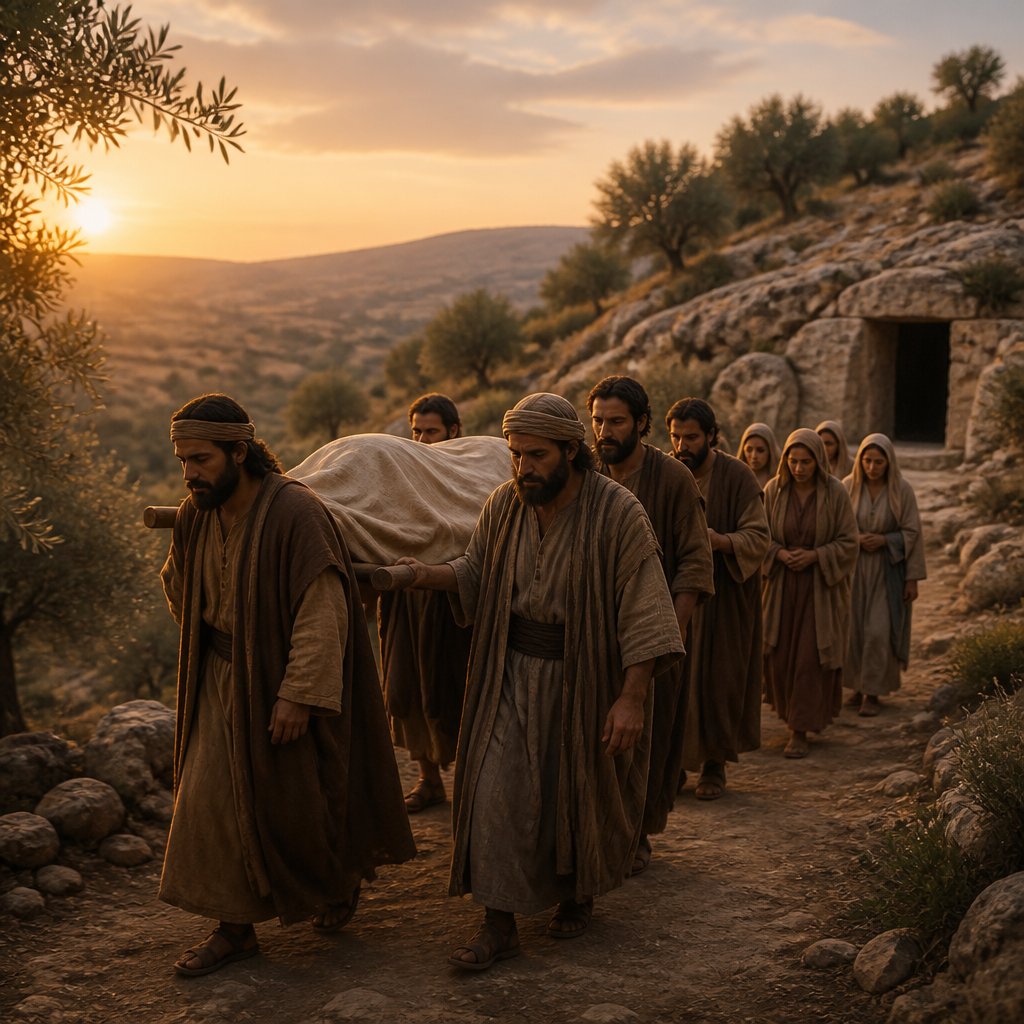
The Bible verse Judges 16:31 in the King James Version (KJV) states:
"Then his brethren and all the house of his father came down, and took him, and brought him up, and buried him between Zorah and Eshtaol in the buryingplace of Manoah his father. And he judged Israel twenty years."
This verse comes at the conclusion of the story of Samson, one of the judges of Israel. Judges 16:31 serves as a summary of Samson's life and his impact as a leader in Israel. In order to fully understand the significance of this verse, it is necessary to delve into the themes, context, and symbolism present in the story of Samson.
The story of Samson can be found in the book of Judges, which describes a tumultuous period in Israel’s history. During this time, the Israelites were constantly in conflict with the Philistines, who sought to subjugate them. The book of Judges records the leadership of a series of charismatic figures known as judges, who were called upon by God to deliver the Israelites from their enemies.
Samson, the central figure of Judges 16:31, was a judge chosen by God to save Israel from the oppression of the Philistines. His life was characterized by extraordinary physical strength, which he used to combat the enemies of Israel. However, Samson's strength was also coupled with moral failings, particularly his weakness for women. This weakness eventually led to his downfall, as he was betrayed by Delilah and captured by the Philistines.
The themes present in the story of Samson include the consequences of sin, the faithfulness of God, and the complexities of human nature. Samson's struggle with his own desires and weaknesses serves as a cautionary tale, illustrating the destructive power of sin. Despite his shortcomings, however, God remained faithful to His promise to deliver Israel from oppression. Samson’s life also highlights the notion of human fallibility, as even the strongest and most courageous individuals are susceptible to temptation and sin.
The context of Judges 16:31 is significant, as it marks the end of Samson's life and his legacy as a judge in Israel. After being captured and blinded by the Philistines, Samson prayed to God for strength one final time and was granted the supernatural power to bring down the pillars of the temple in which he was imprisoned. This act resulted in the death of Samson and a great number of his enemies. The verse further emphasizes that even in death, Samson's impact on Israel remained, as he had judged and led the nation for twenty years.
Symbolism plays a crucial role in the story of Samson and in Judges 16:31. The imagery of Samson's physical strength serves as a metaphor for the power of God working through flawed individuals. Additionally, Samson's act of bringing down the pillars of the temple symbolizes the triumph of God's will over the forces of evil. Furthermore, his death and burial between Zorah and Eshtaol can be seen as a reflection of his significance as a figure of authority and leadership in Israel.
In conclusion, Judges 16:31 in the King James Version encapsulates the story of Samson and the themes, context, and symbolism present within it. This verse serves as a reminder of the complexities of human nature, the consequences of sin, and the unwavering faithfulness of God. Samson's life and legacy continue to resonate as a testament to the enduring power of God's grace and the impact of individuals who are called to serve as instruments of His will.
Get our apps


Artwork for Judges 16:31

Judges 16:31 - "Then his brethren and all the house of his father came down, and took him, and brought him up, and buried him between Zorah and Eshtaol in the buryingplace of Manoah his father. And he judged Israel twenty years."
"Then his brethren and all the house of his father came down, and took him, and brought him up, and buried him between Zorah and Eshtaol in the buryingplace of Manoah his father. And he judged Israel twenty years." - Judges 16:31

luke 3:1-6

Luke 3:1-6

Luke 3:1-6

Judges 3:31

Judges 2:31

Job 31:11 - "For this is an heinous crime; yea, it is an iniquity to be punished by the judges."

1 Corinthians 11:31 - "For if we would judge ourselves, we should not be judged."

Deuteronomy 32:31 - "For their rock is not as our Rock, even our enemies themselves being judges."

judges 16:30

Judges 2:16 - "¶ Nevertheless the LORD raised up judges, which delivered them out of the hand of those that spoiled them."

Judges 8:31 - "And his concubine that was in Shechem, she also bare him a son, whose name he called Abimelech."

"For this is an heinous crime; yea, it is an iniquity to be punished by the judges." - Job 31:11

Judges 18:31 - "And they set them up Micah's graven image, which he made, all the time that the house of God was in Shiloh."

"For if we would judge ourselves, we should not be judged." - 1 Corinthians 11:31

Sampson's strength judges 16:30

Proverbs 31:9 - "Open thy mouth, judge righteously, and plead the cause of the poor and needy."

Judges 3:31 - "¶ And after him was Shamgar the son of Anath, which slew of the Philistines six hundred men with an ox goad: and he also delivered Israel."

Judges 16:16 - "And it came to pass, when she pressed him daily with her words, and urged him, so that his soul was vexed unto death;"

Judges 16:1 - "Then went Samson to Gaza, and saw there an harlot, and went in unto her."

Proverbs 8:16 - "By me princes rule, and nobles, even all the judges of the earth."

Job 31:28 - "This also were an iniquity to be punished by the judge: for I should have denied the God that is above."

Proverbs 16:31 - "The hoary head is a crown of glory, if it be found in the way of righteousness."

John 16:31 - "Jesus answered them, Do ye now believe?"

Judges 16:22 - "Howbeit the hair of his head began to grow again after he was shaven."

Judges 9:31 - "And he sent messengers unto Abimelech privily, saying, Behold, Gaal the son of Ebed and his brethren be come to Shechem; and, behold, they fortify the city against thee."

Judges 1:31 - "¶ Neither did Asher drive out the inhabitants of Accho, nor the inhabitants of Zidon, nor of Ahlab, nor of Achzib, nor of Helbah, nor of Aphik, nor of Rehob:"

"For their rock is not as our Rock, even our enemies themselves being judges." - Deuteronomy 32:31

Ezekiel 16:38 - "And I will judge thee, as women that break wedlock and shed blood are judged; and I will give thee blood in fury and jealousy."