What does Judges 17:3 mean?
“And when he had restored the eleven hundred shekels of silver to his mother, his mother said, I had wholly dedicated the silver unto the LORD from my hand for my son, to make a graven image and a molten image: now therefore I will restore it unto thee.” — Judges 17:3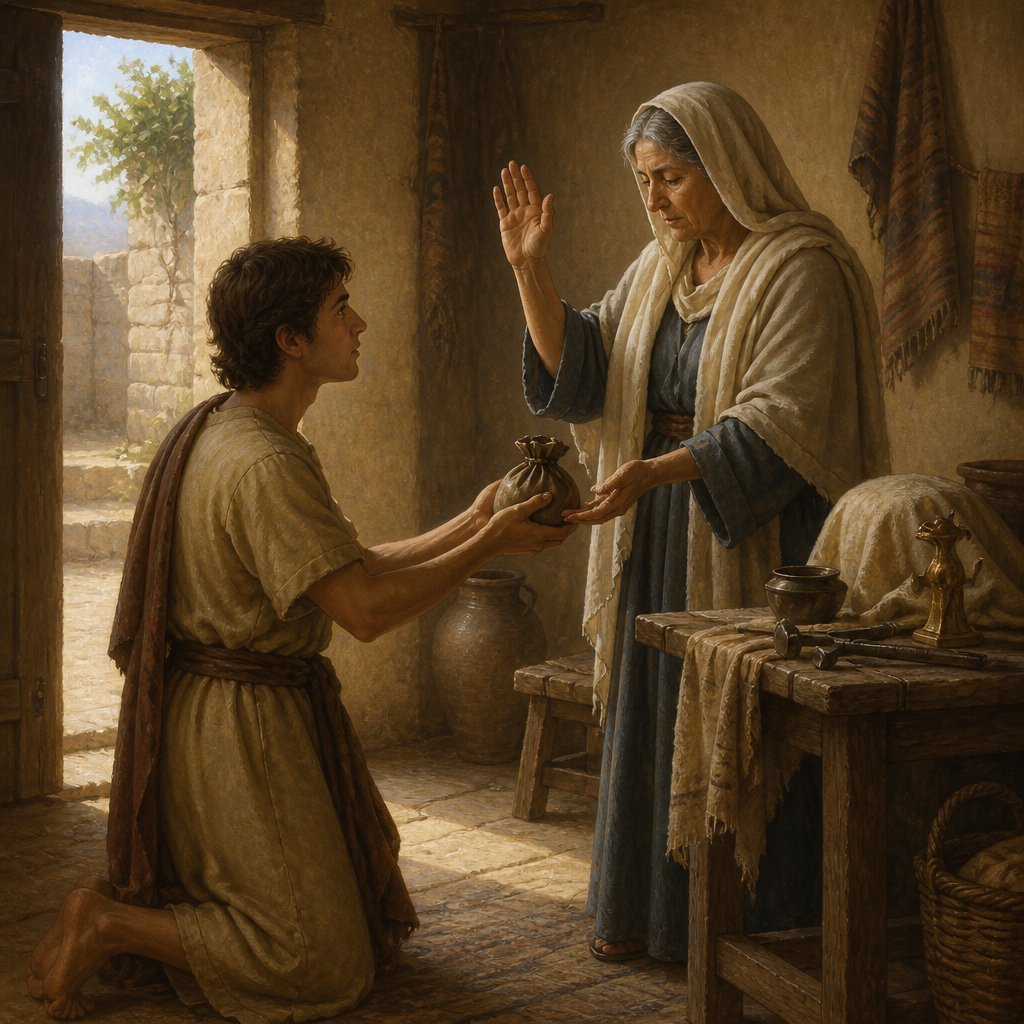
The Bible verse Judges 17:3 from the King James Version (KJV) states, "And when he had restored the eleven hundred shekels of silver to his mother, his mother said, I had wholly dedicated the silver unto the Lord from my hand for my son, to make a graven image and a molten image: now therefore I will restore it unto thee."
This verse comes from the book of Judges, which is a historical and theological account of the Israelites during a time of turmoil and moral decline. This particular verse is part of a larger narrative about a man named Micah and his mother. Micah, who lived in the hill country of Ephraim, had stolen 1100 shekels of silver from his mother. However, upon learning of the theft, his mother proclaimed that she had dedicated the silver to the Lord in order to make graven and molten images, and therefore Micah was to restore the silver to her.
The verse begins with Micah returning the stolen silver to his mother. This act of repentance reflects a sense of honor and duty to one's family and property. However, the mother's response is troubling as she confesses that she had dedicated the silver to the Lord for the purpose of creating graven and molten images. This reveals a grave violation of the second commandment, which states that God's people must not create idols or images to worship (Exodus 20:4-5). The mother's intention to use the dedicated silver for idolatrous purposes reflects the spiritual and moral decay that was prevalent during the time of the judges.
The larger context of this verse is important for understanding its significance. The book of Judges occurs during a period of Israel's history when the people experienced cycles of sin, judgment, and deliverance. The Israelites repeatedly turned away from the Lord to worship idols and engage in immoral behavior. This is evident in the story of Micah and his mother, where the dedicated silver was meant for the creation of idols, violating God's commandments. The verse serves as a reminder of the consequences of idolatry and the corrupting influence of sin.
Furthermore, the verse highlights the theme of religious syncretism, which was prevalent during the time of the judges. Syncretism refers to the blending of different religious beliefs and practices. The mother's dedication of the silver to the Lord for the purpose of creating graven and molten images reflects a syncretistic approach to worship, where elements of paganism and idolatry were being incorporated into the worship of the one true God. This theme of syncretism serves as a cautionary tale about the dangers of compromising one's faith and diluting the purity of worship.
Symbolically, the verse conveys the deep-seated spiritual and moral corruption that existed among the Israelites during the time of the judges. The theft of the silver and its intended use for idolatrous purposes reflect the moral decay and lack of reverence for God's commandments. The act of restoring the stolen silver serves as a symbolic gesture of repentance and restitution, while the mother's confession underscores the pervasiveness of idolatry and syncretism.
In conclusion, Judges 17:3 from the King James Version offers a poignant reminder of the spiritual and moral decline that plagued the Israelites during the time of the judges. The verse serves as a cautionary tale about the dangers of idolatry, syncretism, and the consequences of turning away from God's commandments. It underscores the importance of upholding the purity of worship and the need for repentance and obedience to God. As such, this verse continues to serve as a timeless lesson for believers today, encouraging them to remain steadfast in their faith and to guard against the influence of sin and compromise.
Get our apps


Artwork for Judges 17:3

Judges 17:3 - "And when he had restored the eleven hundred shekels of silver to his mother, his mother said, I had wholly dedicated the silver unto the LORD from my hand for my son, to make a graven image and a molten image: now therefore I will restore it unto thee."
"And when he had restored the eleven hundred shekels of silver to his mother, his mother said, I had wholly dedicated the silver unto the LORD from my hand for my son, to make a graven image and a molten image: now therefore I will restore it unto thee." - Judges 17:3

Judges 3:17 - "And he brought the present unto Eglon king of Moab: and Eglon was a very fat man."

Ecclesiastes 3:17 - "I said in mine heart, God shall judge the righteous and the wicked: for there is a time there for every purpose and for every work."
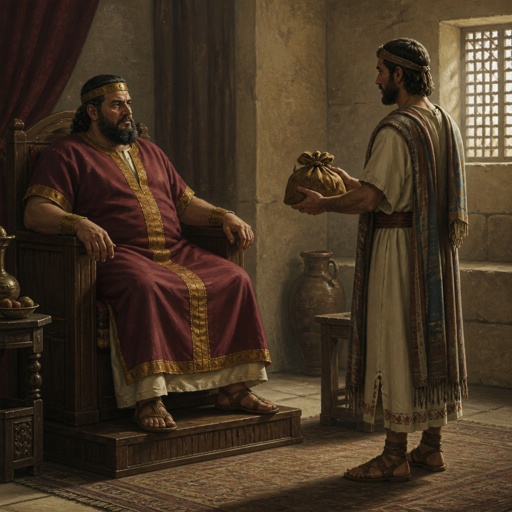
"And he brought the present unto Eglon king of Moab: and Eglon was a very fat man." - Judges 3:17

Judges 17:1 - "And there was a man of mount Ephraim, whose name was Micah."

Judges 3:31

Job 12:17 - "He leadeth counsellors away spoiled, and maketh the judges fools."

Judges 8:17 - "And he beat down the tower of Penuel, and slew the men of the city."

Judges 17:12 - "And Micah consecrated the Levite; and the young man became his priest, and was in the house of Micah."

Judges 21:17 - "And they said, There must be an inheritance for them that be escaped of Benjamin, that a tribe be not destroyed out of Israel."

Judges 17:11 - "And the Levite was content to dwell with the man; and the young man was unto him as one of his sons."

Judges 2:17 - "And yet they would not hearken unto their judges, but they went a whoring after other gods, and bowed themselves unto them: they turned quickly out of the way which their fathers walked in, obeying the commandments of the LORD; but they did not so."

"I said in mine heart, God shall judge the righteous and the wicked: for there is a time there for every purpose and for every work." - Ecclesiastes 3:17

Judges 17:7 - "¶ And there was a young man out of Beth-lehem-judah of the family of Judah, who was a Levite, and he sojourned there."

Judges 17:6 - "In those days there was no king in Israel, but every man did that which was right in his own eyes."

Zephaniah 3:3 - "Her princes within her are roaring lions; her judges are evening wolves; they gnaw not the bones till the morrow."

Judges 10:3 - "¶ And after him arose Jair, a Gileadite, and judged Israel twenty and two years."

Judges 9:17 - "(For my father fought for you, and adventured his life far, and delivered you out of the hand of Midian:"

Judges 10:17 - "Then the children of Ammon were gathered together, and encamped in Gilead. And the children of Israel assembled themselves together, and encamped in Mizpeh."

"And there was a man of mount Ephraim, whose name was Micah." - Judges 17:1

Judges 3:6 - "And they took their daughters to be their wives, and gave their daughters to their sons, and served their gods."

Judges 1:17 - "And Judah went with Simeon his brother, and they slew the Canaanites that inhabited Zephath, and utterly destroyed it. And the name of the city was called Hormah."

Judges 17:13 - "Then said Micah, Now know I that the LORD will do me good, seeing I have a Levite to my priest."

Judges 3:11 - "And the land had rest forty years. And Othniel the son of Kenaz died."

Judges 17:5 - "And the man Micah had an house of gods, and made an ephod, and teraphim, and consecrated one of his sons, who became his priest."

Judges 5:17 - "Gilead abode beyond Jordan: and why did Dan remain in ships? Asher continued on the sea shore, and abode in his breaches."

Deuteronomy 19:17 - "Then both the men, between whom the controversy is, shall stand before the LORD, before the priests and the judges, which shall be in those days;"

Judges 3:14 - "So the children of Israel served Eglon the king of Moab eighteen years."

Judges 13:3 make the Angel of the Lord male