What does Judges 19:6 mean?
“And they sat down, and did eat and drink both of them together: for the damsel’s father had said unto the man, Be content, I pray thee, and tarry all night, and let thine heart be merry.” — Judges 19:6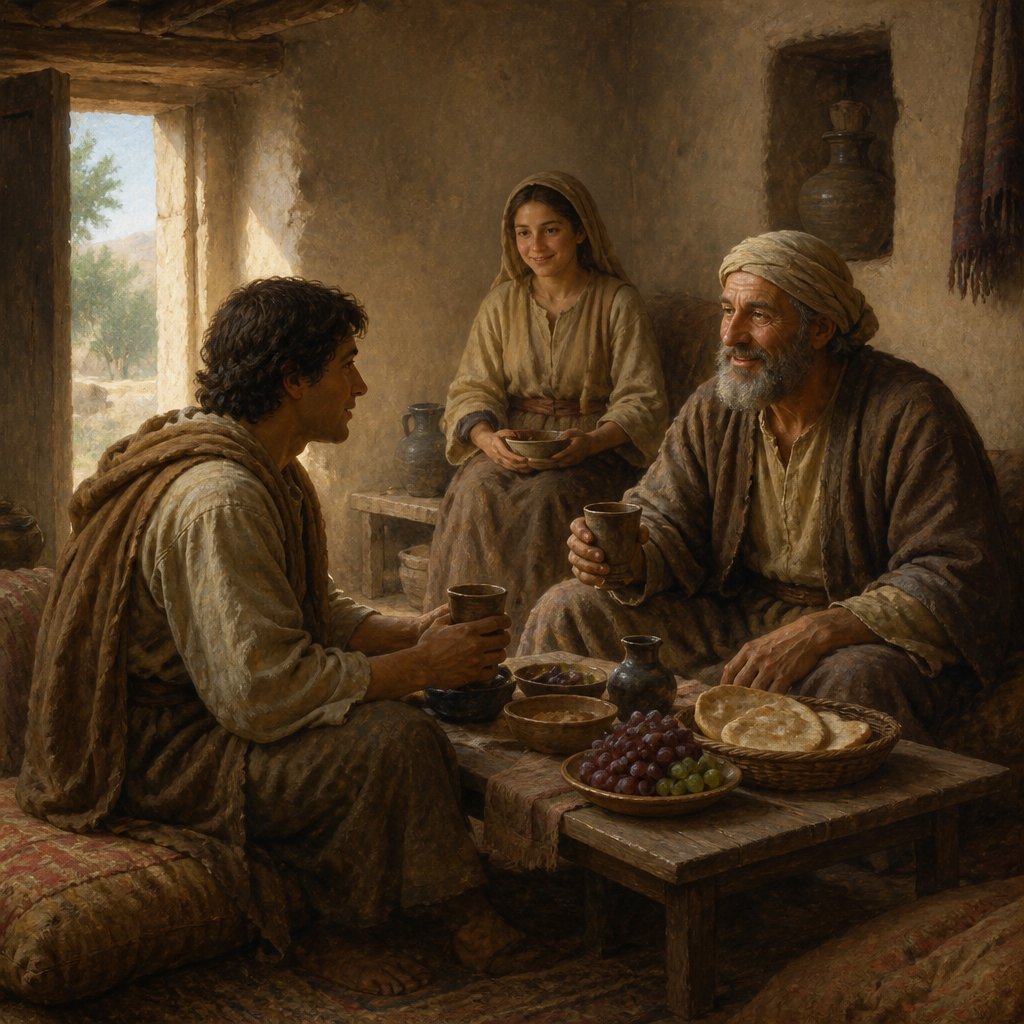
The Bible verse Judges 19:6 in the King James Version (KJV) reads:
"And they sat down, and did eat and drink both of them together: for the damsel's father had said unto the man, Be content, I pray thee, and tarry all night, and let thine heart be merry."
This verse comes from the Book of Judges in the Old Testament, which tells the story of the Israelites during the time of the judges, before they had a king. The specific passage in this verse describes a scene where a man and his concubine stopped to rest at a town in the territory of the tribe of Benjamin.
The deeper meaning and commentary behind this verse are complex and multifaceted. To fully understand its significance, we must consider the larger context of the Book of Judges and the specific cultural and historical background of the passage.
In the broader context of the Book of Judges, the verse is part of a larger narrative of moral decay, violence, and social disorder in ancient Israel. The verse occurs during a period of history when the Israelites had turned away from God and were living in a state of moral and spiritual decline. The book describes a cycle of sin, oppression, repentance, and deliverance, and the story of the Levite and his concubine in Judges 19 is a vivid illustration of the chaos and wickedness that characterized this period.
The passage portrays the breakdown of social norms and the degradation of human relationships. The invitation for the man and his concubine to stay in the town overnight reflects the hospitality customs of the time, but it also reveals a lack of concern for the safety and well-being of the vulnerable travelers. The father's insistence that the man "let thine heart be merry" suggests a disregard for the dangers that lurked in the town. This callousness and lack of empathy are indicative of the moral corruption and societal decay that plagued the Israelites during this era.
The verse also raises important themes related to the status of women and the treatment of vulnerable members of society. The concubine in the story is not given a voice or agency, and she is ultimately subjected to horrific violence and abuse later in the narrative. Her mistreatment reflects broader issues of gender inequality and the exploitation of women that were prevalent in ancient Near Eastern societies. This theme resonates with contemporary discussions about the rights and dignity of women, and it challenges readers to confront the ways in which women have been marginalized and mistreated throughout history.
Furthermore, the verse carries symbolic significance in its portrayal of the breakdown of social order and the erosion of moral values. The callousness and indifference displayed by the characters in the passage serve as a warning about the consequences of turning away from God and embracing moral relativism. The verse can be read as a cautionary tale about the dangers of complacency and moral apathy, and it prompts readers to reflect on the ways in which their own actions and attitudes contribute to the well-being of society.
In conclusion, Judges 19:6 in the King James Version encapsulates the broader themes of moral decay, social disorder, and the mistreatment of vulnerable members of society that are prevalent throughout the Book of Judges. The verse serves as a poignant reminder of the consequences of turning away from God and abandoning moral values, and it challenges readers to confront the ways in which societal injustice and oppression continue to manifest in the world today. By engaging with the complex layers of meaning and symbolism in this verse, readers can glean important insights about the human condition and the enduring relevance of the biblical text.
Get our apps


Artwork for Judges 19:6
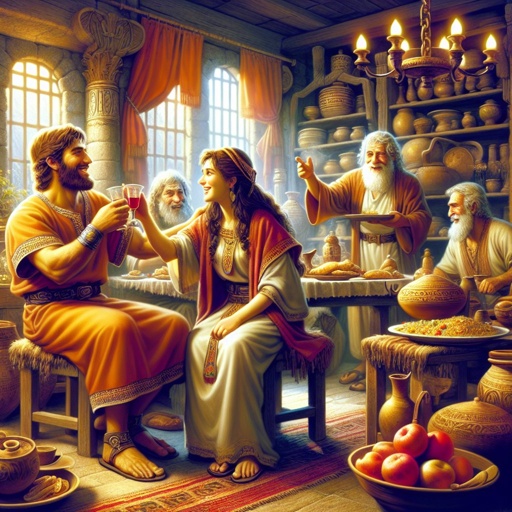
Judges 19:6 - "And they sat down, and did eat and drink both of them together: for the damsel's father had said unto the man, Be content, I pray thee, and tarry all night, and let thine heart be merry."
"And they sat down, and did eat and drink both of them together: for the damsel's father had said unto the man, Be content, I pray thee, and tarry all night, and let thine heart be merry." - Judges 19:6

2 Chronicles 19:6 - "And said to the judges, Take heed what ye do: for ye judge not for man, but for the LORD, who is with you in the judgment."
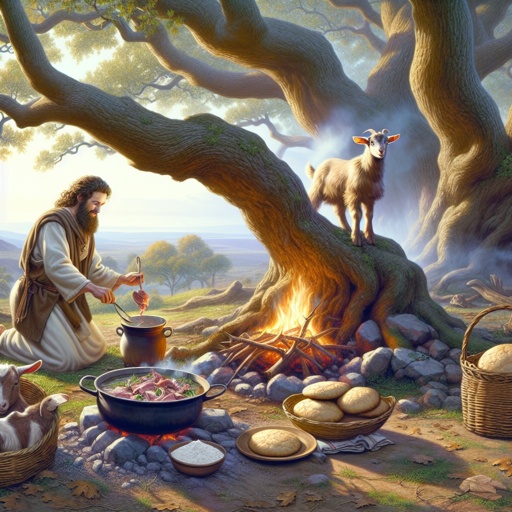
Judges 6:19 - "¶ And Gideon went in, and made ready a kid, and unleavened cakes of an ephah of flour: the flesh he put in a basket, and he put the broth in a pot, and brought it out unto him under the oak, and presented it."
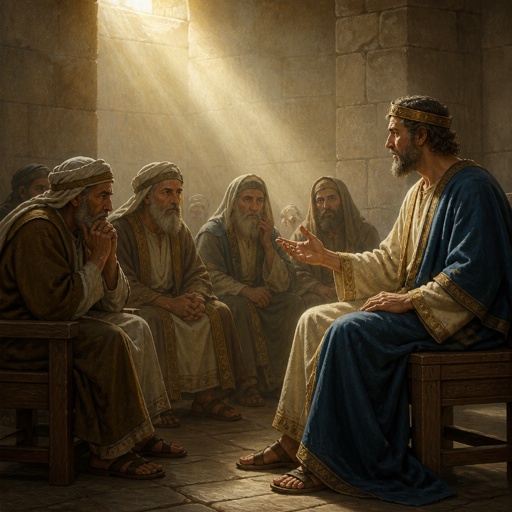
"And said to the judges, Take heed what ye do: for ye judge not for man, but for the LORD, who is with you in the judgment." - 2 Chronicles 19:6

Judges 6:6 - "And Israel was greatly impoverished because of the Midianites; and the children of Israel cried unto the LORD."

Judges 20:19 - "And the children of Israel rose up in the morning, and encamped against Gibeah."

Judges 19:19 - "Yet there is both straw and provender for our asses; and there is bread and wine also for me, and for thy handmaid, and for the young man which is with thy servants: there is no want of any thing."

2 Chronicles 19:5 - "¶ And he set judges in the land throughout all the fenced cities of Judah, city by city,"

Judges 5:19 - "The kings came and fought, then fought the kings of Canaan in Taanach by the waters of Megiddo; they took no gain of money."

1 Corinthians 6:2 - "Do ye not know that the saints shall judge the world? and if the world shall be judged by you, are ye unworthy to judge the smallest matters?"

Judges 3:6 - "And they took their daughters to be their wives, and gave their daughters to their sons, and served their gods."

Luke 6:37 - "Judge not, and ye shall not be judged: condemn not, and ye shall not be condemned: forgive, and ye shall be forgiven:"

Judges 19:14 - "And they passed on and went their way; and the sun went down upon them when they were by Gibeah, which belongeth to Benjamin."

Judges 6:36-40 – Gideon’s fleece test for dew.

Judges 19:7 - "And when the man rose up to depart, his father in law urged him: therefore he lodged there again."

Judges 19:26 - "Then came the woman in the dawning of the day, and fell down at the door of the man's house where her lord was, till it was light."

Deuteronomy 19:18 - "And the judges shall make diligent inquisition: and, behold, if the witness be a false witness, and hath testified falsely against his brother;"

Judges 6:7 - "¶ And it came to pass, when the children of Israel cried unto the LORD because of the Midianites,"

Psalms 141:6 - "When their judges are overthrown in stony places, they shall hear my words; for they are sweet."

Judges 19:21 - "So he brought him into his house, and gave provender unto the asses: and they washed their feet, and did eat and drink."

Judges 1:19 - "And the LORD was with Judah; and he drave out the inhabitants of the mountain; but could not drive out the inhabitants of the valley, because they had chariots of iron."

Judges 6:23 - "And the LORD said unto him, Peace be unto thee; fear not: thou shalt not die."

Judges 6:40 - "And God did so that night: for it was dry upon the fleece only, and there was dew on all the ground."

Judges 11:6 - "And they said unto Jephthah, Come, and be our captain, that we may fight with the children of Ammon."

Judges 19:20 - "And the old man said, Peace be with thee; howsoever let all thy wants lie upon me; only lodge not in the street."

Luke 11:19 - "And if I by Beelzebub cast out devils, by whom do your sons cast them out? therefore shall they be your judges."

Deuteronomy 19:17 - "Then both the men, between whom the controversy is, shall stand before the LORD, before the priests and the judges, which shall be in those days;"
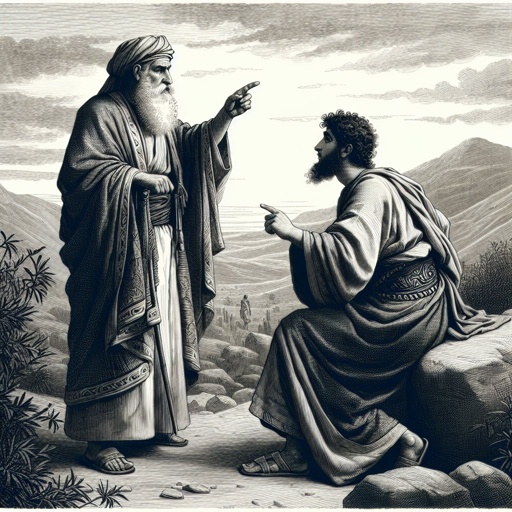
Judges 19:12 - "And his master said unto him, We will not turn aside hither into the city of a stranger, that is not of the children of Israel; we will pass over to Gibeah."

Judges 19:13 - "And he said unto his servant, Come, and let us draw near to one of these places to lodge all night, in Gibeah, or in Ramah."