What does Judges 20:26 mean?
“Then all the children of Israel, and all the people, went up, and came unto the house of God, and wept, and sat there before the LORD, and fasted that day until even, and offered burnt offerings and peace offerings before the LORD.” — Judges 20:26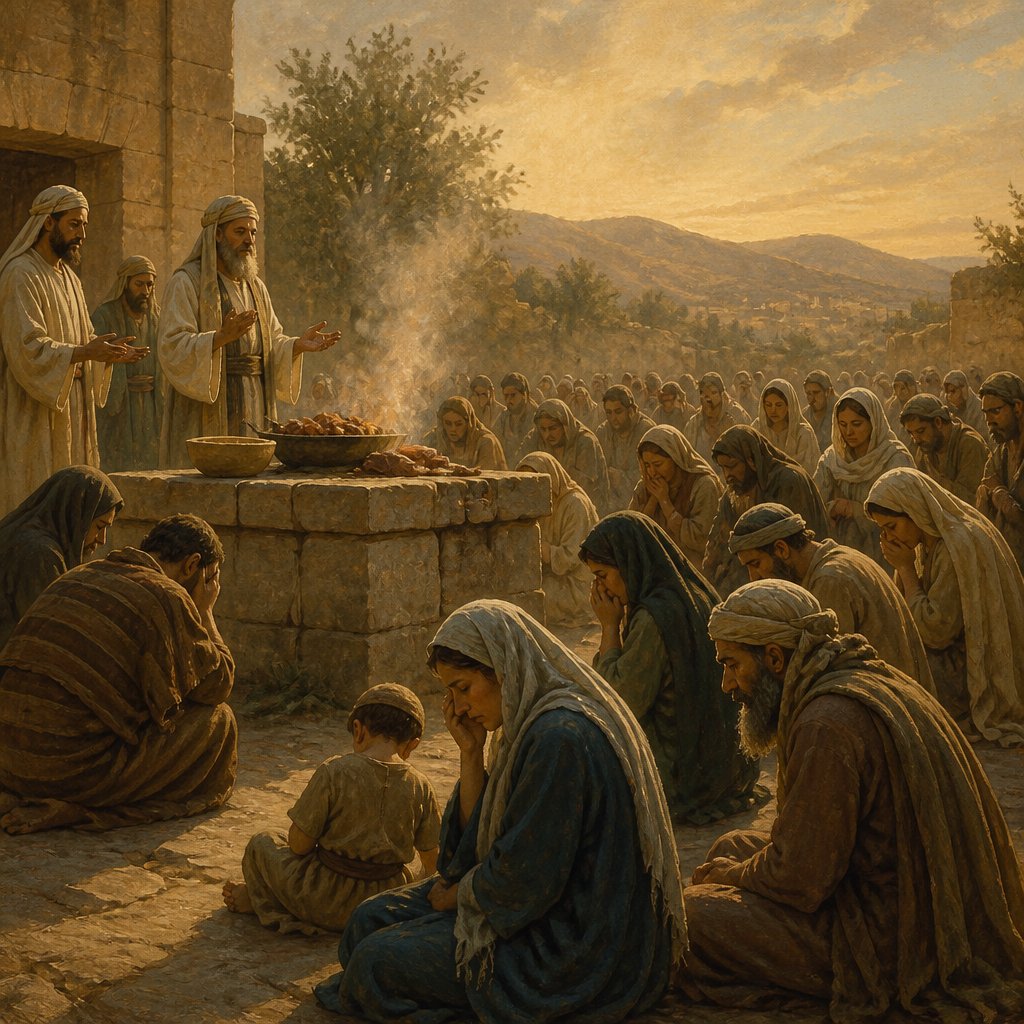
The Bible verse Judges 20:26 from the King James Version reads, "Then all the children of Israel, and all the people, went up, and came unto the house of God, and wept, and sat there before the Lord, and fasted that day until even, and offered burnt offerings and peace offerings before the Lord."
This passage comes at the end of the 20th chapter of the Book of Judges, which tells the story of the tragic civil war between the tribe of Benjamin and the other tribes of Israel. The chapter begins with the heinous crime of a Levite's concubine being raped and murdered by men from the tribe of Benjamin. This leads to a violent confrontation between the tribes, resulting in a significant loss of life. The other tribes of Israel seek justice for the crime, and after several battles and much bloodshed, they are finally successful in defeating the tribe of Benjamin.
In this verse, we see the response of the Israelites after their victory. They go to the house of God, weep, and sit before the Lord. They fast and offer burnt offerings and peace offerings before the Lord as an act of atonement and seeking God's favor and forgiveness for the bloodshed and violence that occurred during the conflict.
The themes present in this verse and the surrounding story include justice, repentance, and seeking God's forgiveness. The Israelites are deeply troubled by the violence and bloodshed that occurred during the civil war, and they recognize the need for spiritual restoration and reconciliation with God. Their actions demonstrate a deep sense of remorse and a desire to make amends for the sins committed during the conflict.
The context of this verse is important to understand its full meaning. The civil war between the tribes of Israel was a deeply tragic and disturbing event that revealed the moral and spiritual decay of the nation. The violence and bloodshed that occurred were a result of the people's disobedience and departure from God's laws and principles. The Israelites' response in this verse reflects their recognition of their guilt and their desperate need for God's forgiveness and restoration.
Symbolism also plays a significant role in this verse. The act of weeping, sitting before the Lord, and offering sacrifices represents the Israelites' humble and contrite hearts. Their fasting is a symbol of their self-denial and intense dedication to seeking God's favor. The burnt offerings and peace offerings are symbols of their desire for atonement and reconciliation with God. These actions are a reflection of the Israelites' understanding of the importance of seeking forgiveness and restoring their relationship with God.
In conclusion, Judges 20:26 from the King James Version of the Bible is a powerful example of the Israelites' response to their victory in the civil war and the deep sense of remorse and repentance they felt for the violence and bloodshed that occurred. The verse emphasizes the themes of justice, repentance, and seeking God's forgiveness, and it demonstrates the Israelites' deep desire for spiritual restoration and reconciliation with God. The story of the civil war in the Book of Judges serves as a sobering reminder of the consequences of disobedience and the importance of seeking God's forgiveness and restoration.
Get our apps


Artwork for Judges 20:26

Judges 20:26 - "¶ Then all the children of Israel, and all the people, went up, and came unto the house of God, and wept, and sat there before the LORD, and fasted that day until even, and offered burnt offerings and peace offerings before the LORD."
"¶ Then all the children of Israel, and all the people, went up, and came unto the house of God, and wept, and sat there before the LORD, and fasted that day until even, and offered burnt offerings and peace offerings before the LORD." - Judges 20:26

Judges 15:20 - "And he judged Israel in the days of the Philistines twenty years."

Judges 3:26 - "And Ehud escaped while they tarried, and passed beyond the quarries, and escaped unto Seirath."

Judges 20:29 - "And Israel set liers in wait round about Gibeah."

Judges 20:20 - "And the men of Israel went out to battle against Benjamin; and the men of Israel put themselves in array to fight against them at Gibeah."

Exodus 18:26 - "And they judged the people at all seasons: the hard causes they brought unto Moses, but every small matter they judged themselves."

Proverbs 26:20

Judges 20:19 - "And the children of Israel rose up in the morning, and encamped against Gibeah."

Judges 5:20 - "They fought from heaven; the stars in their courses fought against Sisera."

1 Chronicles 26:29 - "¶ Of the Izharites, Chenaniah and his sons were for the outward business over Israel, for officers and judges."

Judges 21:20 - "Therefore they commanded the children of Benjamin, saying, Go and lie in wait in the vineyards;"

Judges 20:27 - "And the children of Israel enquired of the LORD, (for the ark of the covenant of God was there in those days,"

Judges 20:44 - "And there fell of Benjamin eighteen thousand men; all these were men of valour."

Judges 20:24 - "And the children of Israel came near against the children of Benjamin the second day."

Judges 20:7 - "Behold, ye are all children of Israel; give here your advice and counsel."

Judges 19:26 - "Then came the woman in the dawning of the day, and fell down at the door of the man's house where her lord was, till it was light."

Judges 9:26 - "And Gaal the son of Ebed came with his brethren, and went over to Shechem: and the men of Shechem put their confidence in him."

Ezekiel 20:4 - "Wilt thou judge them, son of man, wilt thou judge them? cause them to know the abominations of their fathers:"

Judges 14:20 - "But Samson's wife was given to his companion, whom he had used as his friend."

Judges 1:26 - "And the man went into the land of the Hittites, and built a city, and called the name thereof Luz: which is the name thereof unto this day."

Judges 1:20 - "And they gave Hebron unto Caleb, as Moses said: and he expelled thence the three sons of Anak."

Isaiah 1:26 - "And I will restore thy judges as at the first, and thy counsellors as at the beginning: afterward thou shalt be called, The city of righteousness, the faithful city."

"And he judged Israel in the days of the Philistines twenty years." - Judges 15:20

Judges 18:20 - "And the priest's heart was glad, and he took the ephod, and the teraphim, and the graven image, and went in the midst of the people."

Judges 20:9 - "But now this shall be the thing which we will do to Gibeah; we will go up by lot against it;"

Judges 20:11 - "So all the men of Israel were gathered against the city, knit together as one man."

Leviticus 20:22-26 simple picture

Picture to summarize Leviticus 20:22-26

Judges 20:47 - "But six hundred men turned and fled to the wilderness unto the rock Rimmon, and abode in the rock Rimmon four months."