What does Judges 21:4 mean?
“And it came to pass on the morrow, that the people rose early, and built there an altar, and offered burnt offerings and peace offerings.” — Judges 21:4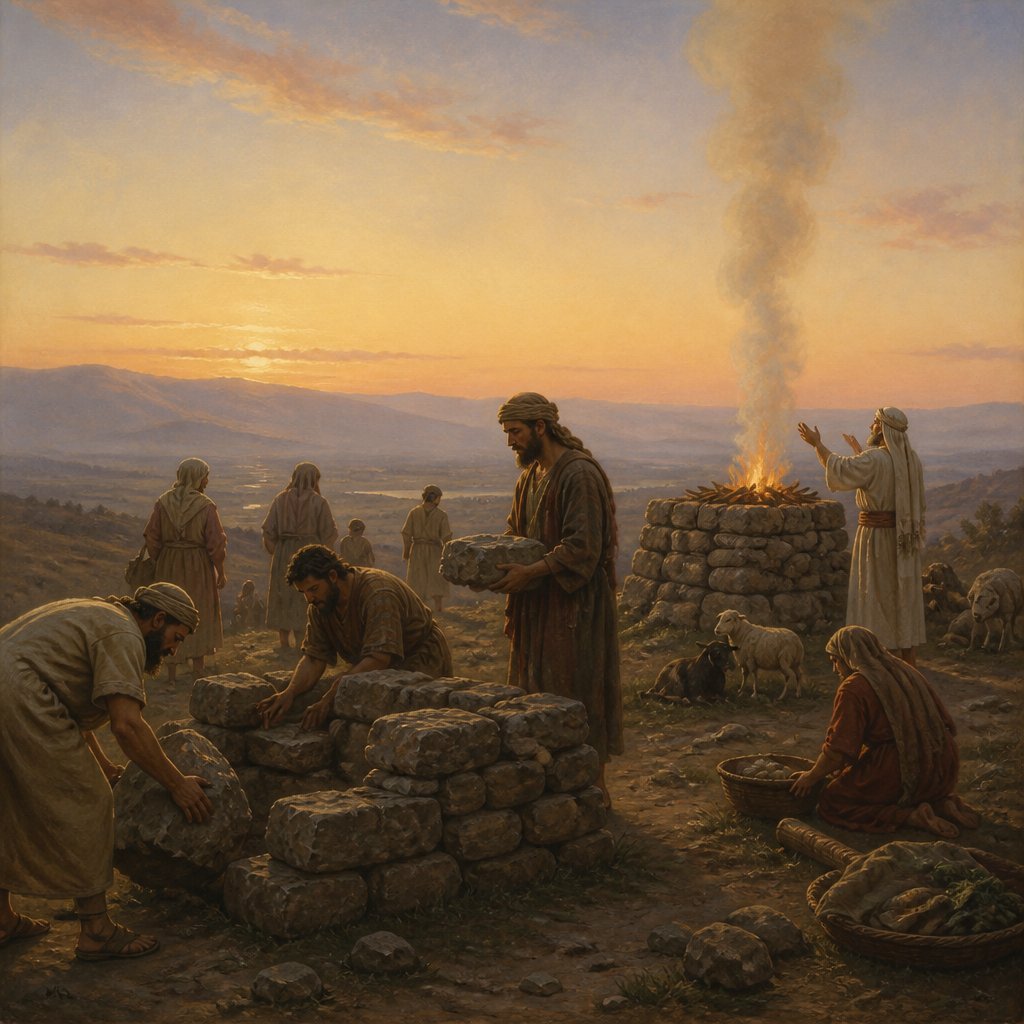
Judges 21:4 (KJV): "And it came to pass on the morrow, that the people rose early, and built there an altar, and offered burnt offerings and peace offerings."
This verse is part of the book of Judges, which is the seventh book of the Hebrew Bible and the Christian Old Testament. It is the story of the Israelites' struggle to establish and maintain a national identity after they settled in the Promised Land. The book of Judges is a historical and theological account of the period between the death of Joshua and the rise of the monarchy in Israel.
The context of Judges 21:4 is the aftermath of a terrible event in the history of Israel. The previous chapter (Judges 19-20) tells the story of an appalling crime committed by the men of the tribe of Benjamin, which resulted in a civil war and the near destruction of the tribe. In Judges 19, a Levite and his concubine were traveling through the territory of Benjamin. They took refuge in the house of an old man in the city of Gibeah, but the wicked men of the city surrounded the house, demanding that the Levite be handed over to them so they could sexually abuse him. To protect himself, the Levite gave them his concubine, and the men abused her all night, resulting in her death. The Levite then cut her body into twelve pieces and sent them to the twelve tribes of Israel. This act incited outrage and led to a gathering of the tribes to address the crime.
In the subsequent battle, the tribe of Benjamin was nearly exterminated, leaving only a handful of survivors. This brought about another problem – the other tribes vowed not to give their daughters in marriage to the men of Benjamin, effectively threatening the survival of the tribe. The tribe of Benjamin faced extinction and the Israelites sought to find a way to preserve the tribe while keeping their vow not to give their daughters to them.
In the aftermath of these events, the Israelites rose early the next day, built an altar, and offered burnt offerings and peace offerings. This act is pregnant with meaning and symbolism. The building of the altar and offering of sacrifices were a way for the Israelites to seek forgiveness and reconciliation with God after the horrors that had taken place. They recognized the need for atonement and sought to restore their relationship with God through these offerings.
The burnt offerings were a symbol of complete surrender and dedication to God. The Israelites were acknowledging their failings and sins, and were seeking God's mercy and forgiveness for the atrocities committed. The peace offerings were a symbol of thanksgiving and reconciliation. The people were expressing their desire for peace and restoration, both with God and with each other.
The act of offering sacrifices was a central part of Israelite worship and was a means of seeking forgiveness for sin and renewing their covenant relationship with God. This act also underscores the centrality of worship in the life of God's people. It is a reminder that, in the face of sin and brokenness, the people turned to God in worship and sought His mercy and grace.
This verse also highlights the theme of reconciliation and restoration. The Israelites recognized the need to make amends and seek restoration after the tragic events that had taken place. They did not allow the horrors to define them, but instead sought to rebuild and restore their relationship with God and with each other. This act of worship and offering of sacrifices was a crucial step towards healing and reconciliation for the entire community.
In conclusion, Judges 21:4 captures a pivotal moment in Israel's history, reflecting the people's recognition of their need for reconciliation with God and with each other. It is a powerful reminder of the central role of worship in times of crisis, as well as a testament to God's mercy and grace in the face of human failings. This verse serves as a poignant reminder of the importance of seeking forgiveness, making amends, and pursuing reconciliation in the aftermath of tragedy and sin.
Get our apps


Artwork for Judges 21:4

Judges 21:4 - "And it came to pass on the morrow, that the people rose early, and built there an altar, and offered burnt offerings and peace offerings."
"And it came to pass on the morrow, that the people rose early, and built there an altar, and offered burnt offerings and peace offerings." - Judges 21:4

Judges 4:21 - "Then Jael Heber's wife took a nail of the tent, and took an hammer in her hand, and went softly unto him, and smote the nail into his temples, and fastened it into the ground: for he was fast asleep and weary. So he died."

Judges 4:4

Judges 4:4 - "¶ And Deborah, a prophetess, the wife of Lapidoth, she judged Israel at that time."

Judges 21:20 - "Therefore they commanded the children of Benjamin, saying, Go and lie in wait in the vineyards;"

Judges 21:9 - "For the people were numbered, and, behold, there were none of the inhabitants of Jabesh-gilead there."

Judges 18:21 - "So they turned and departed, and put the little ones and the cattle and the carriage before them."

Judges 21:17 - "And they said, There must be an inheritance for them that be escaped of Benjamin, that a tribe be not destroyed out of Israel."

Judges 9:21 - "And Jotham ran away, and fled, and went to Beer, and dwelt there, for fear of Abimelech his brother."

Judges 21:15 - "And the people repented them for Benjamin, because that the LORD had made a breach in the tribes of Israel."

Judges 21:25 - "In those days there was no king in Israel: every man did that which was right in his own eyes."

Judges 21:21 - "And see, and, behold, if the daughters of Shiloh come out to dance in dances, then come ye out of the vineyards, and catch you every man his wife of the daughters of Shiloh, and go to the land of Benjamin."

Judges 4:4 - "¶ And Deborah, a prophetess, the wife of Lapidoth, she judged Israel at that time."

Judges 7:21 - "And they stood every man in his place round about the camp: and all the host ran, and cried, and fled."

Judges 13:21 - "But the angel of the LORD did no more appear to Manoah and to his wife. Then Manoah knew that he was an angel of the LORD."

"¶ And Deborah, a prophetess, the wife of Lapidoth, she judged Israel at that time." - Judges 4:4

Judges 21:6 - "And the children of Israel repented them for Benjamin their brother, and said, There is one tribe cut off from Israel this day."

Judges 21:2 - "And the people came to the house of God, and abode there till even before God, and lifted up their voices, and wept sore;"

Judges 21:13 - "And the whole congregation sent some to speak to the children of Benjamin that were in the rock Rimmon, and to call peaceably unto them."

James 2:4 - "Are ye not then partial in yourselves, and are become judges of evil thoughts?"

Judges 19:21 - "So he brought him into his house, and gave provender unto the asses: and they washed their feet, and did eat and drink."

Judges 21:16 - "Then the elders of the congregation said, How shall we do for wives for them that remain, seeing the women are destroyed out of Benjamin?"

Judges 21:3 - "And said, O LORD God of Israel, why is this come to pass in Israel, that there should be to day one tribe lacking in Israel?"

Judges 1:21 - "And the children of Benjamin did not drive out the Jebusites that inhabited Jerusalem; but the Jebusites dwell with the children of Benjamin in Jerusalem unto this day."

Judges 20:21 - "And the children of Benjamin came forth out of Gibeah, and destroyed down to the ground of the Israelites that day twenty and two thousand men."

Judges 4:15 – "The Lord routed Sisera and all his chariots and army by the sword."

Judges 21:1 - "Now the men of Israel had sworn in Mizpeh, saying, There shall not any of us give his daughter unto Benjamin to wife."

Deuteronomy 21:2 - "Then thy elders and thy judges shall come forth, and they shall measure unto the cities which are round about him that is slain:"

Judges 2:21 - "I also will not henceforth drive out any from before them of the nations which Joshua left when he died:"