What does Judges 3:31 mean?
“And after him was Shamgar the son of Anath, which slew of the Philistines six hundred men with an ox goad: and he also delivered Israel.” — Judges 3:31
"Judges 3:31" from the King James Version of the Bible reads, "And after him was Shamgar the son of Anath, which slew of the Philistines six hundred men with an ox goad: and he also delivered Israel." This verse is found in the Old Testament book of Judges, which recounts the history of the nation of Israel during the time between the conquest of Canaan and the establishment of the monarchy.
The story of Shamgar is a brief and straightforward account of a little-known figure in Israel's history. He is only mentioned twice in the Bible, once in Judges 3:31 and again in Judges 5:6, and yet his actions are significant enough to be recorded. His heroic act of killing six hundred Philistines with an ox goad demonstrates his strength, courage, and determination. It also serves as a reminder of God's faithfulness in delivering Israel from their enemies.
Shamgar's story takes place during a tumultuous period in Israel's history when they were oppressed by the Philistines. The book of Judges describes a cycle of sin, oppression, repentance, and deliverance that the Israelites experienced repeatedly. During this time, God raised up judges to lead and deliver the people from their oppressors. Shamgar is one of these judges, albeit a lesser-known one. His victory over the Philistines is a testimony to God's power to use ordinary and unexpected individuals to achieve extraordinary results.
The fact that Shamgar used an ox goad as a weapon is notable. An ox goad was a long wooden stick with a pointed metal tip used to prod oxen or other livestock. It was not a traditional weapon of war, but Shamgar used what he had at his disposal to defeat the enemy. This demonstrates his resourcefulness and determination to defend his people. It also serves as a reminder that God can use unconventional means to bring about deliverance and victory.
The symbolism in Shamgar's story is also noteworthy. The number six hundred is often seen as a symbol of completeness or fullness. In this context, it represents the complete defeat of the Philistine oppressors by Shamgar's hand. Additionally, the use of the ox goad as a weapon symbolizes the idea that God can turn ordinary, everyday objects into powerful tools for accomplishing His purposes. Shamgar's faithfulness and obedience to God's call to defend Israel serve as an inspiration and a challenge to believers to be willing to use whatever means necessary to stand against evil and defend the cause of righteousness.
Overall, Shamgar's story in Judges 3:31 serves as a powerful reminder of God's faithfulness in delivering His people and His ability to use ordinary individuals to accomplish extraordinary feats. It also underscores the importance of resourcefulness, determination, and faithfulness in the pursuit of justice and righteousness. The themes of oppression, deliverance, and the unexpected hero are timeless and continue to resonate with readers today. Shamgar's example encourages believers to trust in God's power, to be open to unconventional methods, and to remain steadfast in the face of adversity.
Get our apps


Artwork for Judges 3:31

Judges 3:31

Judges 3:31 - "¶ And after him was Shamgar the son of Anath, which slew of the Philistines six hundred men with an ox goad: and he also delivered Israel."
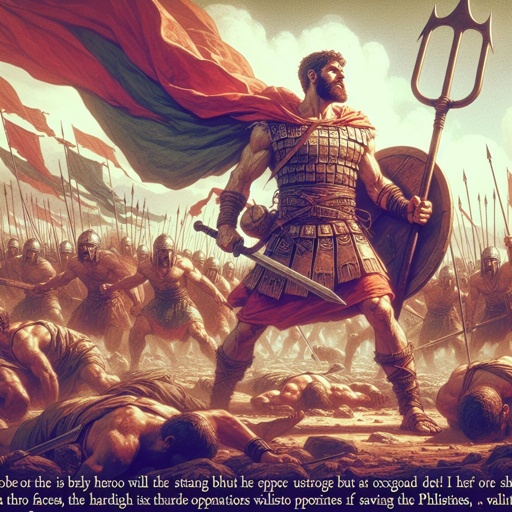
Judges 3:31 “After Ehud came Shamgar son of Anath, who struck down six hundred Philistines with an oxgoad. He too saved Israel.”

"¶ And after him was Shamgar the son of Anath, which slew of the Philistines six hundred men with an ox goad: and he also delivered Israel." - Judges 3:31

Judges 3:31 “After Ehud came Shamgar son of Anath, who struck down six hundred Philistines with an oxgoad. He too saved Israel.”

Judges 2:31

Job 31:11 - "For this is an heinous crime; yea, it is an iniquity to be punished by the judges."

1 Corinthians 11:31 - "For if we would judge ourselves, we should not be judged."

Judges 3:1 - "Now these are the nations which the LORD left, to prove Israel by them, even as many of Israel as had not known all the wars of Canaan;"

Deuteronomy 32:31 - "For their rock is not as our Rock, even our enemies themselves being judges."

Judges 8:31 - "And his concubine that was in Shechem, she also bare him a son, whose name he called Abimelech."

"For this is an heinous crime; yea, it is an iniquity to be punished by the judges." - Job 31:11

Judges 18:31 - "And they set them up Micah's graven image, which he made, all the time that the house of God was in Shiloh."

"For if we would judge ourselves, we should not be judged." - 1 Corinthians 11:31

Proverbs 31:9 - "Open thy mouth, judge righteously, and plead the cause of the poor and needy."

Job 31:28 - "This also were an iniquity to be punished by the judge: for I should have denied the God that is above."

Judges 9:31 - "And he sent messengers unto Abimelech privily, saying, Behold, Gaal the son of Ebed and his brethren be come to Shechem; and, behold, they fortify the city against thee."

Judges 1:31 - "¶ Neither did Asher drive out the inhabitants of Accho, nor the inhabitants of Zidon, nor of Ahlab, nor of Achzib, nor of Helbah, nor of Aphik, nor of Rehob:"

Mark 3:31-34

"For their rock is not as our Rock, even our enemies themselves being judges." - Deuteronomy 32:31

Judges 16:31 - "Then his brethren and all the house of his father came down, and took him, and brought him up, and buried him between Zorah and Eshtaol in the buryingplace of Manoah his father. And he judged Israel twenty years."

Lamentations 3:31 - "For the Lord will not cast off for ever:"
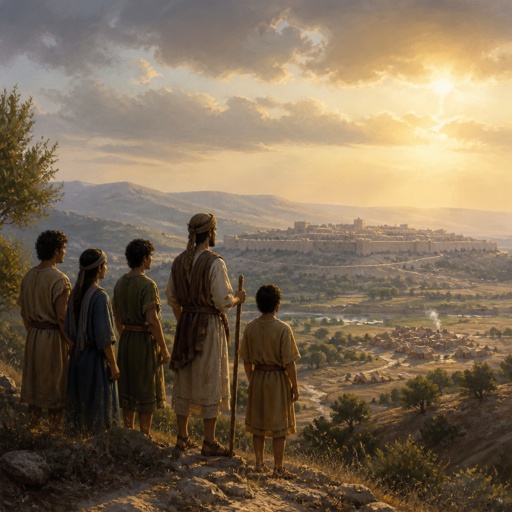
"Now these are the nations which the LORD left, to prove Israel by them, even as many of Israel as had not known all the wars of Canaan;" - Judges 3:1

Zephaniah 3:3 - "Her princes within her are roaring lions; her judges are evening wolves; they gnaw not the bones till the morrow."

Judges 10:3 - "¶ And after him arose Jair, a Gileadite, and judged Israel twenty and two years."

Genesis 31:53 - "The God of Abraham, and the God of Nahor, the God of their father, judge betwixt us. And Jacob sware by the fear of his father Isaac."

Job 31:3 - "Is not destruction to the wicked? and a strange punishment to the workers of iniquity?"

Judges 3:6 - "And they took their daughters to be their wives, and gave their daughters to their sons, and served their gods."

Judges 11:31 - "Then it shall be, that whatsoever cometh forth of the doors of my house to meet me, when I return in peace from the children of Ammon, shall surely be the LORD'S, and I will offer it up for a burnt offering."

Judges 5:31 - "So let all thine enemies perish, O LORD: but let them that love him be as the sun when he goeth forth in his might. And the land had rest forty years."