What does Judges 4:20 mean?
“Again he said unto her, Stand in the door of the tent, and it shall be, when any man doth come and enquire of thee, and say, Is there any man here? that thou shalt say, No.” — Judges 4:20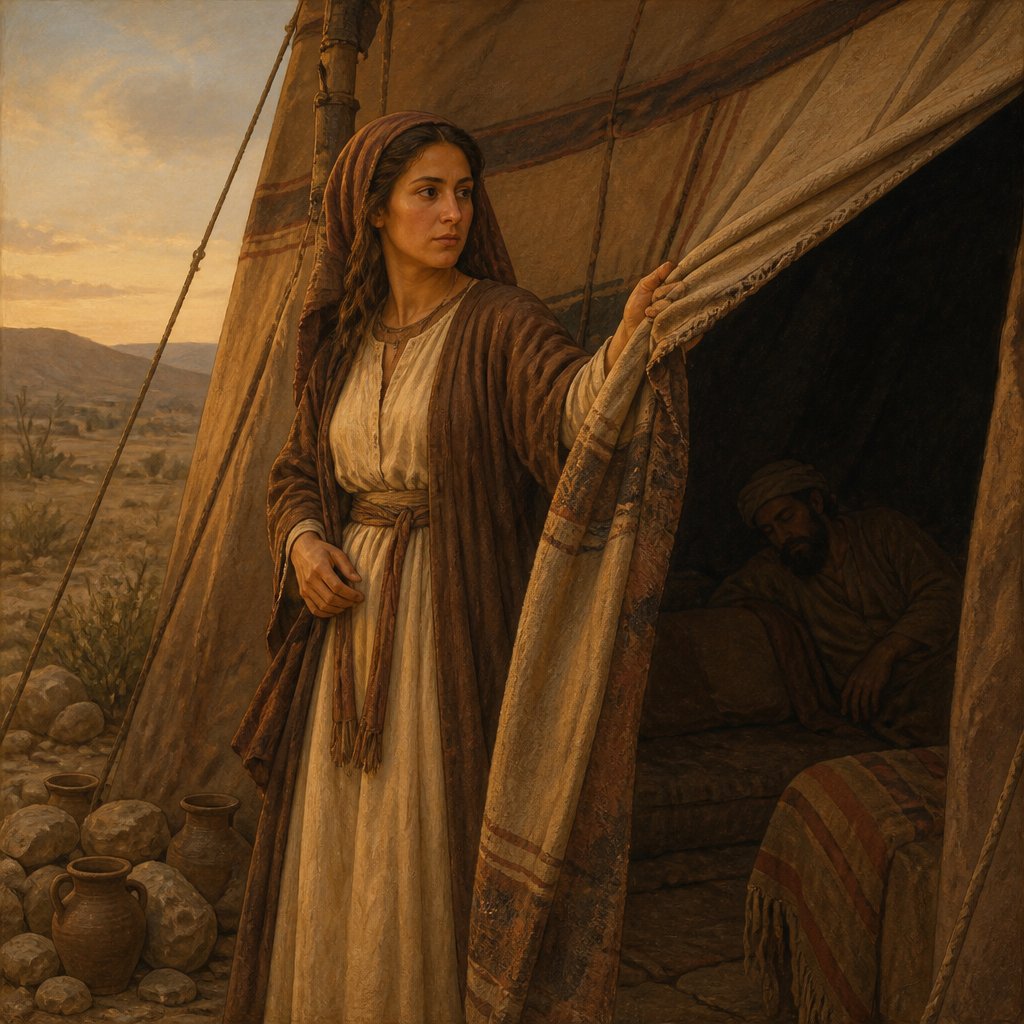
The Bible verse Judges 4:20 in the King James Version reads: "Again he said unto her, Stand in the door of the tent, and it shall be, when any man doth come and enquire of thee, and say, Is there any man here? that thou shalt say, No."
This verse is part of the narrative of the story of Deborah and Barak, which is found in the book of Judges in the Old Testament. The verse occurs in the context of a battle between the Israelites and the Canaanites. Deborah was a prophetess and judge of Israel, and Barak was the military leader of the Israelite army.
The context of this verse is the strategic action taken by Jael, the wife of Heber the Kenite, who was an ally of the Canaanites. This verse shows how Jael cleverly lured Sisera, the commander of the Canaanite army, into her tent and subsequently killed him. By following the instruction given by Deborah in the verse, Jael was able to deceive and ultimately defeat the enemy.
From a thematic perspective, this verse reflects the themes of courage, resourcefulness, and the fulfillment of God's plan. Deborah, as a judge and prophetess, demonstrated leadership and faith in God's guidance. She played a crucial role in rallying the Israelites to fight against their oppressors. Barak, on the other hand, showed bravery and obedience by leading the army into battle. Jael's actions also exemplify bravery and cunning, as she took a risk by deceiving and killing the enemy commander.
The verse also conveys the theme of divine intervention and fulfillment of prophecy. The outcome of the battle and the defeat of Sisera were in accordance with the word of God and the prophecy given by Deborah. This demonstrates the sovereignty of God and His faithfulness in fulfilling His promises to His people.
Symbolically, the door of the tent can represent a place of decision and action. Jael's positioning at the door signifies her role as a pivotal figure in the unfolding events. Her response to the inquiry symbolizes her commitment to the plan and her willingness to carry out the task assigned to her. The act of luring Sisera into her tent and subsequently killing him symbolizes the cunning and decisive action taken to achieve victory.
Furthermore, the verse also highlights the role of women in the biblical narrative. Deborah, as a prophetess and judge, exercised leadership and wisdom in guiding the nation of Israel. Jael, through her bold actions, played a significant role in the defeat of the enemy. This serves as a reminder of the important contributions of women in the fulfillment of God's plans and purposes.
In summary, the Bible verse Judges 4:20 in the King James Version encapsulates the themes of courage, divine intervention, and the decisive actions of God's people. It also symbolizes the role of women in the biblical narrative and their significant contributions to the fulfillment of God's purposes. This verse serves as a reminder of the trustworthiness of God's word and His faithfulness in guiding and empowering His people to overcome adversity.
Get our apps


Artwork for Judges 4:20

Judges 4:20 - "Again he said unto her, Stand in the door of the tent, and it shall be, when any man doth come and enquire of thee, and say, Is there any man here? that thou shalt say, No."
"Again he said unto her, Stand in the door of the tent, and it shall be, when any man doth come and enquire of thee, and say, Is there any man here? that thou shalt say, No." - Judges 4:20

Ezekiel 20:4 - "Wilt thou judge them, son of man, wilt thou judge them? cause them to know the abominations of their fathers:"

Judges 20:4 - "And the Levite, the husband of the woman that was slain, answered and said, I came into Gibeah that belongeth to Benjamin, I and my concubine, to lodge."

Judges 4:4
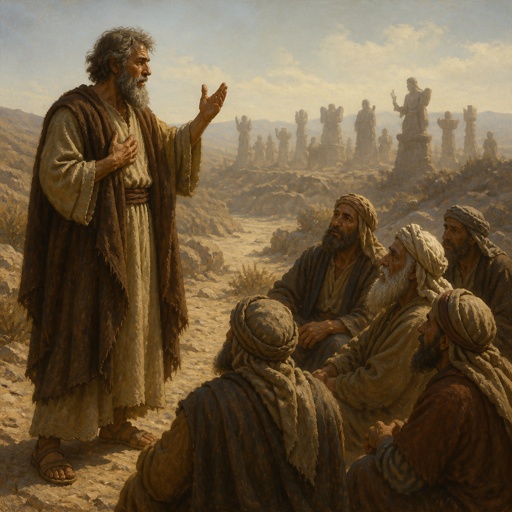
"Wilt thou judge them, son of man, wilt thou judge them? cause them to know the abominations of their fathers:" - Ezekiel 20:4

Revelation 20:4

Judges 15:20 - "And he judged Israel in the days of the Philistines twenty years."

Judges 4:4 - "¶ And Deborah, a prophetess, the wife of Lapidoth, she judged Israel at that time."

Judges 20:29 - "And Israel set liers in wait round about Gibeah."

Judges 20:20 - "And the men of Israel went out to battle against Benjamin; and the men of Israel put themselves in array to fight against them at Gibeah."
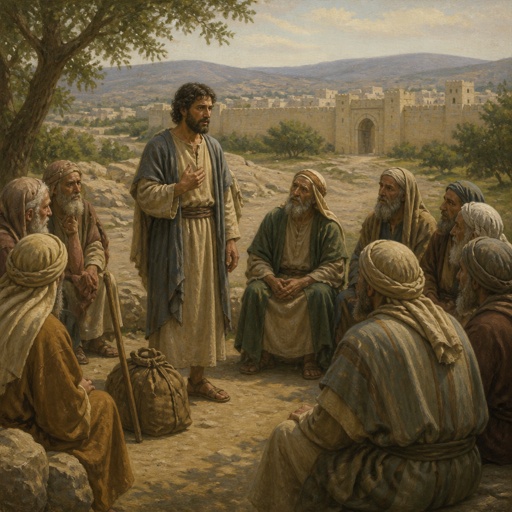
"And the Levite, the husband of the woman that was slain, answered and said, I came into Gibeah that belongeth to Benjamin, I and my concubine, to lodge." - Judges 20:4

Judges 20:19 - "And the children of Israel rose up in the morning, and encamped against Gibeah."

Judges 5:20 - "They fought from heaven; the stars in their courses fought against Sisera."

Judges 21:20 - "Therefore they commanded the children of Benjamin, saying, Go and lie in wait in the vineyards;"

Judges 20:27 - "And the children of Israel enquired of the LORD, (for the ark of the covenant of God was there in those days,"

Judges 20:44 - "And there fell of Benjamin eighteen thousand men; all these were men of valour."

Judges 20:24 - "And the children of Israel came near against the children of Benjamin the second day."

Judges 20:7 - "Behold, ye are all children of Israel; give here your advice and counsel."

Judges 14:20 - "But Samson's wife was given to his companion, whom he had used as his friend."

Judges 1:20 - "And they gave Hebron unto Caleb, as Moses said: and he expelled thence the three sons of Anak."

Judges 4:4 - "¶ And Deborah, a prophetess, the wife of Lapidoth, she judged Israel at that time."

"And he judged Israel in the days of the Philistines twenty years." - Judges 15:20

Judges 18:20 - "And the priest's heart was glad, and he took the ephod, and the teraphim, and the graven image, and went in the midst of the people."

Judges 20:9 - "But now this shall be the thing which we will do to Gibeah; we will go up by lot against it;"

Judges 20:11 - "So all the men of Israel were gathered against the city, knit together as one man."

"¶ And Deborah, a prophetess, the wife of Lapidoth, she judged Israel at that time." - Judges 4:4

Judges 20:47 - "But six hundred men turned and fled to the wilderness unto the rock Rimmon, and abode in the rock Rimmon four months."

Judges 20:41 - "And when the men of Israel turned again, the men of Benjamin were amazed: for they saw that evil was come upon them."

Judges 20:12 - "¶ And the tribes of Israel sent men through all the tribe of Benjamin, saying, What wickedness is this that is done among you?"