What does Judges 5:13 mean?
“Then he made him that remaineth have dominion over the nobles among the people: the LORD made me have dominion over the mighty.” — Judges 5:13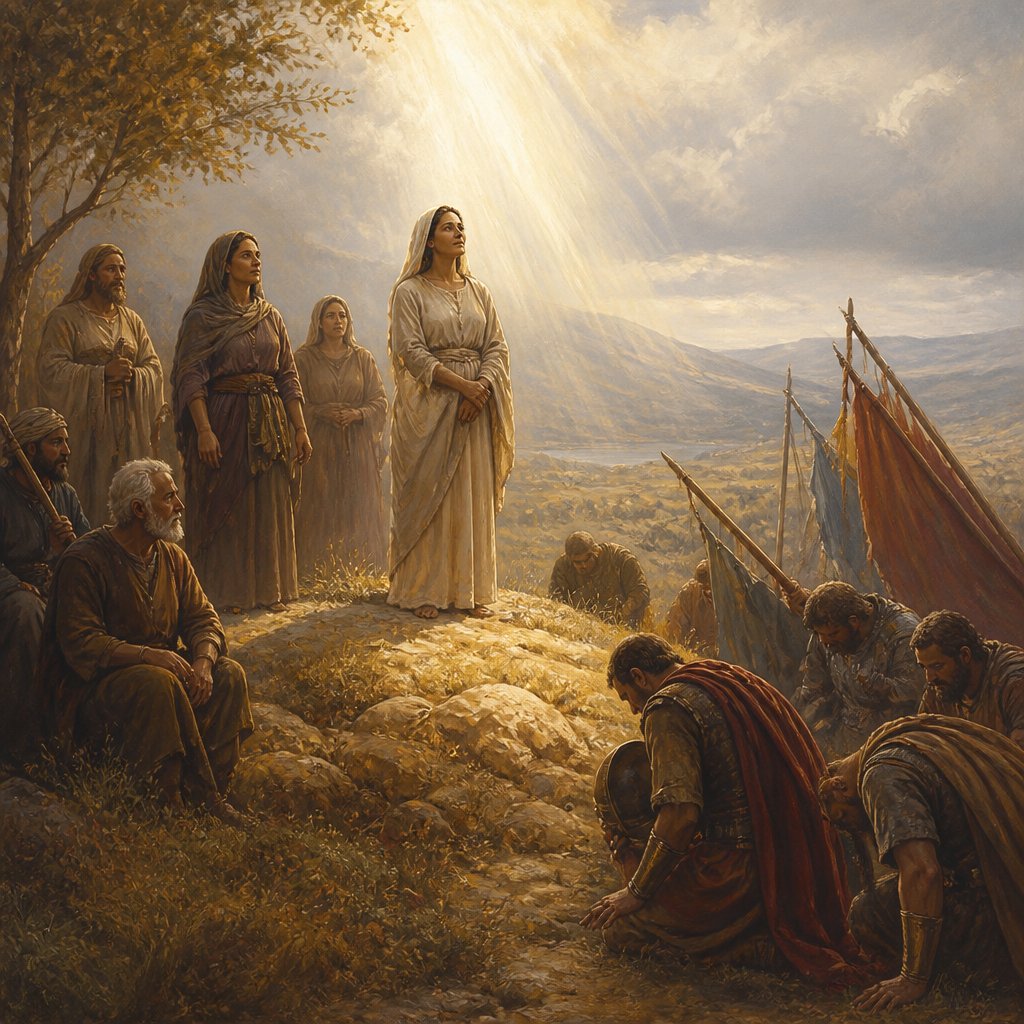
Judges 5:13 in the King James Version reads, "Then he made him that remaineth have dominion over the nobles among the people: the LORD made me have dominion over the mighty." This verse is part of the Song of Deborah, a poetic and triumphant celebration of victory over the Canaanite armies under the leadership of Deborah the Prophetess and Barak the warrior.
The historical context of this verse is crucial to understanding its deeper meaning. At the time, the Israelites were oppressed by the Canaanites and had been subjugated for many years. However, Deborah and Barak, in obedience to God's command, rallied the Israelites to fight against their oppressors. The victory described in this song was a turning point in the history of Israel and is a prominent example of God's deliverance and faithfulness to His people.
The language of the verse is rich with symbolism and themes that resonate throughout the Bible. The theme of divine intervention and the triumph of the weak over the strong is prominent. The verse proclaims that it is the Lord who grants dominion and authority, not through human strength or wisdom, but through His divine will. This resonates with the overall message of the Song of Deborah, which emphasizes the power and sovereignty of God over the affairs of humanity.
The concept of dominion and authority is significant in this verse. The idea that the one who remains, or the remnant, is granted dominion over the nobles and the mighty speaks to the transformative power of God's intervention. It is a reminder that God often uses the weak and the humble to accomplish His purposes, as seen throughout the Bible in the stories of figures like David, Gideon, and Esther. This verse serves as a powerful reminder that God's strength is made perfect in human weakness and that He often exalts the lowly to confound the mighty.
The verse also reflects the theme of divine justice. The Canaanite nobles and mighty were powerful and oppressive figures, but their dominion is ultimately given to the remnant, those who remain faithful to God. This echoes the words of Jesus in the New Testament, that the meek shall inherit the earth (Matthew 5:5). It is a reminder that God's justice often overturns the established order, exalting the humble and bringing low the proud.
Symbolically, this verse can also be seen as a foreshadowing of the ultimate victory of God's people over all forms of oppression and evil. The language of dominion and authority speaks to the ultimate triumph of God's kingdom over the forces of darkness. The Lord making Deborah and Barak have dominion over the mighty is a powerful symbol of God's power to overthrow oppressive rulers and establish His righteous rule on earth.
In conclusion, Judges 5:13 in the King James Version is a verse rich with theological and symbolic significance. It emphasizes the themes of divine intervention, the triumph of the weak over the strong, and the justice of God. It is a powerful declaration of God's sovereignty and his ability to exalt the humble and grant them authority over the powerful. This verse serves as a reminder of the transformative power of God's intervention and His ultimate victory over all forms of oppression and evil.
Get our apps


Artwork for Judges 5:13

Judges 5:13 - "Then he made him that remaineth have dominion over the nobles among the people: the LORD made me have dominion over the mighty."
"Then he made him that remaineth have dominion over the nobles among the people: the LORD made me have dominion over the mighty." - Judges 5:13

Judges 13:5 - "For, lo, thou shalt conceive, and bear a son; and no razor shall come on his head: for the child shall be a Nazarite unto God from the womb: and he shall begin to deliver Israel out of the hand of the Philistines."

Judges 5:7

Judges 2:13 - "And they forsook the LORD, and served Baal and Ashtaroth."

Judges 13:13 - "And the angel of the LORD said unto Manoah, Of all that I said unto the woman let her beware."

Judges 12:13 - "¶ And after him Abdon the son of Hillel, a Pirathonite, judged Israel."

Judges 10:5 - "And Jair died, and was buried in Camon."

Judges 5:5 - "The mountains melted from before the LORD, even that Sinai from before the LORD God of Israel."

Judges 5:1 - "Then sang Deborah and Barak the son of Abinoam on that day, saying,"

Judges 2:5 - "And they called the name of that place Bochim: and they sacrificed there unto the LORD."

Judges 18:13 - "And they passed thence unto mount Ephraim, and came unto the house of Micah."

Judges 8:13 - "¶ And Gideon the son of Joash returned from battle before the sun was up,"

Judges 13:3 make the Angel of the Lord male

Judges 5:20 - "They fought from heaven; the stars in their courses fought against Sisera."

Judges 5:22 - "Then were the horsehoofs broken by the means of the pransings, the pransings of their mighty ones."

Judges 13:25 - "And the Spirit of the LORD began to move him at times in the camp of Dan between Zorah and Eshtaol."

"And Jair died, and was buried in Camon." - Judges 10:5

Psalms 96:13 - "Before the LORD: for he cometh, for he cometh to judge the earth: he shall judge the world with righteousness, and the people with his truth."

Judges 5:29 - "Her wise ladies answered her, yea, she returned answer to herself,"

Judges 5:10 - "Speak, ye that ride on white asses, ye that sit in judgment, and walk by the way."

Judges 5:2 - "Praise ye the LORD for the avenging of Israel, when the people willingly offered themselves."

Judges 1:5 - "And they found Adoni-bezek in Bezek: and they fought against him, and they slew the Canaanites and the Perizzites."

1 Corinthians 5:12 - "For what have I to do to judge them also that are without? do not ye judge them that are within?"

Judges 13:2 - "¶ And there was a certain man of Zorah, of the family of the Danites, whose name was Manoah; and his wife was barren, and bare not."

"And they forsook the LORD, and served Baal and Ashtaroth." - Judges 2:13

Judges 13:24 - "¶ And the woman bare a son, and called his name Samson: and the child grew, and the LORD blessed him."

Judges 3:5 - "¶ And the children of Israel dwelt among the Canaanites, Hittites, and Amorites, and Perizzites, and Hivites, and Jebusites:"

Judges 5:18 - "Zebulun and Naphtali were a people that jeoparded their lives unto the death in the high places of the field."

Judges 10:13 - "Yet ye have forsaken me, and served other gods: wherefore I will deliver you no more."