What does Judges 5:14 mean?
“Out of Ephraim was there a root of them against Amalek; after thee, Benjamin, among thy people; out of Machir came down governors, and out of Zebulun they that handle the pen of the writer.” — Judges 5:14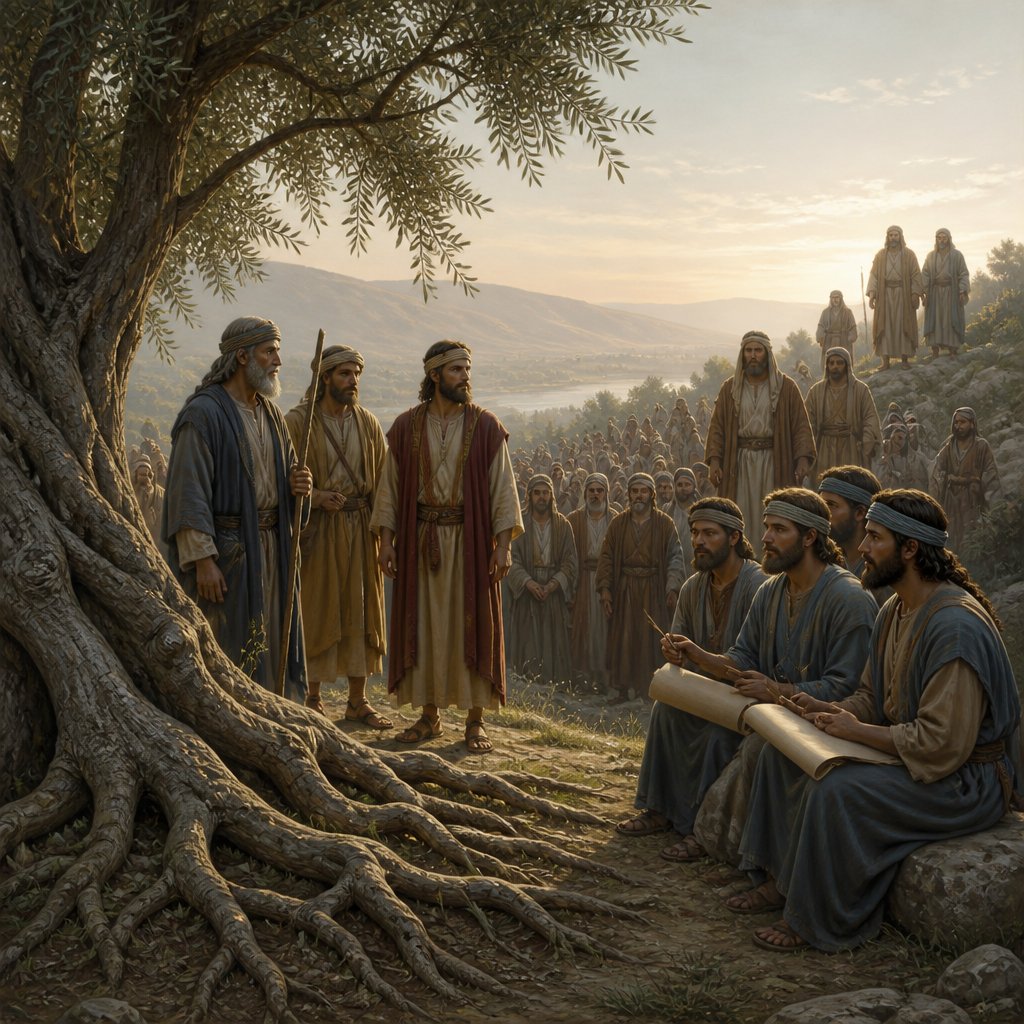
The Bible verse Judges 5:14 from the King James Version (KJV) states: "Out of Ephraim was there a root of them against Amalek; after thee, Benjamin, among thy people; out of Machir came down governors, and out of Zebulun they that handle the pen of the writer."
This verse is part of the Song of Deborah, which is found in the book of Judges in the Old Testament. The song is a poetic retelling of the victory of the Israelites over their enemies, specifically the Canaanites under the leadership of Deborah and Barak. The verse is part of a larger section that recounts the various tribes and individuals who played a role in the battle and their specific contributions.
In this particular verse, there are several themes and elements that can be explored. One of the key themes is the idea of unity and collaboration among the Israelite tribes. The verse highlights the tribe of Ephraim, Benjamin, Machir, and Zebulun, each contributing in their own way to the victory over the enemy. This serves as a reminder of the importance of working together as a community and leveraging individual strengths for the greater good.
The mention of Ephraim as "a root of them against Amalek" is significant as it brings to mind the story of the Israelites' battle against the Amalekites in the book of Exodus. In that story, the Amalekites attacked the Israelites while they were traveling through the wilderness, and Joshua led the Israelite army in battle. During the fighting, Moses stood on a hill with the staff of God in his hand, and as long as his arms were raised, the Israelites prevailed. This connection serves to tie the current victory to the history of the Israelite people and reinforces the idea that their success is rooted in their relationship with God.
The reference to "governors" coming out of Machir and those who "handle the pen of the writer" from Zebulun also points to the diverse skills and leadership roles within the Israelite community. This diversity of talents and abilities is recognized and celebrated as contributing to the overall strength of the nation.
In addition to the themes of unity and collaboration, this verse also contains elements of symbolism. The mention of Ephraim and Benjamin, two important tribes in Israel, represents the collective strength of the nation. By naming these specific tribes, the verse emphasizes the role of each tribe in the overall success of the battle, highlighting the importance of every individual and group within the community.
Furthermore, the imagery of "governors" coming out of Machir and those who "handle the pen of the writer" from Zebulun symbolizes the roles of leadership and communication within the community. The governors represent those who provide guidance and direction, while the writers represent the importance of recording and preserving the history and traditions of the Israelite people.
When considering the historical and cultural context of this verse, it is important to recognize the turbulent and often violent nature of the time period in which it was written. The Israelites faced constant threats and conflict from neighboring nations, and the Song of Deborah serves as a powerful testament to their resilience and faith in the face of adversity. The verse can be seen as a rallying cry for the Israelites, reminding them of their shared history, their individual strengths, and their collective purpose as a chosen people.
In conclusion, Judges 5:14 from the King James Version offers a rich tapestry of themes, symbolism, and historical context. It serves as a powerful reminder of the importance of unity, collaboration, and the diverse talents and contributions of the Israelite community in their ongoing struggle for survival and prosperity. It resonates with contemporary readers as a timeless message of strength in diversity and the power of collective action.
Get our apps


Artwork for Judges 5:14

Judges 5:14 - "Out of Ephraim was there a root of them against Amalek; after thee, Benjamin, among thy people; out of Machir came down governors, and out of Zebulun they that handle the pen of the writer."
"Out of Ephraim was there a root of them against Amalek; after thee, Benjamin, among thy people; out of Machir came down governors, and out of Zebulun they that handle the pen of the writer." - Judges 5:14

Judges 14:5 - "¶ Then went Samson down, and his father and his mother, to Timnath, and came to the vineyards of Timnath: and, behold, a young lion roared against him."

2 Corinthians 5:14 - "For the love of Christ constraineth us; because we thus judge, that if one died for all, then were all dead:"

Judges 5:7

Judges 10:5 - "And Jair died, and was buried in Camon."

Judges 5:5 - "The mountains melted from before the LORD, even that Sinai from before the LORD God of Israel."

Judges 11:14 - "And Jephthah sent messengers again unto the king of the children of Ammon:"
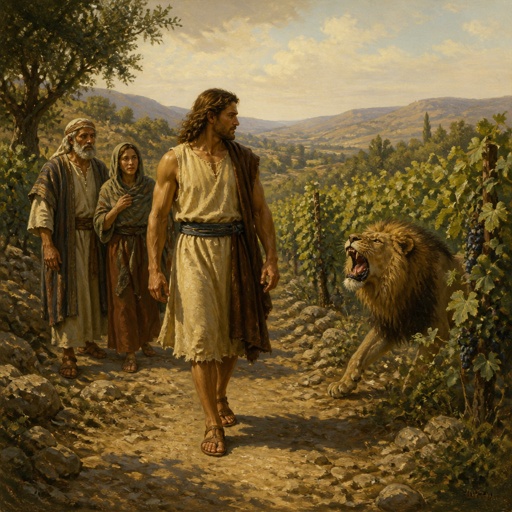
"¶ Then went Samson down, and his father and his mother, to Timnath, and came to the vineyards of Timnath: and, behold, a young lion roared against him." - Judges 14:5

Judges 14:11 - "And it came to pass, when they saw him, that they brought thirty companions to be with him."

Judges 14:1 - "And Samson went down to Timnath, and saw a woman in Timnath of the daughters of the Philistines."

Judges 3:14 - "So the children of Israel served Eglon the king of Moab eighteen years."

Judges 14:7 - "And he went down, and talked with the woman; and she pleased Samson well."

Judges 5:1 - "Then sang Deborah and Barak the son of Abinoam on that day, saying,"

Judges 2:5 - "And they called the name of that place Bochim: and they sacrificed there unto the LORD."

Judges 14:14 - "And he said unto them, Out of the eater came forth meat, and out of the strong came forth sweetness. And they could not in three days expound the riddle."

Judges 9:14 - "Then said all the trees unto the bramble, Come thou, and reign over us."

Judges 5:20 - "They fought from heaven; the stars in their courses fought against Sisera."

Judges 5:22 - "Then were the horsehoofs broken by the means of the pransings, the pransings of their mighty ones."

Judges 14:20 - "But Samson's wife was given to his companion, whom he had used as his friend."

"For the love of Christ constraineth us; because we thus judge, that if one died for all, then were all dead:" - 2 Corinthians 5:14

Judges 12:14 - "And he had forty sons and thirty nephews, that rode on threescore and ten ass colts: and he judged Israel eight years."

"And Jair died, and was buried in Camon." - Judges 10:5

Judges 5:29 - "Her wise ladies answered her, yea, she returned answer to herself,"

Judges 5:10 - "Speak, ye that ride on white asses, ye that sit in judgment, and walk by the way."

Judges 5:2 - "Praise ye the LORD for the avenging of Israel, when the people willingly offered themselves."

Judges 1:5 - "And they found Adoni-bezek in Bezek: and they fought against him, and they slew the Canaanites and the Perizzites."

1 Corinthians 5:12 - "For what have I to do to judge them also that are without? do not ye judge them that are within?"

Judges 3:5 - "¶ And the children of Israel dwelt among the Canaanites, Hittites, and Amorites, and Perizzites, and Hivites, and Jebusites:"

Romans 14:13 - "Let us not therefore judge one another any more: but judge this rather, that no man put a stumblingblock or an occasion to fall in his brother's way."