What does Judges 5:28 mean?
“The mother of Sisera looked out at a window, and cried through the lattice, Why is his chariot so long in coming? why tarry the wheels of his chariots?” — Judges 5:28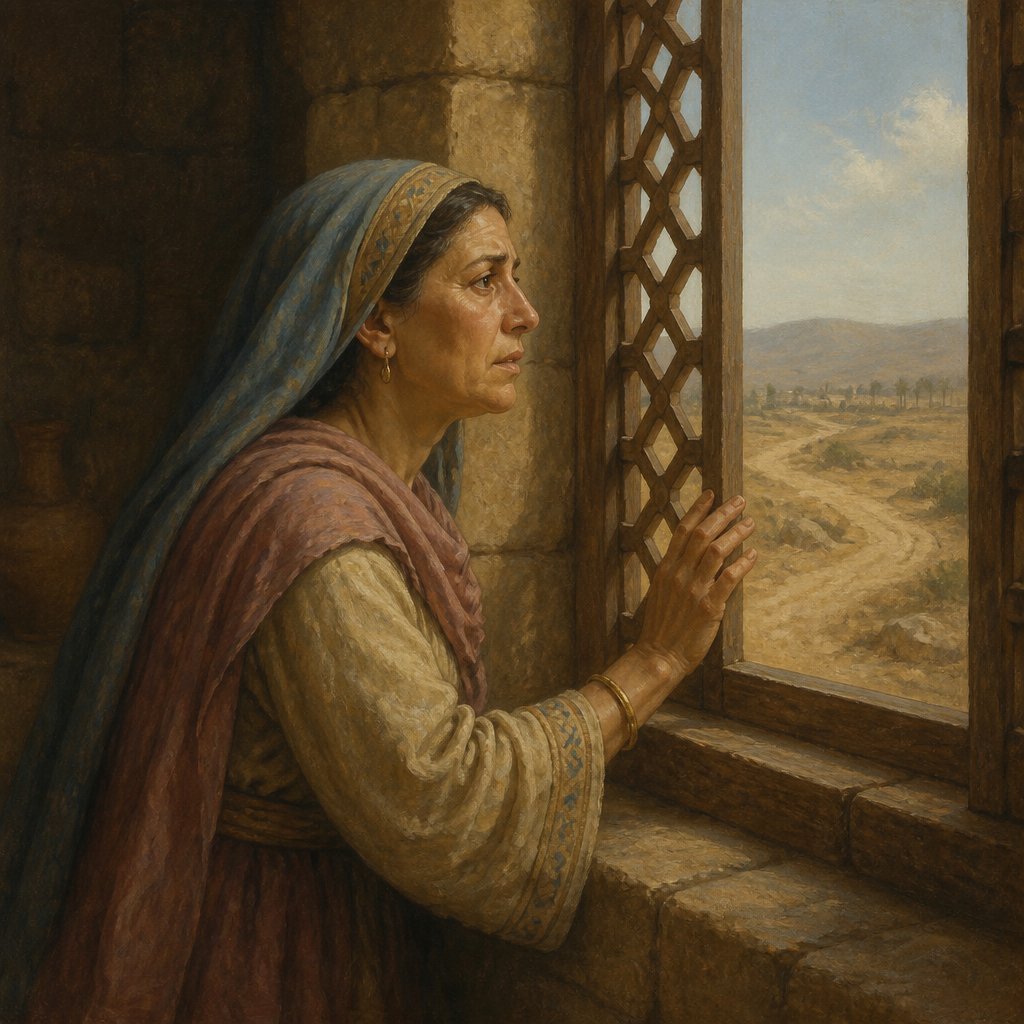
The verse Judges 5:28 in the King James Version (KJV) of the Bible states: "The mother of Sisera looked out at a window, and cried through the lattice, Why is his chariot so long in coming? why tarry the wheels of his chariots?"
This verse comes from the Book of Judges, which is the seventh book of the Old Testament, and is part of the historical narrative of ancient Israel. The Book of Judges describes the period of time after the Israelites had settled in the Promised Land, but before the monarchy was established. During this time, the Israelites were led by a series of judges, who were charismatic leaders raised up by God to deliver the people from their oppressors. The verse in question is part of the "Song of Deborah," which celebrates the victory of the Israelite forces under the leadership of Deborah and Barak over the Canaanite general Sisera.
The verse depicts the mother of Sisera, a Canaanite commander who had been defeated by the Israelites, anxiously awaiting the return of her son. She looks out of a window and cries out in distress, wondering why her son's chariot is taking so long to return. The imagery of the mother looking out from a window and crying through a lattice conveys a sense of longing, anxiety, and despair. It gives insight into the personal, human aspect of the conflict, adding depth and emotional resonance to the story.
The verse is significant within the broader context of the Book of Judges, as it reflects the aftermath of a pivotal battle between the Israelites and the Canaanites. The Song of Deborah celebrates the courage and faithfulness of those who fought for the Lord, and it highlights the power and sovereignty of God in delivering his people from their enemies. The verse also serves to humanize the Canaanite forces, offering a poignant reminder of the human cost of war and conflict.
In terms of themes, the verse speaks to the universal experience of longing and waiting, as well as the agony of uncertainty and loss. It also touches on the themes of power, victory, and the inevitable defeat of those who oppose God's will. Additionally, the verse can be seen as a commentary on the futility of human strength and the ultimate triumph of divine providence.
Symbolically, the image of the mother waiting and watching for her son's return can be seen as a representation of the longing for security, protection, and the restoration of peace. It also reflects the deeply ingrained desire for the safety and well-being of loved ones, which transcends cultural and historical boundaries. The window and lattice symbolize the boundary between the private, personal realm and the outside world, emphasizing the contrast between the intimate, domestic sphere and the tumultuous, unpredictable events unfolding beyond.
Overall, Judges 5:28 is a verse that offers a poignant glimpse into the human cost of conflict, while also affirming the ultimate victory of God's purposes. It adds a layer of emotional depth to the historical account, inviting readers to empathize with the characters and contemplate the universal experiences of longing and waiting. In its broader context, the verse contributes to the theme of divine intervention and underscores the enduring significance of faith, courage, and perseverance in the face of adversity.
Get our apps


Artwork for Judges 5:28

Judges 5:28 - "The mother of Sisera looked out at a window, and cried through the lattice, Why is his chariot so long in coming? why tarry the wheels of his chariots?"
"The mother of Sisera looked out at a window, and cried through the lattice, Why is his chariot so long in coming? why tarry the wheels of his chariots?" - Judges 5:28

Jeremiah 5:28 - "They are waxen fat, they shine: yea, they overpass the deeds of the wicked: they judge not the cause, the cause of the fatherless, yet they prosper; and the right of the needy do they not judge."

"They are waxen fat, they shine: yea, they overpass the deeds of the wicked: they judge not the cause, the cause of the fatherless, yet they prosper; and the right of the needy do they not judge." - Jeremiah 5:28

Jeremiah 5:26-28 - "For among my people are found wicked men: they lay wait, as he that setteth snares; they set a trap, they catch men. As a cage is full of birds, so are their houses full of deceit: therefore they are become great, and waxen rich. They are waxen fat, they shine: yea, they overpass the deeds of the wicked: they judge not the cause, the cause of the fatherless, yet they prosper; and the right of the needy do they not judge."

Judges 5:7

Judges 11:28 - "Howbeit the king of the children of Ammon hearkened not unto the words of Jephthah which he sent him."

Judges 1:28 - "And it came to pass, when Israel was strong, that they put the Canaanites to tribute, and did not utterly drive them out."

Judges 10:5 - "And Jair died, and was buried in Camon."

Judges 5:5 - "The mountains melted from before the LORD, even that Sinai from before the LORD God of Israel."

John 5:28

John 5:28

John 5:28

Judges 5:1 - "Then sang Deborah and Barak the son of Abinoam on that day, saying,"

Judges 2:5 - "And they called the name of that place Bochim: and they sacrificed there unto the LORD."

Judges 18:28 - "And there was no deliverer, because it was far from Zidon, and they had no business with any man; and it was in the valley that lieth by Beth-rehob. And they built a city, and dwelt therein."

Judges 8:28 - "¶ Thus was Midian subdued before the children of Israel, so that they lifted up their heads no more. And the country was in quietness forty years in the days of Gideon."

Create a digital art style rendition of a scene inspired by Judges 6:25-28

Job 31:28 - "This also were an iniquity to be punished by the judge: for I should have denied the God that is above."

Judges 5:20 - "They fought from heaven; the stars in their courses fought against Sisera."

Judges 5:22 - "Then were the horsehoofs broken by the means of the pransings, the pransings of their mighty ones."

Jjohn 5:28 Kevin

Judges 6:28 - "¶ And when the men of the city arose early in the morning, behold, the altar of Baal was cast down, and the grove was cut down that was by it, and the second bullock was offered upon the altar that was built."

"And Jair died, and was buried in Camon." - Judges 10:5

Judges 5:29 - "Her wise ladies answered her, yea, she returned answer to herself,"

Judges 5:10 - "Speak, ye that ride on white asses, ye that sit in judgment, and walk by the way."

Judges 5:2 - "Praise ye the LORD for the avenging of Israel, when the people willingly offered themselves."

Judges 1:5 - "And they found Adoni-bezek in Bezek: and they fought against him, and they slew the Canaanites and the Perizzites."

1 Corinthians 5:12 - "For what have I to do to judge them also that are without? do not ye judge them that are within?"

Judges 3:5 - "¶ And the children of Israel dwelt among the Canaanites, Hittites, and Amorites, and Perizzites, and Hivites, and Jebusites:"