What does Judges 6:28 mean?
“And when the men of the city arose early in the morning, behold, the altar of Baal was cast down, and the grove was cut down that was by it, and the second bullock was offered upon the altar that was built.” — Judges 6:28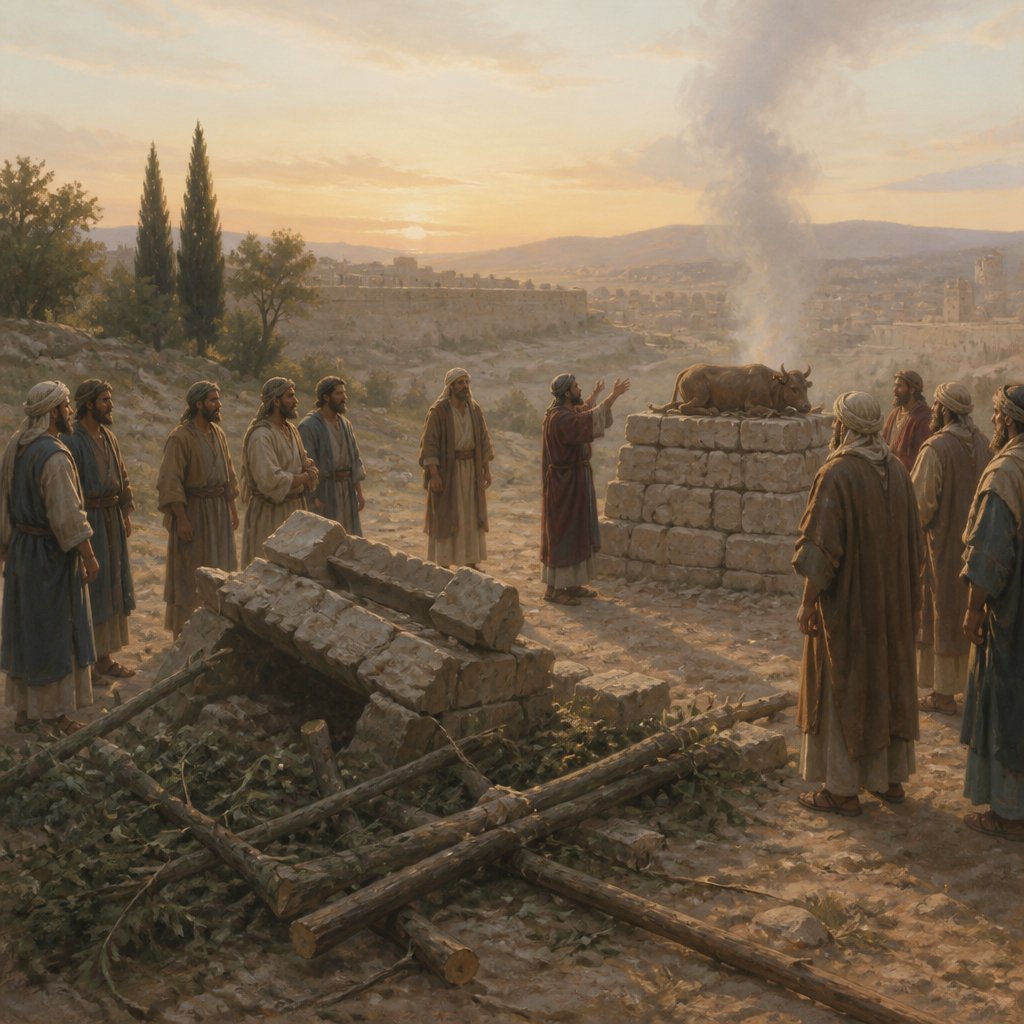
In Judges 6:28, we read about an event in the life of Gideon, a judge of ancient Israel. The verse states, "And when the men of the city arose early in the morning, behold, the altar of Baal was cast down, and the grove was cut down that was by it, and the second bullock was offered upon the altar that was built."
To understand the full meaning and significance of this verse, we need to consider the historical and cultural context in which it was written. During the time of Gideon, the people of Israel had turned away from the worship of the one true God and had begun to worship the false gods of the surrounding nations, particularly the god Baal. Baal was considered to be a fertility and weather god, and his worship often involved sacrifices and rituals that were abhorrent to the Lord.
Gideon, however, was called by God to deliver the Israelites from the oppression of the Midianites, who were plundering their land and causing great hardship. One of the first things God told Gideon to do was to destroy the altar of Baal in his father's house and cut down the Asherah pole (or grove) that was beside it. The Asherah pole was a sacred object used in the worship of false gods, and its destruction was a symbol of the eradication of idolatry from the land.
The events described in Judges 6:28 reveal an act of obedience and faith on the part of Gideon. Despite the risks and potential backlash from the people, Gideon took a bold stand for the Lord by destroying the altar of Baal and offering a sacrifice to the one true God on its ruins. This act not only demonstrated Gideon's commitment to following God's commands, but it also served as a powerful message to the people of Israel about the need to repent and turn back to the Lord.
The symbolism in this verse is significant. The destruction of the altar of Baal represents the victory of truth over falsehood, light over darkness, and righteousness over wickedness. It symbolizes the turning away from false gods and the restoration of true worship to the Lord. The offering of the second bullock on the newly built altar signifies the renewal of the covenant between God and His people, as well as the atonement for sin and the restoration of fellowship with God.
This verse also highlights the theme of spiritual warfare and the struggle between good and evil. Gideon's actions were not just a physical act of destruction; they were a part of a larger spiritual battle for the hearts and souls of the people of Israel. Gideon's courage and obedience in the face of opposition serve as an example for us today, reminding us of the need to stand firm in our faith and resist the lure of false gods and worldly influences.
In conclusion, Judges 6:28 is a powerful and impactful verse that speaks to the themes of obedience, faith, spiritual warfare, and the restoration of true worship. It reminds us of the importance of taking a stand for God, even in the face of opposition and adversity. It serves as a call to repentance and a declaration of the Lord's sovereignty over all. As we reflect on this verse, may we be inspired to follow Gideon's example and remain faithful to the one true God.
Get our apps


Artwork for Judges 6:28

Judges 6:28 - "¶ And when the men of the city arose early in the morning, behold, the altar of Baal was cast down, and the grove was cut down that was by it, and the second bullock was offered upon the altar that was built."
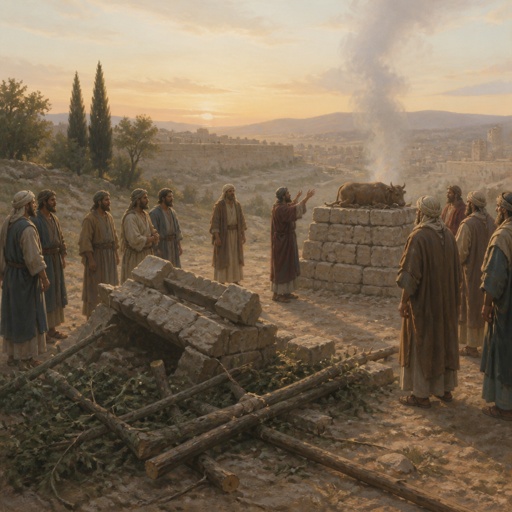
"¶ And when the men of the city arose early in the morning, behold, the altar of Baal was cast down, and the grove was cut down that was by it, and the second bullock was offered upon the altar that was built." - Judges 6:28

Create a digital art style rendition of a scene inspired by Judges 6:25-28

Judges 11:28 - "Howbeit the king of the children of Ammon hearkened not unto the words of Jephthah which he sent him."

Judges 6:6 - "And Israel was greatly impoverished because of the Midianites; and the children of Israel cried unto the LORD."

Judges 1:28 - "And it came to pass, when Israel was strong, that they put the Canaanites to tribute, and did not utterly drive them out."

Jeremiah 5:28 - "They are waxen fat, they shine: yea, they overpass the deeds of the wicked: they judge not the cause, the cause of the fatherless, yet they prosper; and the right of the needy do they not judge."
"And for a spirit of judgment to him that sitteth in judgment, and for strength to them that turn the battle to the gate." - Isaiah 28:6

Judges 18:28 - "And there was no deliverer, because it was far from Zidon, and they had no business with any man; and it was in the valley that lieth by Beth-rehob. And they built a city, and dwelt therein."

Judges 8:28 - "¶ Thus was Midian subdued before the children of Israel, so that they lifted up their heads no more. And the country was in quietness forty years in the days of Gideon."

1 Corinthians 6:2 - "Do ye not know that the saints shall judge the world? and if the world shall be judged by you, are ye unworthy to judge the smallest matters?"

Job 31:28 - "This also were an iniquity to be punished by the judge: for I should have denied the God that is above."

Judges 3:6 - "And they took their daughters to be their wives, and gave their daughters to their sons, and served their gods."

Luke 6:37 - "Judge not, and ye shall not be judged: condemn not, and ye shall not be condemned: forgive, and ye shall be forgiven:"

Judges 5:28 - "The mother of Sisera looked out at a window, and cried through the lattice, Why is his chariot so long in coming? why tarry the wheels of his chariots?"

Judges 6:36-40 – Gideon’s fleece test for dew.

1 Kings 6:28 - "And he overlaid the cherubims with gold."

Judges 6:7 - "¶ And it came to pass, when the children of Israel cried unto the LORD because of the Midianites,"

Psalms 141:6 - "When their judges are overthrown in stony places, they shall hear my words; for they are sweet."

2 Chronicles 19:6 - "And said to the judges, Take heed what ye do: for ye judge not for man, but for the LORD, who is with you in the judgment."

Judges 6:23 - "And the LORD said unto him, Peace be unto thee; fear not: thou shalt not die."

Judges 6:40 - "And God did so that night: for it was dry upon the fleece only, and there was dew on all the ground."

Judges 11:6 - "And they said unto Jephthah, Come, and be our captain, that we may fight with the children of Ammon."

1 Chronicles 6:28 - "And the sons of Samuel; the firstborn Vashni, and Abiah."

Job 28:6 - "The stones of it are the place of sapphires: and it hath dust of gold."

Judges 17:6 - "In those days there was no king in Israel, but every man did that which was right in his own eyes."

Judges 6:34 - "But the Spirit of the LORD came upon Gideon, and he blew a trumpet; and Abiezer was gathered after him."
"And Israel was greatly impoverished because of the Midianites; and the children of Israel cried unto the LORD." - Judges 6:6

Judges 6:24 - "Then Gideon built an altar there unto the LORD, and called it Jehovah-shalom: unto this day it is yet in Ophrah of the Abiezrites."

Judges 5:6 - "In the days of Shamgar the son of Anath, in the days of Jael, the highways were unoccupied, and the travellers walked through byways."