What does Judges 9:20 mean?
“But if not, let fire come out from Abimelech, and devour the men of Shechem, and the house of Millo; and let fire come out from the men of Shechem, and from the house of Millo, and devour Abimelech.” — Judges 9:20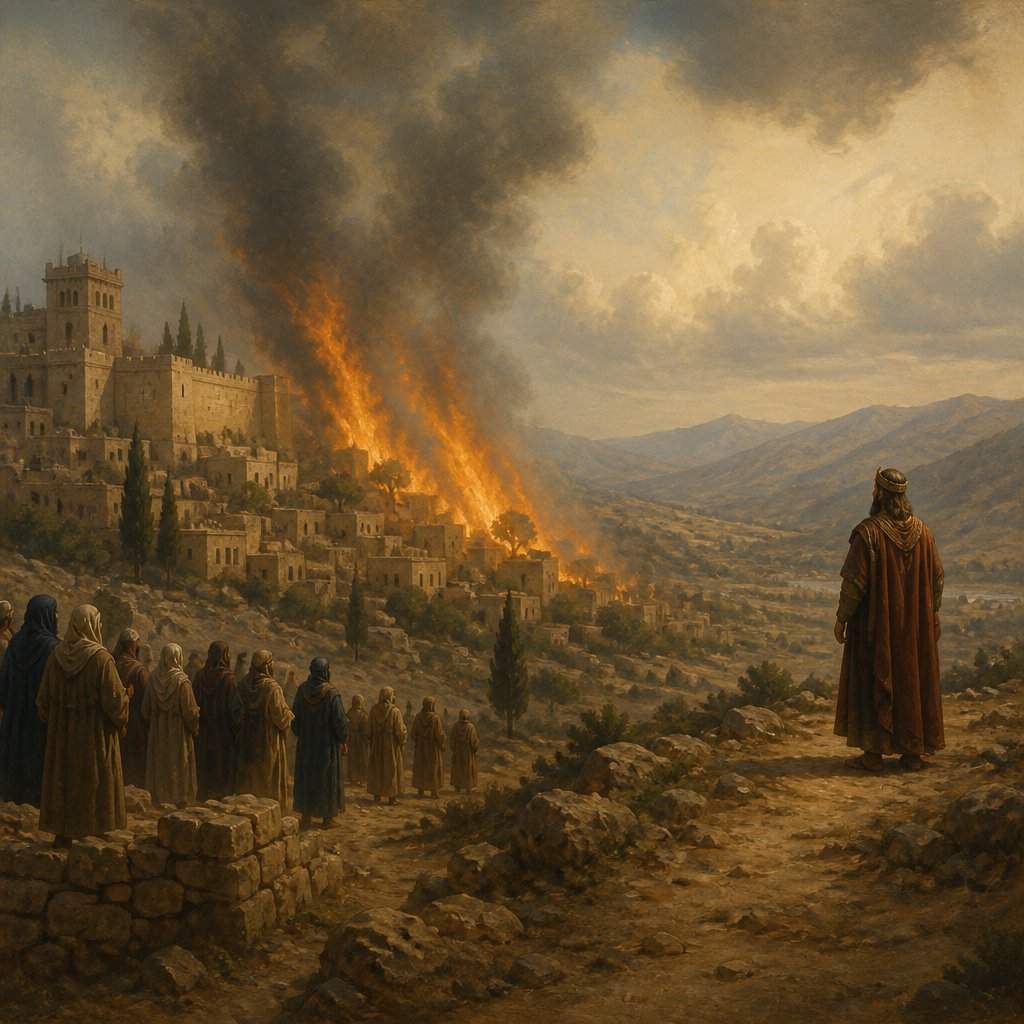
"Judge 9:20 (KJV) - But if not, let fire come out from Abimelech, and devour the men of Shechem, and the house of Millo; and let fire come out from the men of Shechem, and from the house of Millo, and devour Abimelech."
The book of Judges is a historical narrative in the Old Testament that covers a tumultuous period in Israel's history, marked by cycles of sin, oppression, repentance, and deliverance. This particular verse comes from the account of Abimelech, the son of Gideon, who sought to rule over Israel by any means necessary, including violence and manipulation.
In this passage, we find the aftermath of Abimelech's brutal rise to power. The men of Shechem had supported Abimelech in his conquest of the city, but now they were having second thoughts. Gaal, the son of Ebed, incited the men of Shechem to rebel against Abimelech's rule. When Zebul, the governor of the city, brings word to Abimelech about the uprising, Abimelech immediately prepares for war.
The verse in question is part of Abimelech's response to the rebellion. He pronounces a curse upon the men of Shechem and the house of Millo, invoking the destructive power of fire to consume them. This curse is a reflection of the deep-seated animosity and violence that characterized Abimelech's rule. It also reveals the consequences of the people's decision to support a leader who was motivated by selfish ambition and who disregarded the welfare of his subjects.
This verse speaks to several themes that are prevalent throughout the book of Judges. One of the predominant themes is the consequences of ungodly leadership. The people of Israel continually struggled with the choice of following leaders who led them away from God, resulting in chaos and destruction. Abimelech's violent and self-serving rule serves as a sobering example of the devastating impact of choosing leaders based on personal gain rather than godly character.
Another theme present in this verse is the destructive power of conflict and division. The men of Shechem's decision to rebel against Abimelech led to a cycle of violence and retribution. The invocation of fire as a tool of destruction symbolizes the all-consuming nature of discord and strife. This serves as a cautionary tale about the destructive consequences of pursuing selfish ambition and sowing division within the community.
Additionally, this verse underscores the pervasive presence of violence and retribution in the book of Judges. Throughout the narrative, we see a recurring pattern of conflict, bloodshed, and divine judgment. The use of fire as a symbol of divine punishment highlights the justice and judgment of God upon those who act unjustly and disregard His commands.
In conclusion, Judges 9:20 (KJV) is a poignant reminder of the destructive consequences of ungodly leadership, conflict, and violence. It serves as a sobering cautionary tale about the destructive nature of selfish ambition and disunity within the community. As readers, we are challenged to consider the implications of our choices in leadership and the importance of seeking leaders who are aligned with God's principles and values. Ultimately, this verse offers timeless wisdom and a sobering warning about the destructive impact of ungodly leadership and the consequences of pursuing selfish ambition and sowing division within the community.
Get our apps


Artwork for Judges 9:20

Judges 9:20 - "But if not, let fire come out from Abimelech, and devour the men of Shechem, and the house of Millo; and let fire come out from the men of Shechem, and from the house of Millo, and devour Abimelech." respectful, symbolic bible verse art
"But if not, let fire come out from Abimelech, and devour the men of Shechem, and the house of Millo; and let fire come out from the men of Shechem, and from the house of Millo, and devour Abimelech." - Judges 9:20

Judges 20:9 - "But now this shall be the thing which we will do to Gibeah; we will go up by lot against it;"
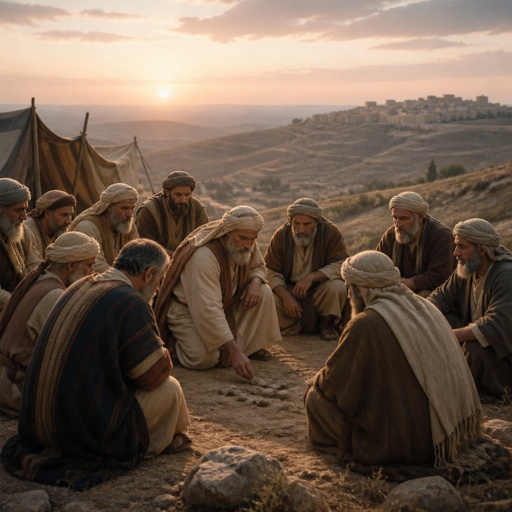
"But now this shall be the thing which we will do to Gibeah; we will go up by lot against it;" - Judges 20:9

Judges 15:20 - "And he judged Israel in the days of the Philistines twenty years."

Judges 20:29 - "And Israel set liers in wait round about Gibeah."

Judges 20:20 - "And the men of Israel went out to battle against Benjamin; and the men of Israel put themselves in array to fight against them at Gibeah."

Judges 9:8-15

Judges 20:19 - "And the children of Israel rose up in the morning, and encamped against Gibeah."

Judges 5:20 - "They fought from heaven; the stars in their courses fought against Sisera."

Judges 21:20 - "Therefore they commanded the children of Benjamin, saying, Go and lie in wait in the vineyards;"

Judges 20:27 - "And the children of Israel enquired of the LORD, (for the ark of the covenant of God was there in those days,"

Judges 20:44 - "And there fell of Benjamin eighteen thousand men; all these were men of valour."

Judges 20:24 - "And the children of Israel came near against the children of Benjamin the second day."

Judges 20:7 - "Behold, ye are all children of Israel; give here your advice and counsel."

Ezekiel 20:4 - "Wilt thou judge them, son of man, wilt thou judge them? cause them to know the abominations of their fathers:"

Judges 9:50 - "¶ Then went Abimelech to Thebez, and encamped against Thebez, and took it."

Judges 14:20 - "But Samson's wife was given to his companion, whom he had used as his friend."

Judges 1:20 - "And they gave Hebron unto Caleb, as Moses said: and he expelled thence the three sons of Anak."

Judges 9:22 - "¶ When Abimelech had reigned three years over Israel,"

Judges 15:9 - "¶ Then the Philistines went up, and pitched in Judah, and spread themselves in Lehi."

"And he judged Israel in the days of the Philistines twenty years." - Judges 15:20

Judges 9:39 - "And Gaal went out before the men of Shechem, and fought with Abimelech."

Judges 18:20 - "And the priest's heart was glad, and he took the ephod, and the teraphim, and the graven image, and went in the midst of the people."

Judges 20:11 - "So all the men of Israel were gathered against the city, knit together as one man."

Judges 21:9 - "For the people were numbered, and, behold, there were none of the inhabitants of Jabesh-gilead there."

Judges 9:10 - "And the trees said to the fig tree, Come thou, and reign over us."

Judges 9:42 - "And it came to pass on the morrow, that the people went out into the field; and they told Abimelech."

Judges 9:12 - "Then said the trees unto the vine, Come thou, and reign over us."

Judges 9:47 - "And it was told Abimelech, that all the men of the tower of Shechem were gathered together."