What does Lamentations 1:12 mean?
“Is it nothing to you, all ye that pass by? behold, and see if there be any sorrow like unto my sorrow, which is done unto me, wherewith the LORD hath afflicted me in the day of his fierce anger.” — Lamentations 1:12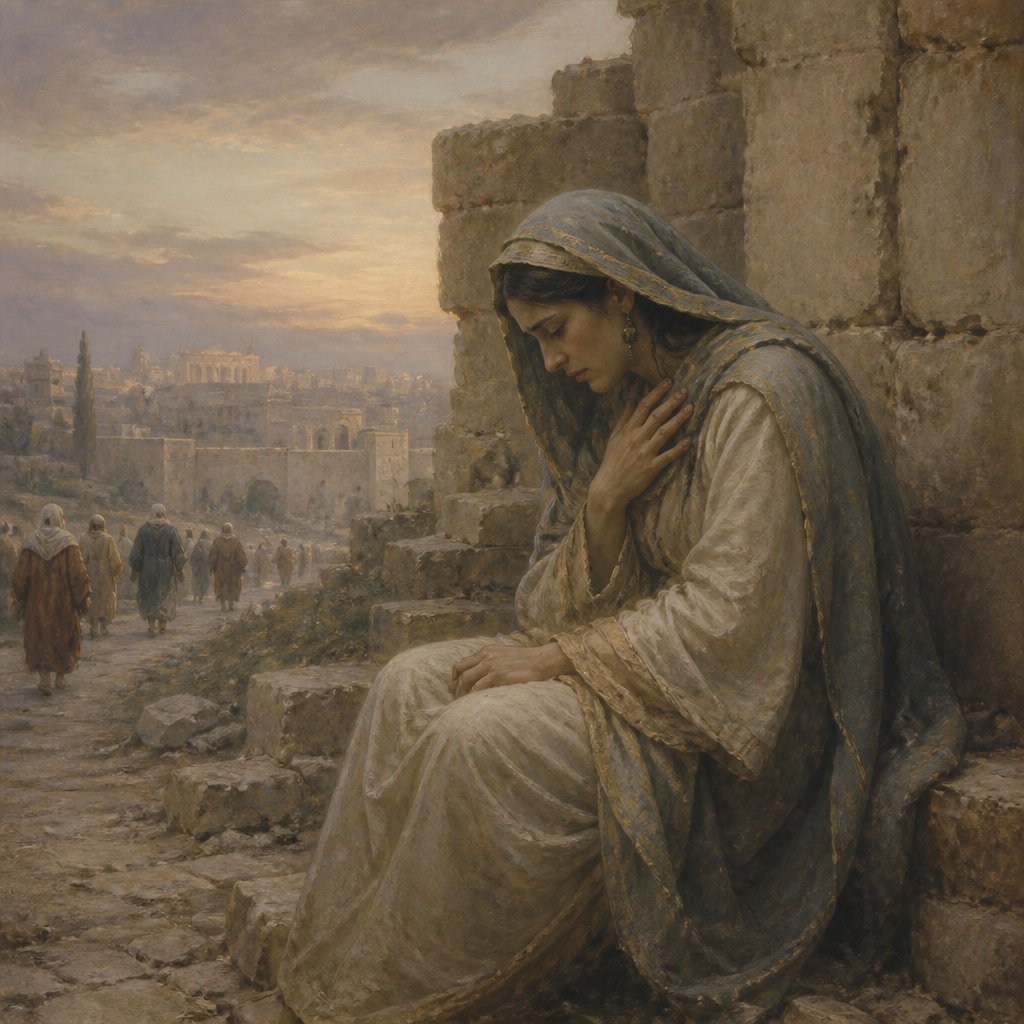
The book of Lamentations is a collection of poetic laments for the destruction of Jerusalem, following the Babylonian conquest of the city in 586 BCE. The author of Lamentations is traditionally believed to be the prophet Jeremiah, who witnessed the destruction and the subsequent exile of the Israelites. The verse Lamentations 1:12 reads, "Is it nothing to you, all ye that pass by? behold, and see if there be any sorrow like unto my sorrow, which is done unto me, wherewith the LORD hath afflicted me in the day of his fierce anger."
This verse reflects the deep anguish and sorrow of the people of Jerusalem, who have been subjected to the devastation brought about by God's fierce anger. The use of the second person plural "ye" in addressing the passersby emphasizes the collective mourning of the people and their longing for empathy and understanding from others. The speaker's plea for recognition of their suffering underscores the isolation and desperation that the Israelites felt in the aftermath of the destruction.
The themes of suffering, grief, and divine judgment are prevalent throughout the book of Lamentations. The city of Jerusalem, once a great and powerful city, lies in ruins, its inhabitants scattered and oppressed. The people mourn the loss of their homeland, the desecration of their sacred spaces, and the devastation of their community. The verse captures the deep sense of grief and lamentation that permeates the entire book, as the people grapple with the magnitude of their suffering and seek solace in acknowledging their pain.
The context of Lamentations 1:12 is crucial to understanding the significance of the verse. The destruction of Jerusalem was not only a physical catastrophe but also a profound spiritual and emotional trauma for the Israelites. The city's fall was seen as a direct result of the people's disobedience and unfaithfulness to God, leading to the belief that the destruction was a manifestation of God's wrath and judgment. The verse serves as an expression of the people's recognition of their culpability and their acceptance of the consequences of their actions, as well as a plea for compassion and understanding from others.
The symbolism in Lamentations 1:12 encompasses the broader themes of suffering and empathy. The image of passersby serves as a metaphor for the indifference and apathy of the outside world towards the plight of the Israelites. The speaker's appeal for recognition and empathy underscores the universal human longing for understanding and connection in times of suffering. The verse also symbolizes the enduring power of empathy and compassion in the face of devastation, as the speaker seeks to be seen and understood in their pain.
In summary, Lamentations 1:12 encapsulates the profound lamentation and anguish of the Israelites in the aftermath of the destruction of Jerusalem. The verse serves as a poignant expression of the people's grief, their acknowledgment of divine judgment, and their plea for recognition and empathy from others. Through its themes of suffering, grief, and empathy, as well as its powerful symbolism, the verse offers a poignant reflection on the human experience of loss and the universal yearning for compassion in the face of devastation.
Get our apps


Artwork for Lamentations 1:12

Lamentations 1:12 - "¶ Is it nothing to you, all ye that pass by? behold, and see if there be any sorrow like unto my sorrow, which is done unto me, wherewith the LORD hath afflicted me in the day of his fierce anger."
"¶ Is it nothing to you, all ye that pass by? behold, and see if there be any sorrow like unto my sorrow, which is done unto me, wherewith the LORD hath afflicted me in the day of his fierce anger." - Lamentations 1:12

Lamentations 5:12 - "Princes are hanged up by their hand: the faces of elders were not honoured."

Lamentations 3:12 - "He hath bent his bow, and set me as a mark for the arrow."

Lamentations 2:1

Lamentations 2:1

Lamentations 2:1

Lamentations 3:1-18

Lamentations 3:13

Lamentations 4:12 - "The kings of the earth, and all the inhabitants of the world, would not have believed that the adversary and the enemy should have entered into the gates of Jerusalem."

Lamentations 2:12 - "They say to their mothers, Where is corn and wine? when they swooned as the wounded in the streets of the city, when their soul was poured out into their mothers' bosom."
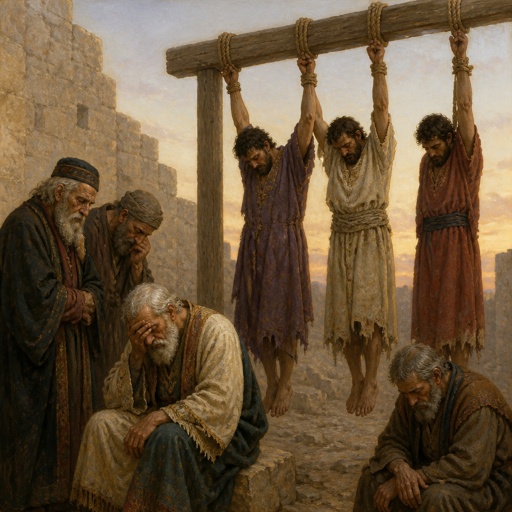
"Princes are hanged up by their hand: the faces of elders were not honoured." - Lamentations 5:12
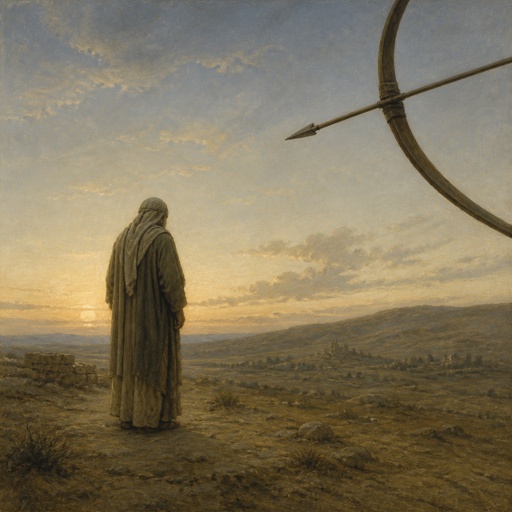
"He hath bent his bow, and set me as a mark for the arrow." - Lamentations 3:12

Lamentations 3:1 - "I am the man that hath seen affliction by the rod of his wrath."

Lamentations 1:2 - "She weepeth sore in the night, and her tears are on her cheeks: among all her lovers she hath none to comfort her: all her friends have dealt treacherously with her, they are become her enemies."

Lamentations 5:1 - "Remember, O LORD, what is come upon us: consider, and behold our reproach."

Lamentations 1:1 How deserted lies the city, once so full of people!

Lamentations 1:1 How deserted lies the city, once so full of people!

Lamentations 1:1 How deserted lies the city, once so full of people!

Hosea 1:2-11;2:14;3:5

Lamentations 1:1 How deserted lies the city, once so full of people!

Ezekiel 19:1 - "Moreover take thou up a lamentation for the princes of Israel,"

Lamentations 1:1 How deserted lies the city, once so full of people!

Lamentations 1:1 How deserted lies the city, once so full of people!

2 Samuel 1:17 - "¶ And David lamented with this lamentation over Saul and over Jonathan his son:"

Ezekiel 28:12 - "Son of man, take up a lamentation upon the king of Tyrus, and say unto him, Thus saith the Lord GOD; Thou sealest up the sum, full of wisdom, and perfect in beauty."

Lamentations 1:1 - "How doth the city sit solitary, that was full of people! how is she become as a widow! she that was great among the nations, and princess among the provinces, how is she become tributary!"

Lamentations 1:15 In his winepress the Lord has trampled Virgin Daughter Judah.

Lamentations 3:49 KJV Mine eye trickleth down, and ceaseth not, without any intermission,

Lamentations 4:1 - "How is the gold become dim! how is the most fine gold changed! the stones of the sanctuary are poured out in the top of every street."