What does Lamentations 2:5 mean?
“The Lord was as an enemy: he hath swallowed up Israel, he hath swallowed up all her palaces: he hath destroyed his strong holds, and hath increased in the daughter of Judah mourning and lamentation.” — Lamentations 2:5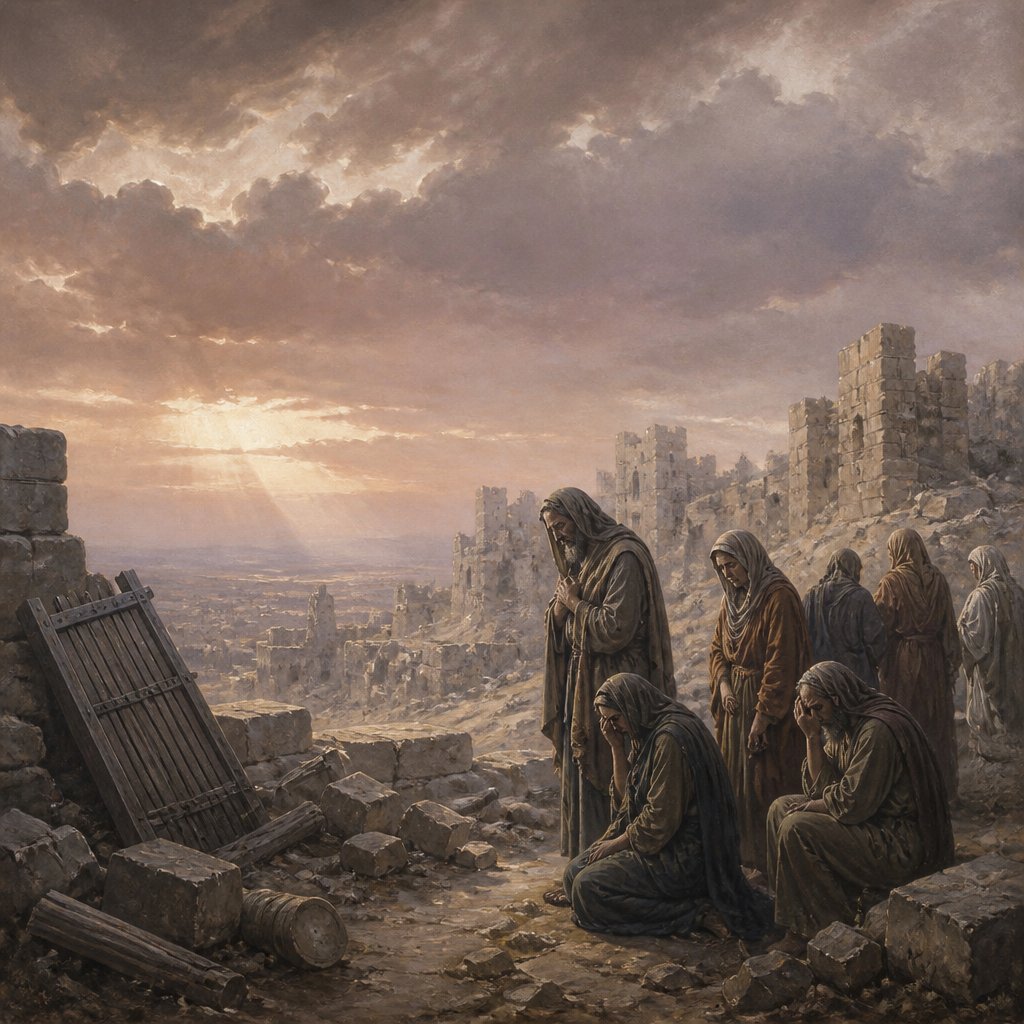
Lamentations 2:5 (KJV) states, "The Lord was as an enemy: he hath swallowed up Israel, he hath swallowed up all her palaces: he hath destroyed his strong holds, and hath increased in the daughter of Judah mourning and lamentation." This verse comes from the book of Lamentations in the Old Testament, which is traditionally attributed to the prophet Jeremiah. The book is a series of poems lamenting the destruction of Jerusalem by the Babylonians in 586 B.C.
The verse begins with a striking image: "The Lord was as an enemy." This image of God as an enemy would have been startling and distressing to the original audience, who would have understood that this was not a situation to be taken lightly. The verse goes on to describe the destruction that God has brought upon Israel, swallowing up her palaces and destroying her strongholds. This imagery conveys a sense of overwhelming devastation and loss.
The verse also mentions the increased mourning and lamentation in the daughter of Judah. This emphasizes the deep despair and grief that the people are experiencing in the aftermath of the destruction. The language used here is highly emotive, conveying the depth of the people's suffering.
One of the key themes of this verse is the idea of divine judgment. The destruction of Israel and the suffering of her people are portrayed as a direct result of God's actions. This reflects the Israelite understanding of their relationship with God, in which obedience to his commandments brought blessings, while disobedience brought curses. The verse serves as a powerful reminder of the consequences of turning away from God and disobeying his will.
The verse also speaks to the theme of the destruction of Jerusalem. The city was a central symbol of the Israelite nation and the seat of God's presence among his people. The devastation of Jerusalem by the Babylonians was a profound loss, not only in practical terms, but also in spiritual and symbolic terms. The destruction of the city and its sacred sites would have signaled the collapse of the Israelite nation's identity and security.
The imagery in this verse also serves as a powerful symbol of the suffering and loss experienced by the Israelite people. The image of God as an enemy and the destruction of the palaces and strongholds convey a sense of overwhelming tragedy and upheaval. The increased mourning and lamentation in the daughter of Judah underscore the depth of the people's anguish.
In terms of historical and cultural context, the book of Lamentations was written in the aftermath of the Babylonian conquest of Jerusalem. The book reflects the intense suffering and grief of the Israelite people as they grappled with the devastation of their city and the loss of their homeland. The verse captures the depth of the people's despair and their sense of being abandoned by God.
In conclusion, Lamentations 2:5 (KJV) is a powerful and evocative verse that communicates the profound suffering and loss experienced by the Israelite people in the aftermath of the Babylonian conquest. It conveys a sense of divine judgment and the consequences of turning away from God, as well as the devastating impact of the destruction of Jerusalem. The verse's imagery and language are highly emotive, effectively conveying the depth of the people's despair. The verse continues to resonate as a poignant reminder of the consequences of disobedience and the profound impact of suffering and loss.
Get our apps


Artwork for Lamentations 2:5

Lamentations 2:5 - "The Lord was as an enemy: he hath swallowed up Israel, he hath swallowed up all her palaces: he hath destroyed his strong holds, and hath increased in the daughter of Judah mourning and lamentation."
"The Lord was as an enemy: he hath swallowed up Israel, he hath swallowed up all her palaces: he hath destroyed his strong holds, and hath increased in the daughter of Judah mourning and lamentation." - Lamentations 2:5

Lamentations 5:2 - "Our inheritance is turned to strangers, our houses to aliens."
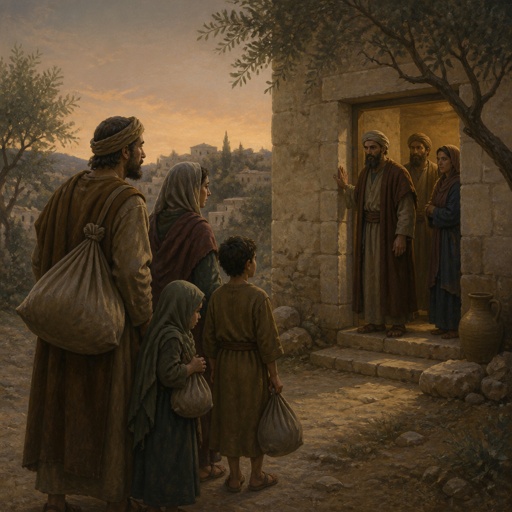
"Our inheritance is turned to strangers, our houses to aliens." - Lamentations 5:2

Lamentations 5:5 - "Our necks are under persecution: we labour, and have no rest."

Lamentations 5:11 - "They ravished the women in Zion, and the maids in the cities of Judah."

Lamentations 5:3 - "We are orphans and fatherless, our mothers are as widows."

Lamentations 5:17 - "For this our heart is faint; for these things our eyes are dim."

Lamentations 5:7 - "Our fathers have sinned, and are not; and we have borne their iniquities."

Lamentations 5:15 - "The joy of our heart is ceased; our dance is turned into mourning."

Lamentations 5:18 - "Because of the mountain of Zion, which is desolate, the foxes walk upon it."

Lamentations 5:6 - "We have given the hand to the Egyptians, and to the Assyrians, to be satisfied with bread."

Lamentations 5:10 - "Our skin was black like an oven because of the terrible famine."

Lamentations 5:13 - "They took the young men to grind, and the children fell under the wood."

Lamentations 5:12 - "Princes are hanged up by their hand: the faces of elders were not honoured."

Lamentations 2:1

Lamentations 2:1

Lamentations 2:1

Lamentations 3:5 - "He hath builded against me, and compassed me with gall and travail."

Lamentations 5:14 - "The elders have ceased from the gate, the young men from their musick."

Lamentations 5:9 - "We gat our bread with the peril of our lives because of the sword of the wilderness."

Lamentations 5:19 – "You, Lord, reign forever; your throne endures from generation to generation."

Lamentations 5:19 - "Thou, O LORD, remainest for ever; thy throne from generation to generation."

"Our necks are under persecution: we labour, and have no rest." - Lamentations 5:5

Lamentations 5:8 - "Servants have ruled over us: there is none that doth deliver us out of their hand."

Lamentations 5:1 - "Remember, O LORD, what is come upon us: consider, and behold our reproach."

Lamentations 5:22 - "But thou hast utterly rejected us; thou art very wroth against us."

Lamentations 4:5 - "They that did feed delicately are desolate in the streets: they that were brought up in scarlet embrace dunghills."

Lamentations 5:4 - "We have drunken our water for money; our wood is sold unto us."

Lamentations 5:20 - "Wherefore dost thou forget us for ever, and forsake us so long time?"