What does Lamentations 3:7 mean?
“He hath hedged me about, that I cannot get out: he hath made my chain heavy.” — Lamentations 3:7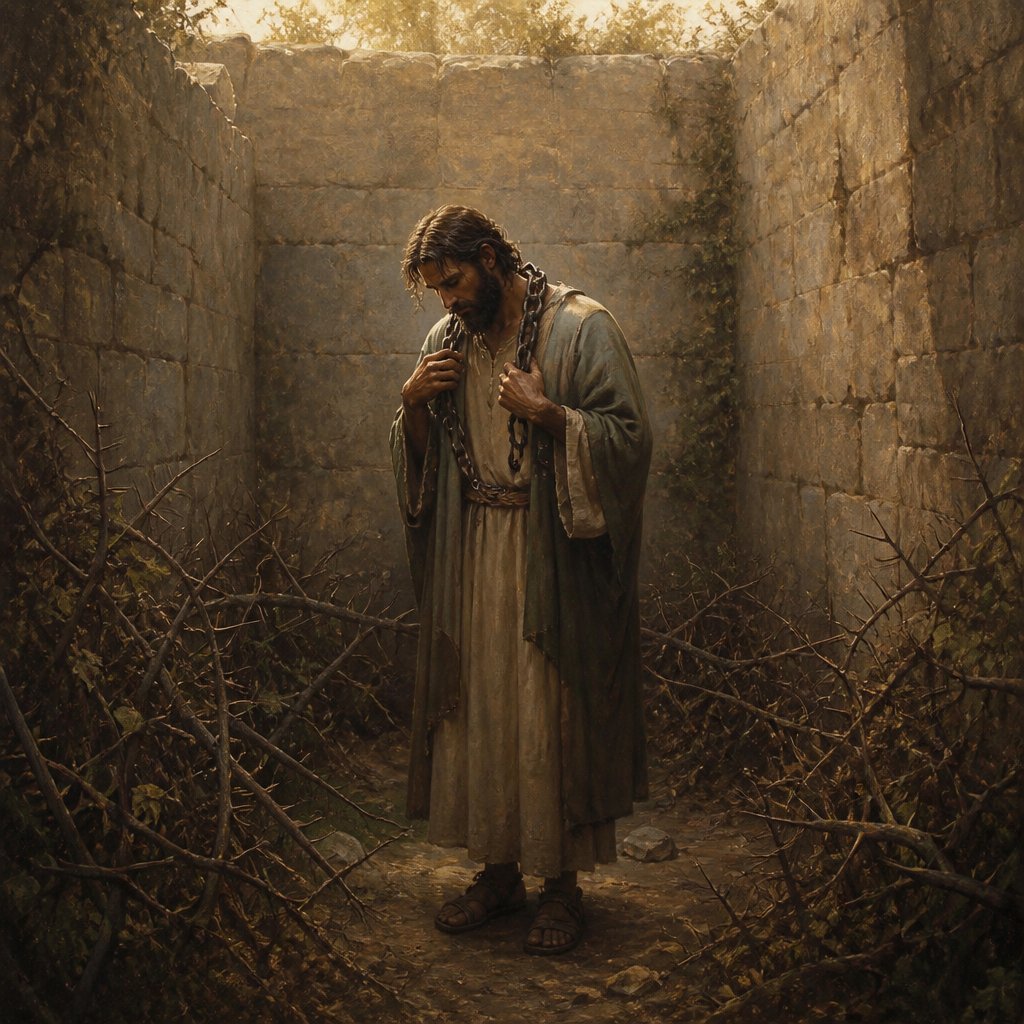
"Lamentations 3:7 (KJV) - He hath hedged me about, that I cannot get out: he hath made my chain heavy."
In order to truly understand the meaning and significance of Lamentations 3:7 in the King James Version of the Bible, it is important to consider the context in which it was written, as well as the themes and symbolism that are present in the verse.
The book of Lamentations was traditionally attributed to the prophet Jeremiah, and it is a collection of five poetic laments mourning the destruction of Jerusalem by the Babylonians in 586 B.C. The book is a reflection of the deep sorrow and anguish that the people of Israel experienced as they witnessed the devastation of their city and the exile of their people. Lamentations 3:7 is a part of the larger context of the suffering and despair expressed throughout the book.
The verse itself is a powerful representation of the feeling of being trapped and weighed down by burdens. The speaker in this verse is expressing a sense of being hemmed in and confined by circumstances beyond their control. The imagery of being hedged in and weighed down by heavy chains conveys a feeling of helplessness and oppression. This verse captures the profound sense of despair and hopelessness that the people of Israel felt as they experienced the consequences of their disobedience and the destruction of their homeland.
Thematically, Lamentations 3:7 reflects the overarching themes of suffering, captivity, and lamentation that permeate the book as a whole. The verse speaks to the experience of being confined and restricted, both physically and emotionally, and the sense of being overwhelmed by the weight of one's own circumstances. It is a poignant expression of the deep grief and sorrow that the people of Israel experienced in the aftermath of the destruction of Jerusalem.
Symbolically, the imagery of being hedged in and weighed down by heavy chains can be interpreted in several ways. In a religious and spiritual sense, this verse can be seen as a representation of the consequences of sin and disobedience. The people of Israel were facing the direct result of their actions and their failure to heed the warnings of the prophets. This verse serves as a reminder of the heavy burden that comes from living in disobedience and the feeling of being confined and restricted by the consequences of our actions.
In a broader sense, Lamentations 3:7 can also be understood as a metaphor for the experience of suffering and oppression that many people face in their lives. The feeling of being trapped, weighed down, and unable to escape one's circumstances is a universal human experience, and this verse captures the depth of that feeling in a profound and evocative way.
Overall, Lamentations 3:7 (KJV) is a verse that encapsulates the deep suffering and despair expressed in the book of Lamentations. It is a powerful representation of the experience of being hemmed in and weighed down by the burdens of life, both in a religious and a universal sense. The verse serves as a poignant reminder of the consequences of disobedience and the heavy burden of suffering that can result from our actions. Despite the heaviness of this verse, it ultimately serves as a testament to the enduring nature of human suffering and the need for hope and redemption in the face of overwhelming despair.
Get our apps


Artwork for Lamentations 3:7

Lamentations 3:7 - "He hath hedged me about, that I cannot get out: he hath made my chain heavy."

"He hath hedged me about, that I cannot get out: he hath made my chain heavy." - Lamentations 3:7

Lamentations 3:13

Lamentations 3:1-18

Lamentations 3:31 - "For the Lord will not cast off for ever:"

Lamentations 3:23 - "They are new every morning: great is thy faithfulness."

Lamentations 5:3 - "We are orphans and fatherless, our mothers are as widows."

Lamentations 3:36 - "To subvert a man in his cause, the Lord approveth not."

Lamentations 5:7 - "Our fathers have sinned, and are not; and we have borne their iniquities."

Lamentations 3:3 - "Surely against me is he turned; he turneth his hand against me all the day."

Lamentations 3:27 - "It is good for a man that he bear the yoke in his youth."

Lamentations 3:38 - "Out of the mouth of the most High proceedeth not evil and good?"

Lamentations 3:47 - "Fear and a snare is come upon us, desolation and destruction."

Lamentations 3:19 - "Remembering mine affliction and my misery, the wormwood and the gall."

Lamentations 3:34 - "To crush under his feet all the prisoners of the earth,"

Lamentations 3:50 - "Till the LORD look down, and behold from heaven."

Lamentations 3:37 - "¶ Who is he that saith, and it cometh to pass, when the Lord commandeth it not?"

Lamentations 3:29 - "He putteth his mouth in the dust; if so be there may be hope."

Lamentations 3:2 - "He hath led me, and brought me into darkness, but not into light."

Lamentations 3:21 - "This I recall to my mind, therefore have I hope."

Lamentations 3:45 - "Thou hast made us as the offscouring and refuse in the midst of the people."

Lamentations 3:49 - "Mine eye trickleth down, and ceaseth not, without any intermission,"

Lamentations 3:20 - "My soul hath them still in remembrance, and is humbled in me."

Lamentations 3:35 - "To turn aside the right of a man before the face of the most High,"

Lamentations 3:46 - "All our enemies have opened their mouths against us."

Lamentations 3:63 - "Behold their sitting down, and their rising up; I am their musick."

Lamentations 3:33 - "For he doth not afflict willingly nor grieve the children of men."

Lamentations 3:65 - "Give them sorrow of heart, thy curse unto them."

Lamentations 3:66 - "Persecute and destroy them in anger from under the heavens of the LORD."

Lamentations 3:42 - "We have transgressed and have rebelled: thou hast not pardoned."