What does Lamentations 4:9 mean?
“They that be slain with the sword are better than they that be slain with hunger: for these pine away, stricken through for want of the fruits of the field.” — Lamentations 4:9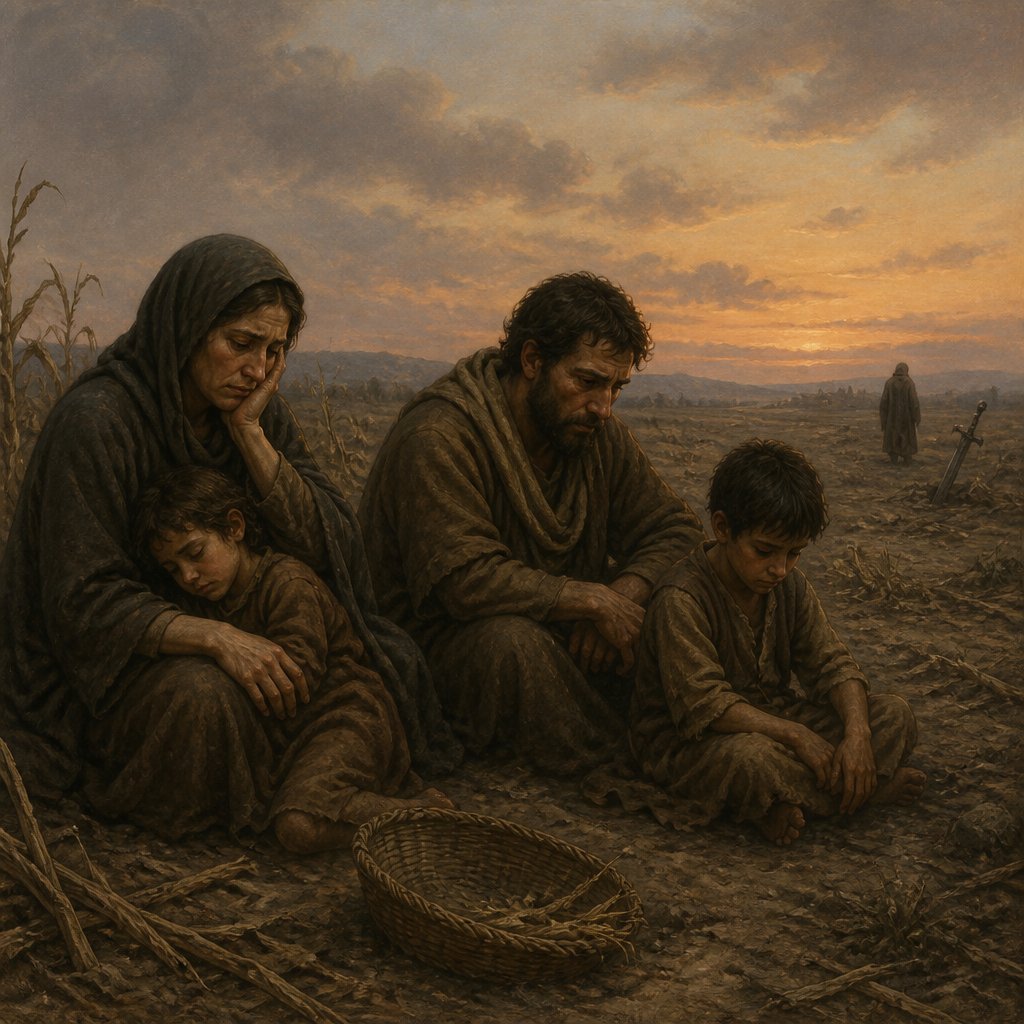
Lamentations 4:9 in the King James Version of the Bible reads, "They that be slain with the sword are better than they that be slain with hunger: for these pine away, stricken through for want of the fruits of the field."
This verse comes from the book of Lamentations, which is a collection of poetic laments over the destruction of Jerusalem. The book is traditionally attributed to the prophet Jeremiah, who witnessed the fall of Jerusalem and the exile of the Israelites to Babylon. The verses in Lamentations express the intense grief and despair of the people in the aftermath of the city's destruction.
In Lamentations 4:9, the author mourns the suffering of the people who have died from starvation. The verse contrasts death by sword with death by hunger, suggesting that dying by the sword is a more merciful fate. This comparison reflects the harsh reality of the siege of Jerusalem, where many people perished as a result of the Babylonian army's blockade and the resulting food shortages.
The theme of suffering and despair is central to the book of Lamentations. The author laments the destruction of the city and the suffering of its people, portraying a bleak and desolate landscape. The verses in Lamentations express the profound sadness and anguish of the Israelites as they grapple with the devastation caused by the siege and the exile. The verse in question highlights the extreme suffering and hardship faced by the people during this difficult time.
The context of Lamentations 4:9 is the siege of Jerusalem by the Babylonian army in 587 B.C. The city was besieged for over a year, during which time the inhabitants suffered from severe food shortages and deprivation. As a result, many people died from hunger and disease, adding to the already significant loss of life from the violence of the siege. The verse reflects the desperation and hopelessness of the situation, as the people faced the grim reality of starvation and death.
Symbolism plays a significant role in the interpretation of Lamentations 4:9. The contrast between death by sword and death by hunger serves as a metaphor for the suffering and despair experienced by the Israelites. The sword represents a swift and violent death, while hunger represents a slow, agonizing demise. This comparison underscores the cruel and harsh nature of the siege and its devastating impact on the people of Jerusalem. The verse also symbolizes the broader themes of loss, suffering, and the consequences of sin, as the author reflects on the tragic fate of the city and its inhabitants.
Overall, Lamentations 4:9 is a poignant and powerful verse that captures the profound suffering and despair of the Israelites in the aftermath of the destruction of Jerusalem. The verse reflects the intense grief and anguish of the author as he mourns the hardships and tragedies faced by the people during this harrowing time. It serves as a poignant reminder of the devastating impact of war and conflict and the toll it takes on the lives of those caught in its crosshairs.
Get our apps


Artwork for Lamentations 4:9

Lamentations 4:9 - "They that be slain with the sword are better than they that be slain with hunger: for these pine away, stricken through for want of the fruits of the field."
"They that be slain with the sword are better than they that be slain with hunger: for these pine away, stricken through for want of the fruits of the field." - Lamentations 4:9

Lamentations 5:9 - "We gat our bread with the peril of our lives because of the sword of the wilderness."

Lamentations 4:4 - "The tongue of the sucking child cleaveth to the roof of his mouth for thirst: the young children ask bread, and no man breaketh it unto them."

Lamentations 3:9 - "He hath inclosed my ways with hewn stone, he hath made my paths crooked."

Lamentations 4:5 - "They that did feed delicately are desolate in the streets: they that were brought up in scarlet embrace dunghills."

Lamentations 5:4 - "We have drunken our water for money; our wood is sold unto us."

Lamentations 4:13 - "¶ For the sins of her prophets, and the iniquities of her priests, that have shed the blood of the just in the midst of her,"

Lamentations 4:2 - "The precious sons of Zion, comparable to fine gold, how are they esteemed as earthen pitchers, the work of the hands of the potter!"

Lamentations 4:10 - "The hands of the pitiful women have sodden their own children: they were their meat in the destruction of the daughter of my people."

Lamentations 3:4 - "My flesh and my skin hath he made old; he hath broken my bones."

Lamentations 4:8 - "Their visage is blacker than a coal; they are not known in the streets: their skin cleaveth to their bones; it is withered, it is become like a stick."

Lamentations 4:16 - "The anger of the LORD hath divided them; he will no more regard them: they respected not the persons of the priests, they favoured not the elders."

Lamentations 4:14 - "They have wandered as blind men in the streets, they have polluted themselves with blood, so that men could not touch their garments."

Lamentations 4:19 - "Our persecutors are swifter than the eagles of the heaven: they pursued us upon the mountains, they laid wait for us in the wilderness."

Lamentations 4:6 - "For the punishment of the iniquity of the daughter of my people is greater than the punishment of the sin of Sodom, that was overthrown as in a moment, and no hands stayed on her."

Lamentations 4:12 - "The kings of the earth, and all the inhabitants of the world, would not have believed that the adversary and the enemy should have entered into the gates of Jerusalem."

Lamentations 4:1 - "How is the gold become dim! how is the most fine gold changed! the stones of the sanctuary are poured out in the top of every street."

Lamentations 4:17 - "As for us, our eyes as yet failed for our vain help: in our watching we have watched for a nation that could not save us."

Lamentations 4:18 - "They hunt our steps, that we cannot go in our streets: our end is near, our days are fulfilled; for our end is come."

Lamentations 1:4 The roads to Zion mourn, for no one comes to her appointed festivals.

Lamentations 1:9 Her filthiness clung to her skirts; she did not consider her future.

Lamentations 1:9 Her filthiness clung to her skirts; she did not consider her future.

Lamentations 1:4 The roads to Zion mourn, for no one comes to her appointed festivals.

Lamentations 1:4 The roads to Zion mourn, for no one comes to her appointed festivals.

Lamentations 1:9 Her filthiness clung to her skirts; she did not consider her future.

Lamentations 4:7 - "Her Nazarites were purer than snow, they were whiter than milk, they were more ruddy in body than rubies, their polishing was of sapphire:"

Lamentations 4:3 - "Even the sea monsters draw out the breast, they give suck to their young ones: the daughter of my people is become cruel, like the ostriches in the wilderness."

Lamentations 4:20 - "The breath of our nostrils, the anointed of the LORD, was taken in their pits, of whom we said, Under his shadow we shall live among the heathen."

Lamentations 4:15 - "They cried unto them, Depart ye; it is unclean; depart, depart, touch not: when they fled away and wandered, they said among the heathen, They shall no more sojourn there."