What does Leviticus 10:18 mean?
“Behold, the blood of it was not brought in within the holy place: ye should indeed have eaten it in the holy place, as I commanded.” — Leviticus 10:18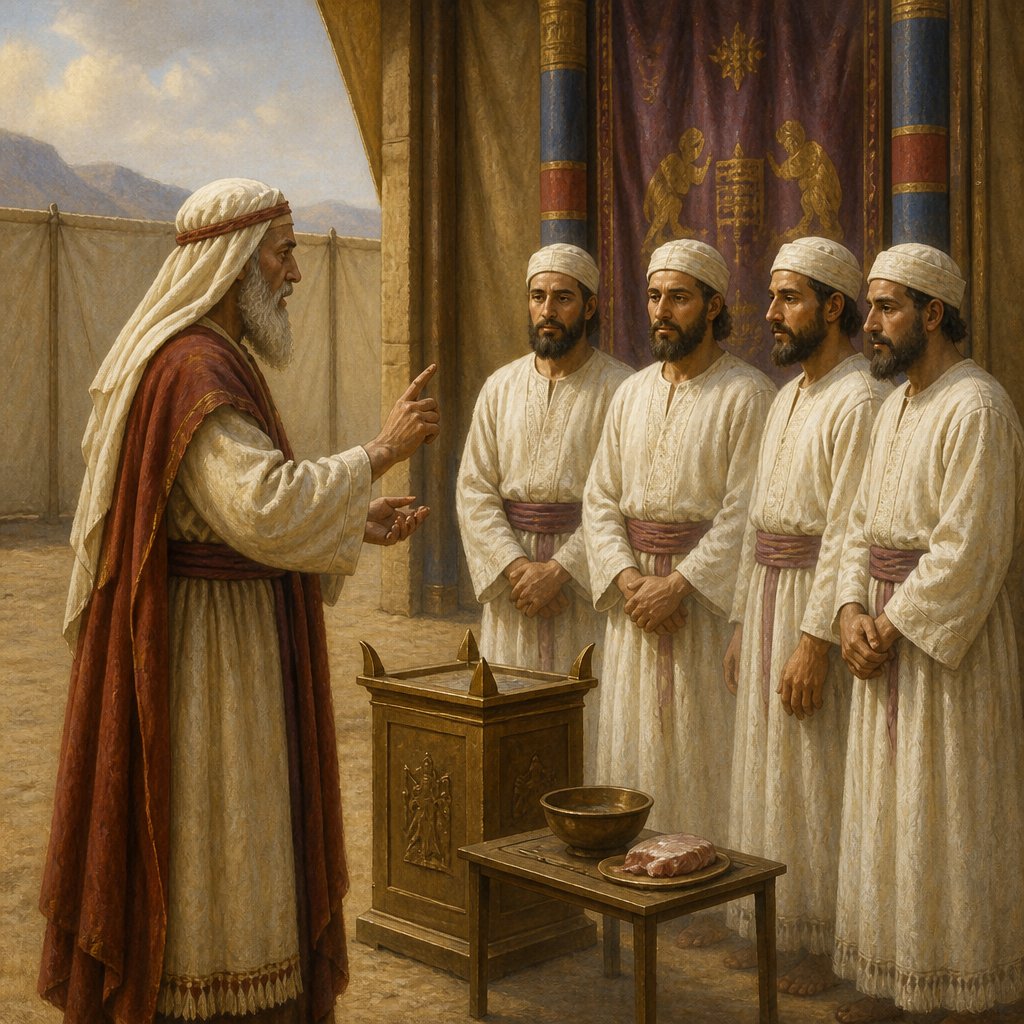
The Bible verse Leviticus 10:18, from the King James Version, states: "Behold, the blood of it was not brought in within the holy place: ye should indeed have eaten it in the holy place, as I commanded."
This verse is part of the book of Leviticus, which is the third book of the Hebrew Bible and the Old Testament. It is a book that focuses on the laws and rituals of the Israelite people, specifically those related to the priesthood, sacrifices, and the holiness of God's people.
In this particular verse, the context is the aftermath of a tragic event. Aaron's sons, Nadab and Abihu, had just been killed by the Lord for offering unauthorized fire before the Lord. This verse is part of the conversation between Moses and Aaron, as they are discussing the handling of the sin offering that had been made on that day. The verse is addressing the fact that the blood of the sin offering was not brought into the tabernacle, as it should have been according to the law. This was a grave error, and Aaron admits that they should have eaten the flesh of the offering in the holy place, as the Lord had commanded.
One of the key themes of this verse is the importance of obedience to God's commands. The Israelites were given specific instructions on how to carry out their religious rituals and offerings, and any deviation from these instructions was considered a serious offense. The death of Nadab and Abihu serves as a stark reminder of the consequences of disobedience and the seriousness of approaching a holy God.
Another important theme in this verse is the concept of holiness. The tabernacle, as the dwelling place of God, was a holy space, and the rituals and offerings performed there were to be done with reverence and adherence to the laws set out by God. The mishandling of the sin offering was a violation of this holiness, and it required a response of repentance and correction from Aaron and the other priests.
Symbolism also plays a significant role in this verse. The blood of the sin offering was a central element of the atonement for the people's sins. It was meant to be brought into the holy place as a representation of the people's reconciliation with God. The failure to do so symbolized a breach in the relationship between the people of Israel and God, highlighting the need for obedience and proper adherence to the rituals God had set forth.
In the broader context of the Bible, this verse also points to the insufficiency of human efforts to appease God and the need for a perfect and ultimate sacrifice. The Book of Leviticus lays the groundwork for the sacrificial system that is ultimately fulfilled in the person of Jesus Christ. His sacrifice, unlike the imperfect sacrifices of the Israelites, is able to truly atone for the sins of humanity once and for all. As the book of Hebrews states, "And every priest stands daily at his service, offering repeatedly the same sacrifices, which can never take away sins. But when Christ had offered for all time a single sacrifice for sins, he sat down at the right hand of God" (Hebrews 10:11-12).
In conclusion, Leviticus 10:18 is a verse that speaks to the themes of obedience, holiness, and the need for proper atonement. It serves as a reminder of the consequences of disobedience and the seriousness of approaching a holy God. The mishandling of the sin offering in this verse symbolizes the need for a perfect and ultimate sacrifice, which is ultimately fulfilled in the person of Jesus Christ. This verse, like the rest of Leviticus, points to the need for a Savior who can truly atone for the sins of humanity.
Get our apps


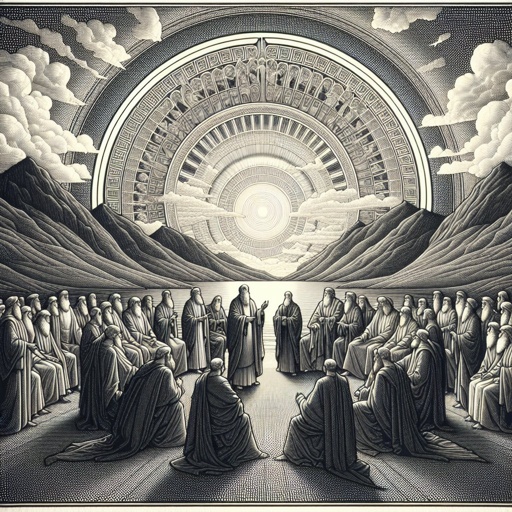
Artwork for Leviticus 10:18

Leviticus 10:18 - "Behold, the blood of it was not brought in within the holy place: ye should indeed have eaten it in the holy place, as I commanded."
"Behold, the blood of it was not brought in within the holy place: ye should indeed have eaten it in the holy place, as I commanded." - Leviticus 10:18

Leviticus 18:10 - "The nakedness of thy son's daughter, or of thy daughter's daughter, even their nakedness thou shalt not uncover: for their's is thine own nakedness."
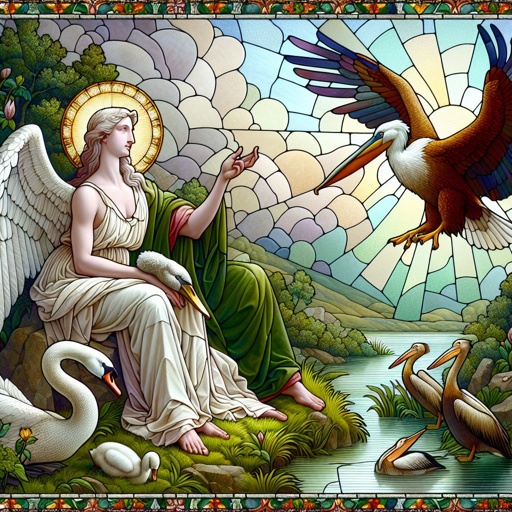
Leviticus 11:18 - "And the swan, and the pelican, and the gier eagle,"

Leviticus 18:1 - "And the LORD spake unto Moses, saying,"

Leviticus 18:22 - "Thou shalt not lie with mankind, as with womankind: it is abomination."

Leviticus 10:10 - "And that ye may put difference between holy and unholy, and between unclean and clean;"
"The nakedness of thy son's daughter, or of thy daughter's daughter, even their nakedness thou shalt not uncover: for their's is thine own nakedness." - Leviticus 18:10

leviticus 16:7-10

Leviticus 18:18 - "Neither shalt thou take a wife to her sister, to vex her, to uncover her nakedness, beside the other in her life time."

Leviticus 13:18 - "¶ The flesh also, in which, even in the skin thereof, was a boil, and is healed,"

Leviticus 24:18 - "And he that killeth a beast shall make it good; beast for beast."

Leviticus 10:20 - "And when Moses heard that, he was content."
Leviticus 10:8 - "¶ And the LORD spake unto Aaron, saying,"

Leviticus 18:16 - "Thou shalt not uncover the nakedness of thy brother's wife: it is thy brother's nakedness."

Leviticus 18:8 - "The nakedness of thy father's wife shalt thou not uncover: it is thy father's nakedness."

"And the swan, and the pelican, and the gier eagle," - Leviticus 11:18

Leviticus 18:20 - "Moreover thou shalt not lie carnally with thy neighbour's wife, to defile thyself with her."

Leviticus 18:2 - "Speak unto the children of Israel, and say unto them, I am the LORD your God."

"And the LORD spake unto Moses, saying," - Leviticus 18:1

Leviticus 18:12 - "Thou shalt not uncover the nakedness of thy father's sister: she is thy father's near kinswoman."

Leviticus 18:27 - "(For all these abominations have the men of the land done, which were before you, and the land is defiled;)"

Leviticus 18:13 - "Thou shalt not uncover the nakedness of thy mother's sister: for she is thy mother's near kinswoman."

Luke 10:18-19

Luke 10:18-19

Luke 10:18-19

Leviticus 18:6 - "¶ None of you shall approach to any that is near of kin to him, to uncover their nakedness: I am the LORD."

Leviticus 8:18 - "¶ And he brought the ram for the burnt offering: and Aaron and his sons laid their hands upon the head of the ram."

Luke 10:18-19

Luke 10:18-19