What does Leviticus 11:13 mean?
“And these are they which ye shall have in abomination among the fowls; they shall not be eaten, they are an abomination: the eagle, and the ossifrage, and the ospray,” — Leviticus 11:13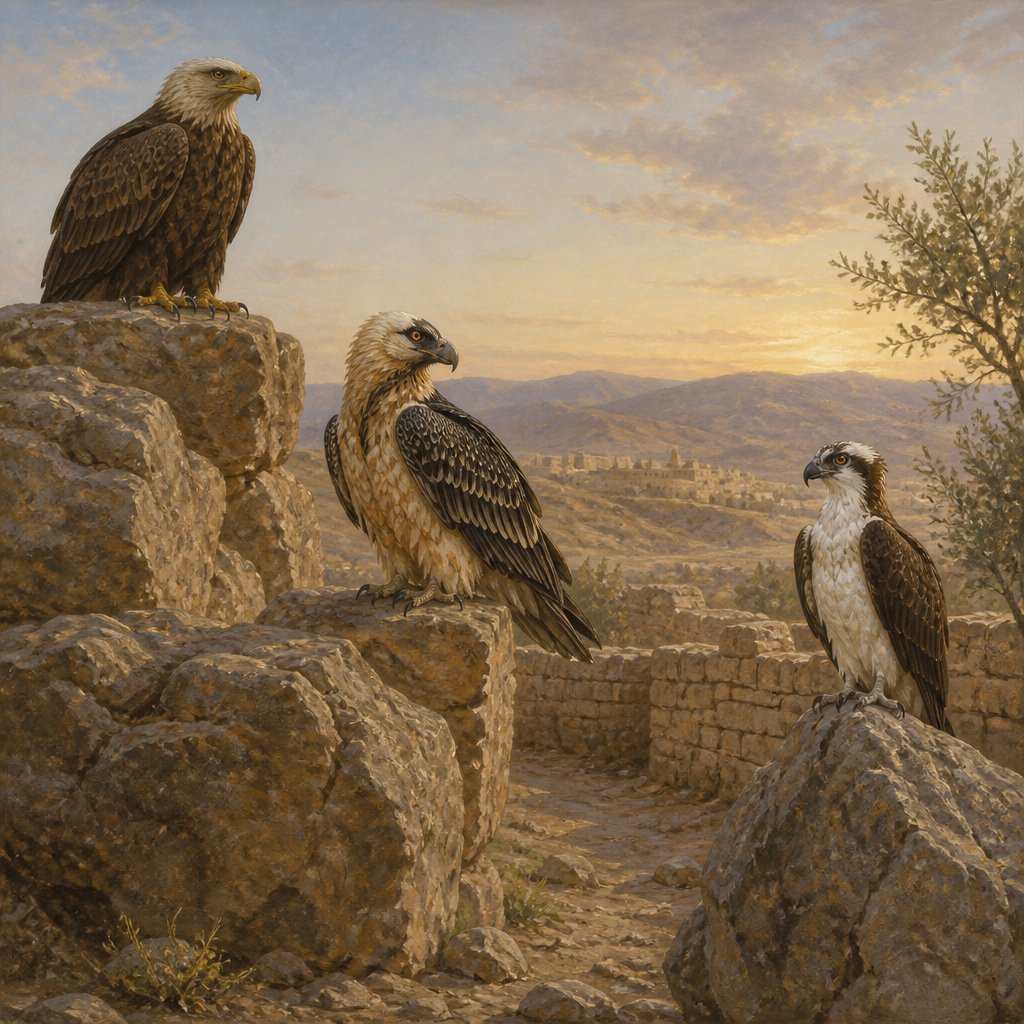
Leviticus 11:13 in the King James Version of the Bible reads, "And these are they which ye shall have in abomination among the fowls; they shall not be eaten, they are an abomination: the eagle, and the ossifrage, and the osprey."
The book of Leviticus is the third book of the Hebrew Bible and the Old Testament, and it is a foundational text for both Judaism and Christianity. This particular verse is part of the laws and regulations set forth in the book of Leviticus, specifically addressing which animals are considered clean or unclean for consumption by the Israelites. In this verse, the focus is on the prohibition of consuming certain species of birds.
The verse starts by listing three specific birds that the Israelites are not permitted to eat: the eagle, the ossifrage, and the osprey. It categorizes these birds as "abominations," emphasizing the strong aversion and disgust that the Israelites should feel towards these creatures. This language is indicative of the importance of adhering to the dietary laws outlined in Leviticus.
In understanding the meaning and significance of this verse, it is important to consider the broader cultural, historical, and religious context in which it was written. The dietary laws in Leviticus served a dual purpose: to set the Israelites apart from other nations and to promote purity and holiness. By restricting certain foods, including specific birds, the Israelites were demonstrating their obedience to God's commands and their commitment to living a righteous and set-apart life.
The prohibition of consuming certain birds is also symbolic of the Israelites' separation from pagan rituals and practices. Many of the birds listed in Leviticus 11 were associated with pagan deities and were commonly used in idolatrous worship. By abstaining from eating these birds, the Israelites were reinforcing their monotheistic faith and their rejection of polytheistic beliefs.
Furthermore, the notion of "abomination" in this verse reflects the broader theme of purity and cleanliness that permeates the book of Leviticus. The Israelites were called to be a holy people, set apart for God's purposes, and this extended to every aspect of their lives, including their diet. By carefully adhering to the dietary laws, the Israelites were reinforcing their commitment to holiness and their desire to honor and obey God.
In a more general sense, this verse serves as a reminder of the importance of obedience to God's commands. The Israelites were given specific instructions regarding what they could and could not eat, and it was incumbent upon them to follow these regulations faithfully. This emphasis on obedience and adherence to God's will is a recurring theme throughout the Bible, and it underscores the significance of living in accordance with divine principles.
In conclusion, Leviticus 11:13 is a verse that addresses the dietary laws set forth for the Israelites, specifically highlighting the prohibition of consuming certain birds. Within the broader context of Leviticus, this verse serves to reinforce the themes of purity, holiness, and obedience to God's commands. It also reflects the cultural and religious context of the Israelites, their separation from pagan practices, and their commitment to monotheistic faith. Ultimately, this verse underscores the importance of living in accordance with God's will and aligning one's life with divine principles.
Get our apps


Artwork for Leviticus 11:13

Leviticus 11:13 - "¶ And these are they which ye shall have in abomination among the fowls; they shall not be eaten, they are an abomination: the eagle, and the ossifrage, and the ospray,"
"¶ And these are they which ye shall have in abomination among the fowls; they shall not be eaten, they are an abomination: the eagle, and the ossifrage, and the ospray," - Leviticus 11:13

Leviticus 13:11 - "It is an old leprosy in the skin of his flesh, and the priest shall pronounce him unclean, and shall not shut him up: for he is unclean."
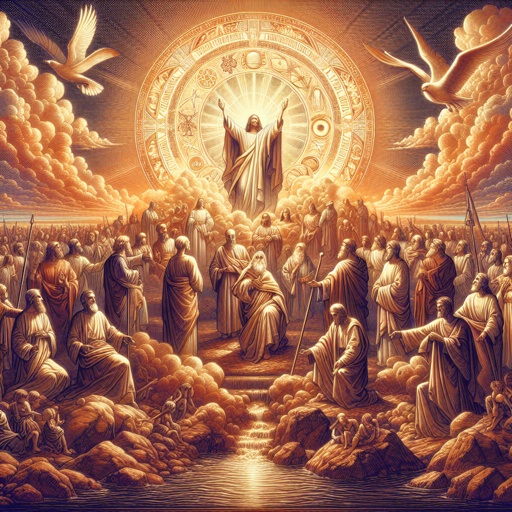
Leviticus 11:22
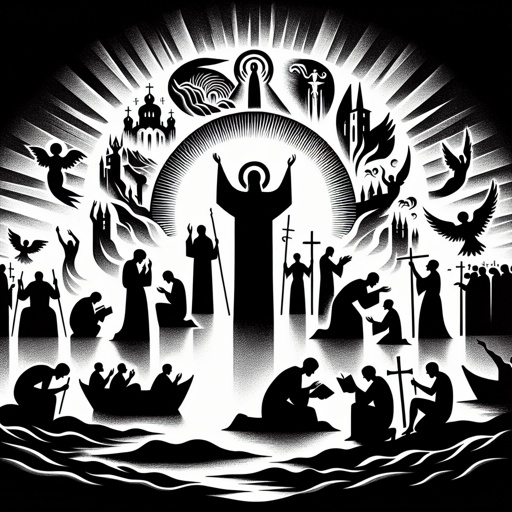
Psalm 1:1-3
Pain 1:1-3
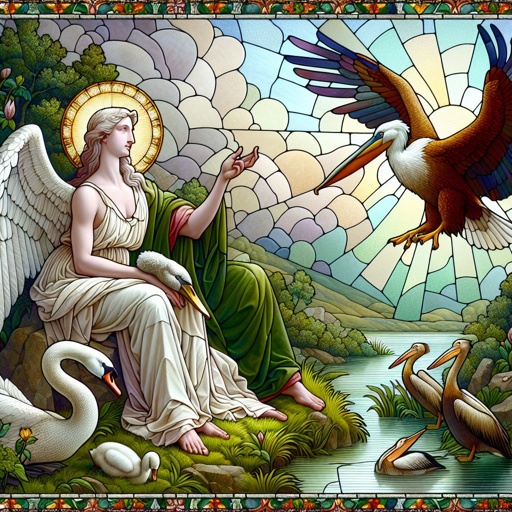
Leviticus 11:18 - "And the swan, and the pelican, and the gier eagle,"

Leviticus 24:13 - "And the LORD spake unto Moses, saying,"
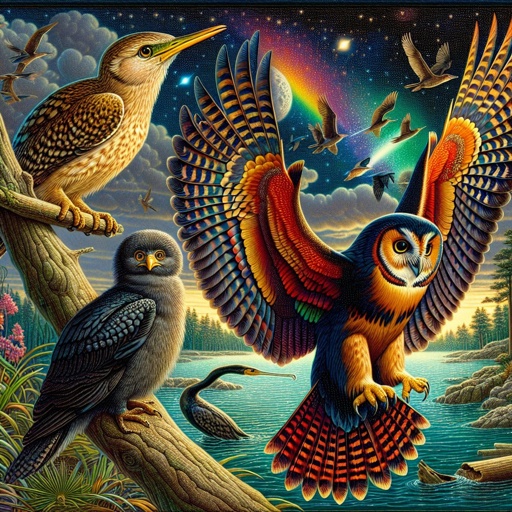
Leviticus 11:17 - "And the little owl, and the cormorant, and the great owl,"

Leviticus 11:14 - "And the vulture, and the kite after his kind;"
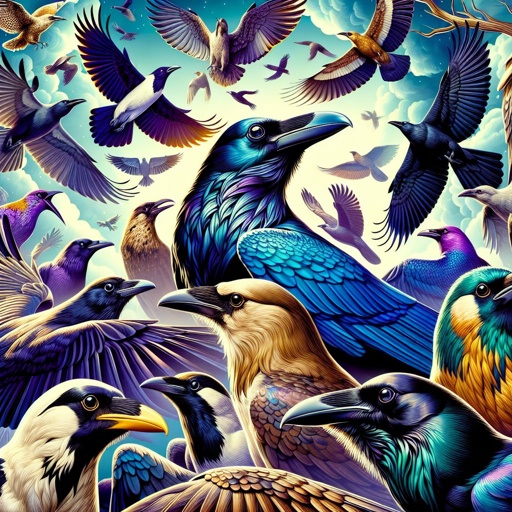
Leviticus 11:15 - "Every raven after his kind;"
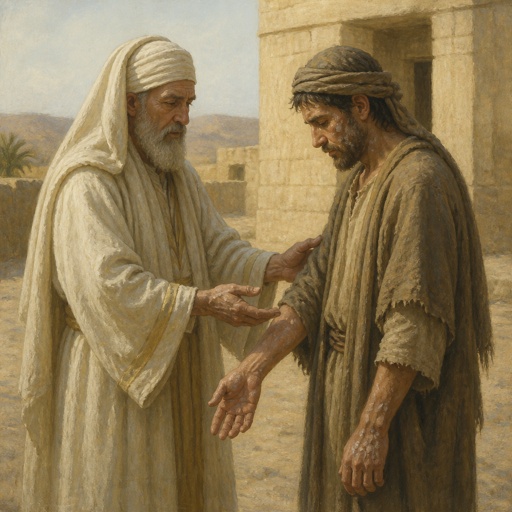
"It is an old leprosy in the skin of his flesh, and the priest shall pronounce him unclean, and shall not shut him up: for he is unclean." - Leviticus 13:11

Leviticus 21:13 - "And he shall take a wife in her virginity."

Leviticus 13:1 - "And the LORD spake unto Moses and Aaron, saying,"

Leviticus 11:30 - "And the ferret, and the chameleon, and the lizard, and the snail, and the mole."

Leviticus 13:35 - "But if the scall spread much in the skin after his cleansing;"

Leviticus 11:19 - "And the stork, the heron after her kind, and the lapwing, and the bat."

Leviticus 13:29 - "¶ If a man or woman have a plague upon the head or the beard;"

Leviticus 13:18 - "¶ The flesh also, in which, even in the skin thereof, was a boil, and is healed,"

Leviticus 9:11 - "And the flesh and the hide he burnt with fire without the camp."

Leviticus 13:14 - "But when raw flesh appeareth in him, he shall be unclean."

Leviticus 13:47 - "¶ The garment also that the plague of leprosy is in, whether it be a woollen garment, or a linen garment;"

Leviticus 11:1 - "And the LORD spake unto Moses and to Aaron, saying unto them,"

Leviticus 11:16 - "And the owl, and the night hawk, and the cuckow, and the hawk after his kind,"

Leviticus 13:9 - "¶ When the plague of leprosy is in a man, then he shall be brought unto the priest;"

Leviticus 13:22 - "And if it spread much abroad in the skin, then the priest shall pronounce him unclean: it is a plague."

Leviticus 25:13 - "In the year of this jubile ye shall return every man unto his possession."

Leviticus 6:13 - "The fire shall ever be burning upon the altar; it shall never go out."

Leviticus 11:41 - "And every creeping thing that creepeth upon the earth shall be an abomination; it shall not be eaten."

Leviticus 19:11 - "¶ Ye shall not steal, neither deal falsely, neither lie one to another."