What does Leviticus 11:33 mean?
“And every earthen vessel, whereinto any of them falleth, whatsoever is in it shall be unclean; and ye shall break it.” — Leviticus 11:33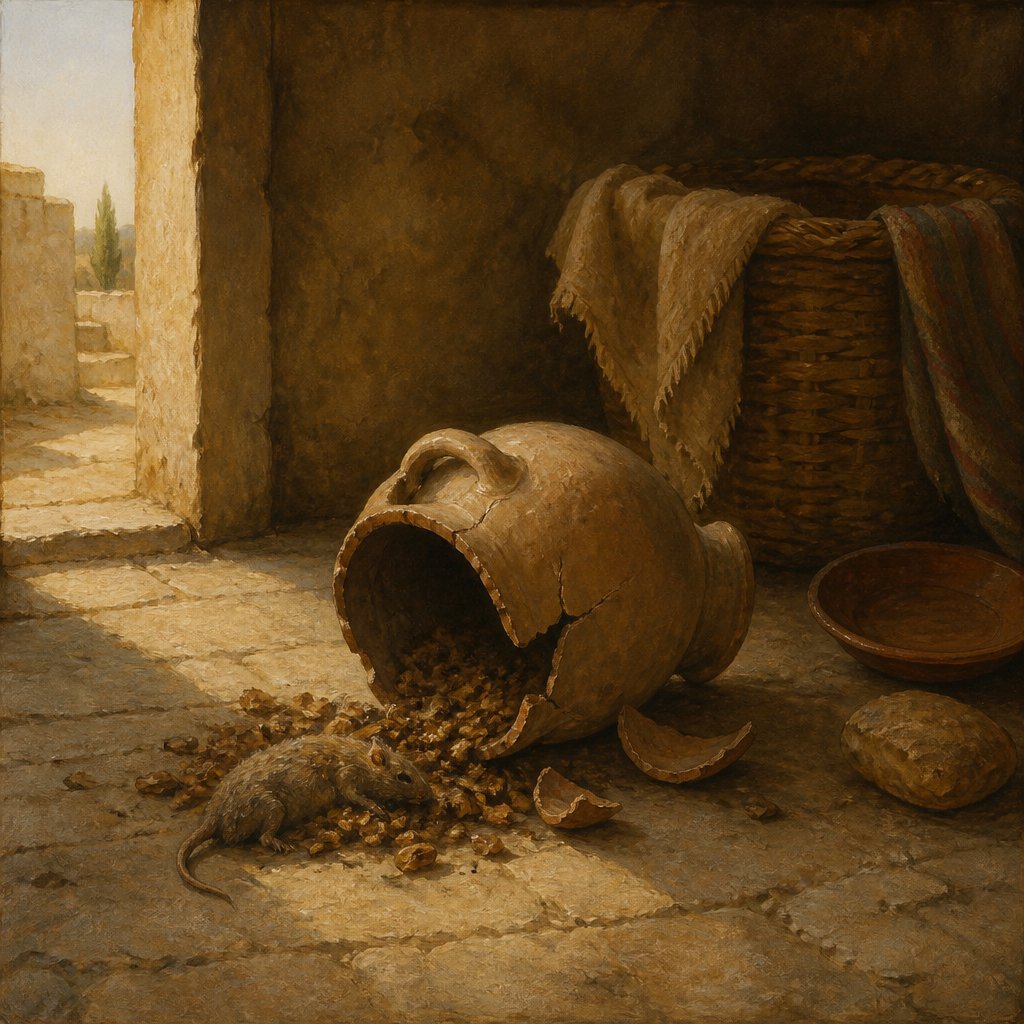
Leviticus 11:33 (KJV): "And every earthen vessel, whereinto any of them falleth, whatsoever is in it shall be unclean; and ye shall break it."
The book of Leviticus is the third book of the Bible, and it primarily deals with matters related to the priesthood, sacrifices, rituals, and moral laws. In Leviticus 11, the focus is on the laws regarding dietary restrictions and clean and unclean animals. The verse 33 in this chapter can be seen as part of the larger context of maintaining purity and holiness as a way of life for the people of Israel.
In this particular verse, the concept of cleanliness and uncleanness is extended to the realm of objects, specifically earthen vessels. These vessels were commonly used for cooking and storing food, as well as for other domestic purposes. The verse states that if an unclean animal were to fall into one of these earthen vessels, everything in it would become unclean. The solution prescribed by the law is to break the contaminated vessel, thus removing the impurity.
The theme of purity and cleanliness in Leviticus 11:33 is tied to the broader theme of holiness and separation from the unclean and impure. The Israelites were called to be a holy people, set apart for God, and their holiness extended not only to their personal behaviors and choices but also to the objects they used in their daily lives. The physical and the spiritual were closely connected in the Israelite worldview, and even mundane objects could become bearers of impurity.
Symbolically, the earthen vessels can represent human beings. Just as an unclean animal contaminates the vessel in the verse, the presence of sin and impurity can defile a person. The breaking of the vessel can represent the need for purification and cleansing from sin. This is in line with the broader biblical theme of the need for repentance and renewal.
The verse also emphasizes the seriousness of uncleanness in the eyes of God. It underscores the importance of maintaining purity and the consequences of allowing impurity to enter one's life. It also serves as a reminder of the need for vigilance in guarding one's heart and life from contamination.
The context of Leviticus as a whole is important for understanding the significance of this verse. The book lays out a comprehensive system of laws and rituals designed to maintain the holiness and purity of the people of Israel. While some of these laws may seem archaic or even arbitrary to modern readers, they were central to the religious and cultural identity of the Israelites at the time.
Leviticus 11:33 also points to broader theological themes of atonement and redemption. The breaking of the vessel can be seen as a necessary step in the process of purification. In the Christian tradition, this can be seen as a foreshadowing of the ultimate purification through the atoning sacrifice of Jesus Christ. The breaking of the vessel represents the breaking of sin's power over humanity through the sacrifice of Christ.
In conclusion, Leviticus 11:33 is a verse that may seem obscure at first glance, but it carries important symbolic and theological significance. It speaks to the importance of maintaining purity and holiness, the consequences of impurity, and the need for atonement and redemption. It also reminds us of the interconnectedness of the physical and the spiritual in the biblical worldview. While the specific laws and rituals of Leviticus may no longer be binding for Christians, the underlying principles of holiness and reverence for God still hold great relevance.
Get our apps


Artwork for Leviticus 11:33

Leviticus 11:33 - "And every earthen vessel, whereinto any of them falleth, whatsoever is in it shall be unclean; and ye shall break it."
"And every earthen vessel, whereinto any of them falleth, whatsoever is in it shall be unclean; and ye shall break it." - Leviticus 11:33

Leviticus 23:33 - "¶ And the LORD spake unto Moses, saying,"

Leviticus 14:33 - "¶ And the LORD spake unto Moses and unto Aaron, saying,"

Leviticus 19:33 - "¶ And if a stranger sojourn with thee in your land, ye shall not vex him."

Leviticus 22:33 - "That brought you out of the land of Egypt, to be your God: I am the LORD."

"¶ And the LORD spake unto Moses, saying," - Leviticus 23:33

Leviticus 15:33 - "And of her that is sick of her flowers, and of him that hath an issue, of the man, and of the woman, and of him that lieth with her that is unclean."

Jeremiah 33:2-11

Jeremiah 33:2-11

Romana 11:33-36

Nehemiah 11:33 - "Hazor, Ramah, Gittaim,"
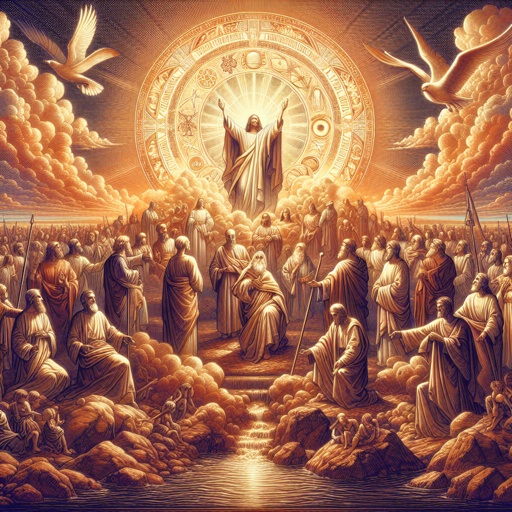
Leviticus 11:22

Leviticus 7:33 - "He among the sons of Aaron, that offereth the blood of the peace offerings, and the fat, shall have the right shoulder for his part."

1 Chronicles 11:33 - "Azmaveth the Baharumite, Eliahba the Shaalbonite,"

Leviticus 26:33 - "And I will scatter you among the heathen, and will draw out a sword after you: and your land shall be desolate, and your cities waste."

"¶ And the LORD spake unto Moses and unto Aaron, saying," - Leviticus 14:33

John 3:3
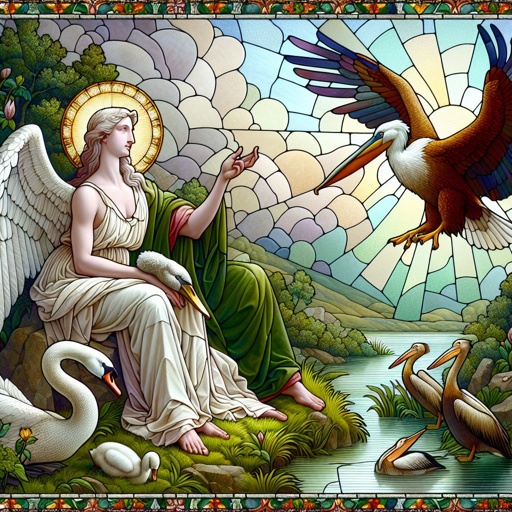
Leviticus 11:18 - "And the swan, and the pelican, and the gier eagle,"

Leviticus 4:33 - "And he shall lay his hand upon the head of the sin offering, and slay it for a sin offering in the place where they kill the burnt offering."

Leviticus 13:33 - "He shall be shaven, but the scall shall he not shave; and the priest shall shut up him that hath the scall seven days more:"

John 3:3-8

Numbers 33:11 - "And they removed from the Red sea, and encamped in the wilderness of Sin."

Leviticus 11:17 - "And the little owl, and the cormorant, and the great owl,"

Leviticus 11:14 - "And the vulture, and the kite after his kind;"

Leviticus 11:15 - "Every raven after his kind;"

"Hazor, Ramah, Gittaim," - Nehemiah 11:33

Leviticus 27:33 - "He shall not search whether it be good or bad, neither shall he change it: and if he change it at all, then both it and the change thereof shall be holy; it shall not be redeemed."

Leviticus 11:30 - "And the ferret, and the chameleon, and the lizard, and the snail, and the mole."

Psalms 33:11 - "The counsel of the LORD standeth for ever, the thoughts of his heart to all generations."